

Top 10 Social Media Marketing Tips Every Business Should Use in 2026
Social media marketing in 2026 is no longer about visibility alone. Businesses that continue to rely on basic posting schedules, generic content, or trend-driven tactics are finding it increasingly difficult to generate real business outcomes.
The platforms themselves have matured. Algorithms now prioritize relevance, depth of engagement, and user value, while audiences expect content that informs, solves problems, or influences decisions. As a result, many brands invest time and resources into social media without seeing measurable returns in traffic, leads, or revenue.
The gap is not effort. The gap is execution.
The brands that perform consistently on social media approach it as a structured growth channel, not a publishing activity. Every post serves a purpose. Every campaign supports a business objective. And every decision is guided by performance data rather than assumptions.
In this blog, we outline ten high-impact social media marketing tips that businesses should prioritize in 2026. These tips are designed to help brands move beyond surface-level tactics and build social media strategies that drive engagement, demand, and long-term growth.
Why Do Most Social Media Strategies Fail Today?
Most social media strategies underperform not because businesses are inactive, but because execution lacks strategic precision and relevance. In 2025-2026, multiple performance benchmarks illustrate the gap between effort and impact.
1. Organic reach has sharply declined across major platforms
Today, many brands achieve average organic reach rates of only 2% to 6% of their total followers. For instance, Instagram’s organic reach averages around 3.5%, while Facebook’s organic reach often sits below 2-3%. These low distribution rates make organic visibility extremely limited without strategic amplification.
2. Content is often disconnected from business outcomes
Despite declining reach, more than half of marketing leaders continue to measure social media success primarily through engagement metrics. However, engagement alone rarely correlates directly with revenue, qualified leads, or pipeline growth unless tied to business goals.
3. Many brands struggle to link social activity to broader business objectives
According to recent industry research, about 65% of marketers report that they need to demonstrate how social media supports business goals to secure leadership buy-in, showing that strategic alignment remains a critical challenge.
4. Analytic usage remains inconsistent
While analytics are readily available on most platforms, many organizations fail to systematically use this data to inform strategy. As a result, content decisions are often based on assumptions rather than measurable performance signals, leading to repetitive posting that does not scale outcomes.
As a result of these factors, many businesses feel that social media “doesn’t work,” despite significant effort. In reality, success today requires strategic alignment, disciplined performance tracking, and systems that connect social efforts to measurable business objectives.
The following tips are designed to address these challenges by providing an outcome-focused framework for social media marketing in 2026.
Tip 1: Tie Every Post To A Business Goal
Followers, likes, and views are indicators, not outcomes. Without a direct connection to business impact, these metrics offer limited strategic value and often create a false sense of progress.
Every social media activity should support a defined objective. Whether the goal is lead generation, website traffic, consultation bookings, product signups, or customer retention, content must be planned and evaluated against that outcome.
Define measurable goals before publishing any post:
- Leads generated from social platforms
- Website sessions driven by social content
- Demo or consultation requests
- Email signups or gated content downloads
- Retention or re-engagement of existing audiences
To do it appropriately, you need a shift in approach:
Instead of:
“Get more Instagram likes”
You should focus on:
“Generate 50 website visits from Instagram this week”
This shift changes how content is created, distributed, and optimized.
When every post is tied to a business outcome, social media strategy gains direction. Decision-making improves, resources are allocated more effectively, and content begins to compound results instead of operating in isolation.
Tip 2: Build Campaign Themes Instead Of Random Posts
High-performing brands approach social media as a series of coordinated campaigns, not disconnected individual posts. Each campaign is designed to move the audience through a defined journey rather than relying on isolated content to drive results.
Campaign-based planning allows businesses to create repeatable frameworks that can be executed consistently across platforms. These frameworks may include product or service launches, awareness campaigns, educational content series, or lead-generation initiatives, each aligned with a specific objective.
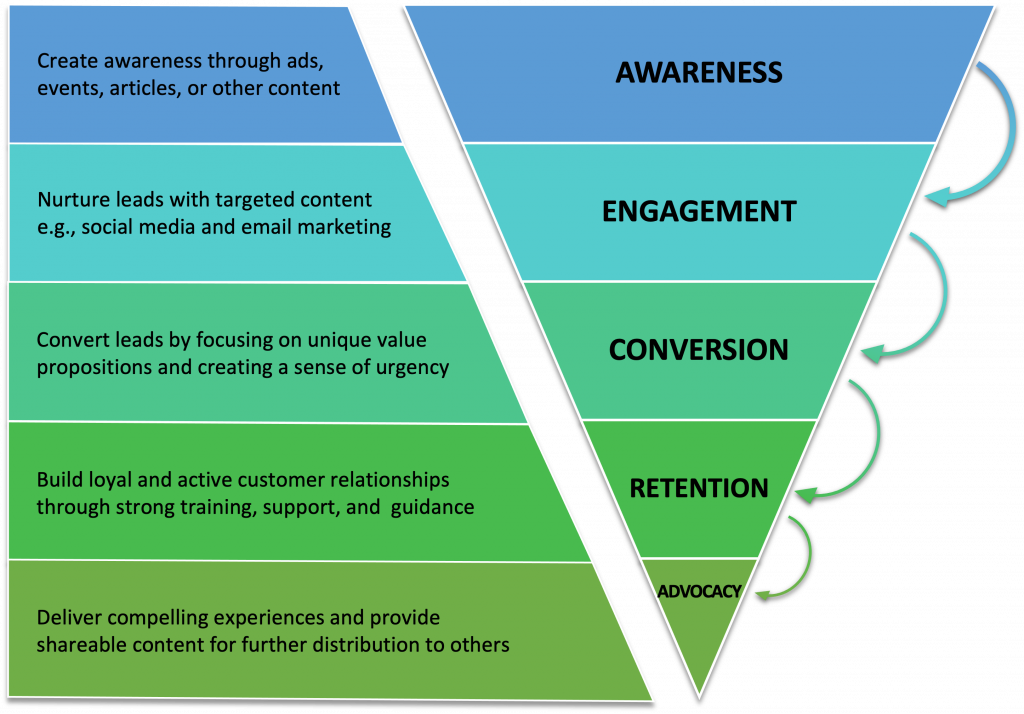
This structure ensures that audiences are first introduced to a concept, then educated, shown credibility, presented with a clear action, and reminded at the right time. It mirrors how real buying decisions are made and prevents content from feeling promotional too early.
By building campaign themes, brands reduce creative burnout, maintain message consistency, and improve performance over time. Content becomes easier to plan, easier to measure, and more effective at driving meaningful business outcomes rather than short-term engagement spikes.
Tip 3: Choose Two Platforms And Go Deep
Attempting to maintain a presence on every social platform often dilutes focus and weakens results. Spreading resources too thin leads to inconsistent content quality, delayed engagement, and strategies that fail to compound over time.
Performance data consistently shows that brands concentrating on one or two core platforms achieve stronger engagement, higher content efficiency, and better conversion outcomes. Depth outperforms breadth when resources, time, and creative bandwidth are limited.
Platform selection should be driven by audience behavior and business model, not trends. B2B brands typically see stronger results on LinkedIn, visual and consumer-focused businesses perform better on Instagram, and community-led or local brands often benefit from Facebook-led strategies.
Once platforms are selected, the priority should be mastery. This includes understanding native content formats, optimal posting cadence, timing patterns, and community interaction dynamics. When brands commit to depth first, social media becomes easier to scale, measure, and optimize for sustained business impact.
Tip 4: Plan Content You Can Sustain Long-Term
Consistency is one of the strongest performance signals social media algorithms reward. Brands that publish regularly, without long gaps or spikes, build stronger distribution momentum and improve long-term visibility across platforms.
Sustainable performance requires structured planning, not last-minute execution. Mapping content at least 30 days in advance allows teams to align topics with goals, define strong hooks, select the right formats, and plan clear calls to action before publishing pressure sets in.
Effective planning should account for:
- Core topics aligned with business priorities
- Primary hooks designed to capture attention quickly
- Formats such as reels, carousels, stories, and text-based posts
- Clear CTAs tied to traffic, engagement, or conversion goals
Maintaining ready-to-use templates for each content format reduces friction and execution fatigue. It also ensures brand consistency across posts, even when multiple team members are involved.
In social media marketing, sustainability consistently outperforms short-term creativity. Brands that prioritize repeatable systems over sporadic bursts of inspiration build stronger algorithm trust, maintain momentum, and achieve more reliable growth over time.
Tip 5: Lead With Education, Proof And Real Value
Excessive promotion consistently limits reach and erodes audience trust. Social platforms are designed to reward content that informs, educates, or solves problems, not content that pushes offers without context or credibility.
High-performing brands follow a value-first distribution model. Approximately 80% of content should focus on education, insights, and proof, while no more than 20% should be promotional. This balance allows brands to build authority before asking for action.
Value-driven content formats that consistently perform include:
- How-to posts that solve specific problems
- Myth-busting content that challenges common assumptions
- Comparisons that help audiences make informed decisions
- Lessons drawn from real experience or execution
- Proof-based content such as case studies and results
- FAQs that address objections and decision barriers
Trust is the primary conversion driver in social media marketing. When audiences repeatedly gain value from content, buying decisions become easier, engagement increases organically, and promotional posts convert at significantly higher rates.
Tip 6: Write Hooks Designed To Stop The Scroll
The first few seconds determine whether content earns attention or is ignored. With over 60% of viewers dropping off short-form videos within the initial moments if they are not immediately engaged.
Platforms such as TikTok, Instagram, and Facebook evaluate early retention as a core quality signal. When content does not secure attention quickly, algorithms restrict distribution and suppress reach, which directly limits performance potential.
Posts and videos that open with strong, deliberate hooks consistently achieve higher retention, often by up to 60%. This increase directly influences watch time, engagement velocity, and content discoverability across feeds.
High-performing hooks are driven by psychological leverage. They surface unresolved pain points, introduce tension through curiosity, or establish immediate value through numbers. These elements force a pause in scrolling behavior and invite continued consumption.
Example:
“You’re posting daily, but here’s why nobody cares.”
This type of opening challenges existing assumptions and demands attention. Hooks that confront real audience friction or curiosity reliably increase saves, shares, and watch time, which are the engagement signals platforms reward with broader distribution.
Tip 7: Prioritize Short-Form Video Over Everything Else
If you want visibility in 2026, short-form video is no longer optional. Reels, Shorts, and TikTok are where discovery happens first. This is where platforms introduce new creators, push fresh ideas, and decide what deserves attention.
Video consistently outperforms static content because it holds attention longer. Longer watch time leads to stronger distribution, and stronger distribution creates more opportunities for engagement and conversions. This is why brands that lean into video see faster momentum, even with smaller audiences.
The biggest mistake businesses make is overthinking production. Short-form video does not need studio lighting, scripts, or perfect edits. What matters is clarity of message and relevance to the viewer.
Formats that work without complexity:
- Quick lists that share practical takeaways.
- Simple explanations that break down complex concepts.
- Myths versus facts attract users’ attention.
- Before-and-after stories that show progress or results.
These formats are easy to repeat and easy to scale, which makes them sustainable over time.
Tip 8: Turn One Winning Idea Into Multiple Assets
Constantly creating new content is one of the fastest ways to burn out. High-performing marketers do the opposite. They focus on identifying what already works and extending its impact across multiple formats and platforms.
When a topic performs well, it should not be treated as a one-time post. A single strong idea can be expanded into several assets, each designed for how different audiences consume content.
One winning topic can become:
- Reel that captures attention quickly
- Carousel that breaks the idea into steps
- Blog that explains the concept in depth
- Email that reinforces the message for subscribers
- LinkedIn post that frames the insight for a professional audience
Repetition is not a weakness in content marketing. It is how familiarity and trust are built. Most people do not see every post, and even fewer remember it after one exposure. Repeating core ideas in different formats ensures the message lands when the audience is ready to engage.
By repurposing intentionally, brands save time, maintain consistency, and strengthen brand recall. Instead of chasing new ideas every day, focus on amplifying the ideas that already resonate and let them compound across channels.
Tip 9: Let Data Decide What You Work On Next
Most brands ignore analytics in social media marketing and rely on assumptions. As a result, the same mistakes repeat, and consistent growth remains out of reach.
If you continue posting without reviewing performance, you will keep investing time in content that looks active but delivers no real business impact.
Here’s how to use analytics the right way:
- Reach – Shows whether platforms are distributing your content.
- Saves – Indicates content people find valuable enough to revisit.
- Link clicks – Reveals what drives traffic and intent.
- Comments – Signals relevance and depth of audience interest.
- Leads – Confirms whether social media supports revenue goals.
Once you identify what brings results, use it to:
- Scale content that consistently earns saves and shares.
- Move high-click posts closer to offers and conversions.
- Eliminate formats that drain effort without impact.
- Build repeatable systems around proven performance.
When data leads your decisions, social media stops being guesswork and starts driving predictable growth.
Tip 10: Boost High-Performing Content With Paid Ads
Paid promotion works best when it amplifies what already performs. Boosting weak or untested content only increases spend without improving results, which is why many ad budgets underdeliver.
In order to increase your social media performance, start by identifying posts that already earn strong engagement organically. Content that receives saves, shares, comments, or profile visits has already proven relevance.
Then use paid distribution strategically to:
- Promote posts with high saves and engagement to expand reach.
- Retarget users who visited your profile, website, or landing pages.
- Show ads to warm audiences who already recognize your brand.
This approach lowers acquisition costs and improves click-through rates because the audience is already familiar with the message. Instead of chasing cold traffic, you reinforce interest where intent already exists.
When paid ads support proven content, performance improves naturally. Costs stay controlled, traffic quality increases, and social media becomes a scalable growth channel rather than a constant expense.
Conclusion: What Should You Do Next?
Social media marketing in 2026 rewards strategy, consistency, and execution, not random activity. These social media marketing tips are shared to help you move from posting for presence to building social media as a growth channel.
To make sure your social media drives measurable growth:
- You need to move from “random posting” to “measurable posting” with some business outcome.
- Using analytics to make the next publishing cadence.
- Creating content strategy, hooks, and short-form videos to boost visibility.
- Lastly, prioritizing platforms that work for your business while making sure education/entertainment > promotions.
While social media isn’t about hacking algorithms or chasing trends, only it requires discipline, clarity, and continuous optimization to turn attention into trust, and trust into consistent business results.
Check here if you’re a small business looking for effective digital marketing strategies to grow your business!
If social media plays an important role in your growth but you’re struggling to scale it effectively, having expert guidance can accelerate results. At Codexxa, we help businesses do social media marketing that converts attention into impact. Interested? Contact Us!
Add Comment