

9 Performance Marketing Trends Every Marketer Is Chasing in 2026
Performance marketing is changing faster than most brands can keep up with. AI is automating campaign decisions, privacy updates are reshaping audience targeting, and traditional performance metrics are no longer enough to measure real business growth. What worked a year ago may not deliver the same results today.
That’s why staying updated with the latest performance marketing trends is becoming essential for marketers and business owners alike. Understanding where digital advertising is heading helps you make smarter decisions, improve campaign performance, and invest your budget where it delivers the highest return.
In this blog, we’ll explore the biggest performance marketing trends shaping 2026, why they matter, and how you can use them to build more profitable marketing campaigns.
Why Performance Marketing Is Changing Fast in 2026?
Performance marketing isn’t changing because of a single technology. Multiple shifts are happening together, forcing brands to rethink how they acquire, measure, and retain customers.
Artificial intelligence is automating campaign decisions. Privacy updates are reducing third-party data availability. Consumer journeys are becoming longer and more fragmented across platforms.
As a result, marketers can no longer depend on platform dashboards alone to evaluate campaign success. Businesses now want clearer answers to a simple question: Which marketing efforts are actually generating incremental revenue?
This shift is pushing brands towards first-party data, incrementality testing, blended ROAS, and marketing mix modeling (MMM). Together, these approaches provide a more complete picture of marketing performance than traditional attribution models. They also help businesses allocate budgets with greater confidence in an increasingly automated advertising ecosystem.
Some of the biggest changes driving performance marketing in 2026 include:
- AI handling campaign bidding, optimization, and audience targeting.
- First-party data replacing third-party cookies for audience insights.
- Incrementality testing becoming more reliable than platform-reported ROAS.
- Retail media, Connected TV (CTV), and shoppable video creating new performance channels.
- Profitability and customer lifetime value becoming more important than vanity metrics.
Now, let’s check the following performance marketing trends 2026 to highlight where the industry is heading and how brands are adapting to stay competitive in 2026.
1. AI-Driven Bidding and Campaign Automations Are Taking Priority
AI is no longer a supporting tool in performance marketing, it’s running the core decisions. Platforms like Google Performance Max and Meta Advantage+ now handle bidding, budget allocation, and audience targeting with minimal manual input from marketers.
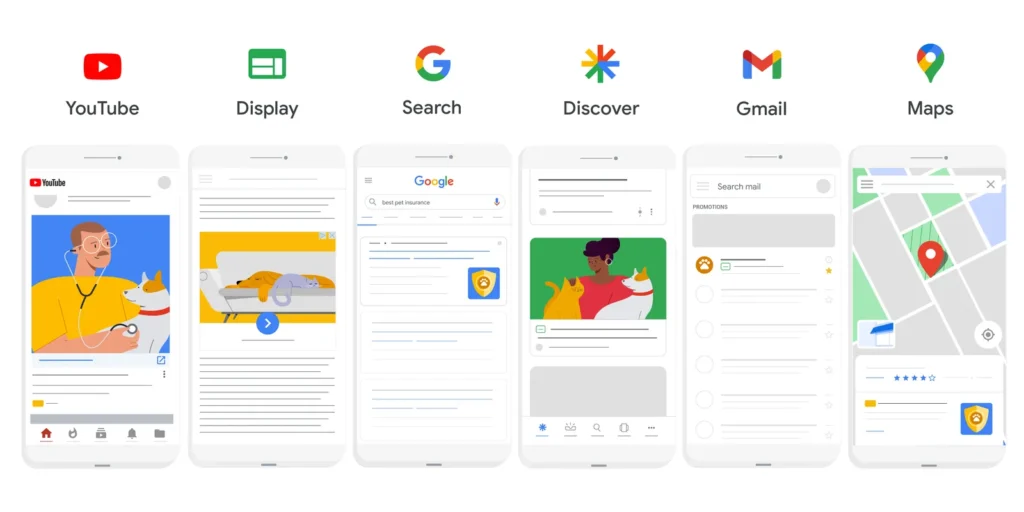
This shift is driven by scale. AI systems can process signals like device, time of day, browsing behavior, and past conversions far faster than any human media buyer, adjusting bids in real time to protect return on ad spend.
For marketers, the role is changing from executing campaigns to guiding and validating what AI decides.
What AI automation is now handling in performance marketing:
- Bidding and budget pacing: Real-time bid adjustments based on conversion probability, replacing manual CPC and CPA targets.
- Audience targeting: AI-driven lookalike and intent modeling instead of manually built audience segments.
- Creative testing: Automated split testing of ad variations to identify top-performing combinations faster.
- Predictive forecasting: Estimating campaign performance before launch to guide budget planning.
Marketers who treat AI as a collaborator, feeding it clean data and clear goals, are seeing stronger results than those still trying to manually override every decision. In 2026, the advantage goes to teams that know how to direct AI systems, not just use them.
2. First-Party Data Is Becoming the Primary Targeting Source
The era of relying heavily on third-party cookies for audience targeting is coming to an end. Privacy changes across platforms like iOS and major browsers have significantly reduced the tracking capabilities marketers once used to understand user behaviour across the web.
Because of this shift, first-party data has become one of the most valuable assets for performance marketers. Unlike external data sources, this information comes directly from customers through interactions such as purchases, website activity, email engagement, app usage, and account preferences.
Brands that build strong first-party data systems gain a major advantage. They can create more accurate audience segments, deliver relevant messaging, and provide better signals to AI-powered advertising platforms for improved campaign optimization.
This is why businesses are now focusing more on collecting customer data directly through loyalty programs, gated resources, preference centres, surveys, and personalized experiences. These methods are no longer just customer engagement tactics; they have become essential inputs for improving advertising performance.
The brands that adapt quickly are treating first-party data as a core marketing strategy rather than simply a CRM responsibility.
In 2026, companies with stronger customer insights will have a better ability to create targeted campaigns, improve efficiency, and maintain consistent results in privacy-focused advertising campaigns.
3. Incrementality Testing Is Replacing Platform-Reported ROAS
A high ROAS number can look impressive on a dashboard, but it does not always tell the full story. The real question is whether those conversions would have happened without the ad.
That is exactly why incrementality testing is becoming more important in 2026. Instead of relying only on platform-reported attribution, brands are using controlled experiments to compare exposed and unexposed audiences and measure the actual lift their campaigns create.
The results are often revealing. In many cases, a meaningful share of attributed conversions would have happened anyway, which means the reported performance is stronger than the true incremental impact.
This is why leadership teams are paying closer attention to incrementality before shifting budgets or scaling spend. It gives marketers a clearer view of what is genuinely driving revenue, not just what looks successful inside an ad platform.
Brands using incrementality testing are treating it as an ongoing habit, not a one-time check. In 2026, that discipline is helping them make cleaner decisions, defend budgets better, and separate real growth from inflated reporting.
4. Blended ROAS Is Emerging as the Standard Performance Metric
For years, ROAS has been the go-to metric for measuring paid campaign success. But as advertising channels continue expanding, relying only on platform-reported ROAS is becoming less effective for understanding true marketing performance.
The biggest challenge is attribution. A customer may discover a brand through Meta ads, search on Google later, return through email, and finally complete a purchase directly. However, each platform may try to claim credit for the same conversion, creating an incomplete view of what drove revenue.
This is why more brands are moving towards blended ROAS, which measures total revenue generated across all channels against total marketing spend. Instead of asking which platform reported the highest return, marketers are focusing on whether their overall advertising investment is creating profitable growth.
The shift is already visible across the industry. Brands are increasingly moving beyond individual platform metrics as measurement gaps continue growing across commerce media and advertising channels. According to EMARKETER, marketers are adopting more advanced measurement approaches because spending is increasing faster than their ability to accurately measure performance.
Blended ROAS also helps businesses make better budget decisions. A channel showing lower platform ROAS may still contribute significantly to the overall customer journey, while a high ROAS channel may simply be capturing demand that already existed.
This doesn’t mean platform-level ROAS has become irrelevant. It is still useful for campaign optimization. However, businesses are now using broader metrics like blended ROAS, customer acquisition cost, lifetime value, and profitability to evaluate whether marketing efforts are truly supporting growth.
5. Retail Media Networks Are Expanding Beyond Amazon
Retail media has become one of the fastest-growing areas in performance marketing, giving brands access to high-intent shoppers using retailer-owned customer data.
While Amazon has dominated this space for years, other retailers are building their own advertising ecosystems. Walmart, Target, Carrefour, Tesco, and many others are turning their marketplaces, loyalty programs, and purchase data into powerful media channels.
| Retail Media Advantage | Why Brands Are Investing |
| First-party customer data | Better targeting without relying on third-party cookies |
| High purchase intent | Reaching users closer to buying decisions |
| Closed-loop measurement | Connecting ad exposure directly with sales |
The growth is backed by rising advertiser investment. eMarketer estimates that US retail media ad spending will approach $70 billion in 2026, showing how quickly brands are shifting budgets toward commerce-driven advertising channels.
For performance marketers, retail media creates a new opportunity to combine audience targeting with measurable revenue outcomes. In 2026, brands that leverage retail data effectively will have a stronger advantage in reaching customers at the right moment.
6. Shoppable Video and CTV Advertising Are Becoming Core Channels
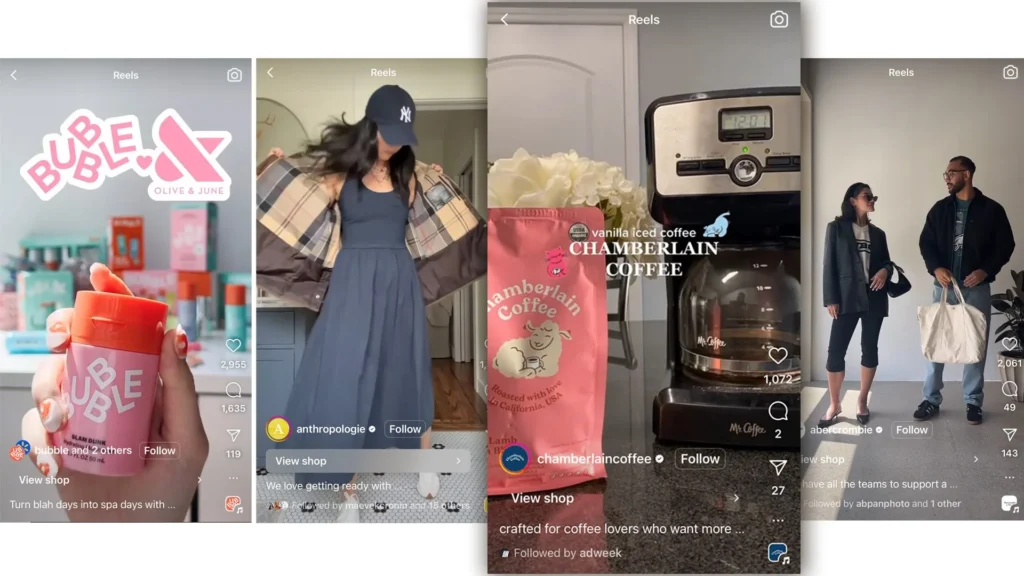
Video advertising is moving beyond awareness campaigns. In 2026, brands are using shoppable videos and connected TV (CTV) advertising to combine the reach of traditional television with the measurement capabilities of digital marketing.
The biggest change is that viewers are no longer passive audiences. Shoppable formats allow users to discover products, interact with offers, and take action directly from video content, reducing the gap between attention and purchase.
CTV is seeing similar growth as consumers continue shifting from traditional television to streaming platforms. According to IAB, digital video advertising, including CTV, social video, and online video, recorded 25.4% year-over-year growth in 2025, making it one of the fastest-growing digital ad formats.
| Channel | Why Brands Are Investing |
| Shoppable Video | Converts product discovery into direct actions |
| CTV Advertising | Reaches streaming audiences with better targeting |
| Interactive Ads | Creates measurable engagement beyond views |
For performance marketers, this creates new opportunities to connect brand storytelling with measurable outcomes. In 2026, video advertising is becoming less about impressions and more about driving trackable customer actions across the buying journey.
7. TikTok Is Maturing Into a Reliable Performance Marketing Channel
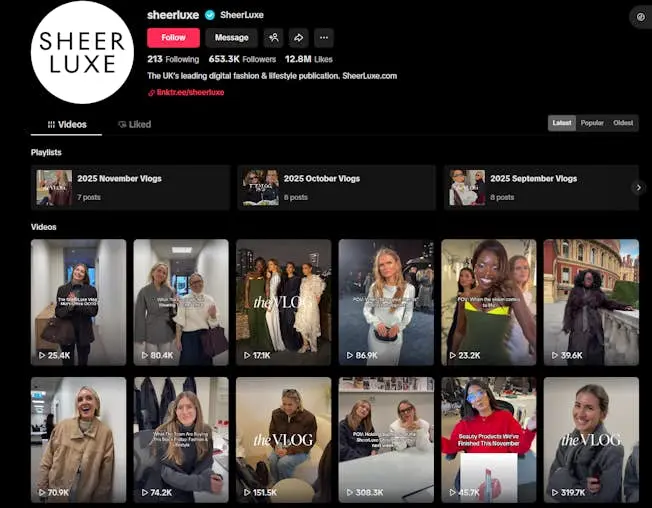
TikTok was once considered a platform mainly for brand awareness and viral content. In 2026, that perception is changing as more businesses are using it as a measurable performance channel.
The shift is happening because TikTok has built a strong combination of discovery, engagement, and purchase behaviour. Users are not only watching content but also discovering products, researching brands, and making buying decisions directly through the platform.
TikTok’s advertising tools reached 1.59 billion users globally in January 2025, showing the scale brands can access through the channel.
| Why TikTok Is Growing for Performance Marketing | Impact on Brands |
| Algorithm-driven discovery | Reaches relevant audiences beyond existing followers |
| Short-form video format | Creates higher engagement through native content |
| Shopping integrations | Reduces the gap between discovery and purchase |
Another reason behind TikTok’s growth is its ability to blend advertising with organic-style content. Instead of interruptive ads, brands can create videos that feel natural within the user experience.
TikTok’s advertising revenue is also expected to continue growing, with projections reaching around $43.96 billion in 2026, highlighting increasing marketer confidence in the platform.
For performance marketers, TikTok is becoming less of an experimental channel and more of a scalable acquisition platform. In 2026, brands that combine creative testing, authentic content, and data-driven optimization will be better positioned to capture demand on the platform.
8. Generative Engine Ads Are Emerging as a New Ad Frontier
Search advertising has always been built around keywords, rankings, and clicks. But the rise of generative AI is changing how people discover information, compare options, and make purchase decisions online.
AI-powered experiences like Google AI Overviews, ChatGPT Search, and Perplexity are moving users from traditional search journeys toward direct answers. Instead of browsing multiple websites, consumers are increasingly receiving summarized recommendations before deciding where to click or buy.
The adoption of these AI-driven search experiences is already happening at a massive scale. Google reported that AI Overviews reached more than 2 billion monthly users, while AI Mode crossed 1 billion monthly users, showing how quickly generative search is becoming part of everyday discovery.
This shift is creating a new challenge for marketers: visibility is no longer limited to search result pages. Brands now need to understand how AI systems evaluate content, authority, and relevance when generating responses.
The opportunity is also expanding beyond traditional search behaviour. OpenAI’s research shows ChatGPT usage continues growing globally, with users increasingly relying on AI for information discovery, research, and decision-making tasks.
For performance marketers, this creates a completely new advertising opportunity. Campaign strategies will need to focus beyond traditional paid search by building stronger brand authority, creating trusted content, and improving visibility across emerging AI-driven discovery platforms.
Generative engine advertising is still an early-stage opportunity, but brands preparing now will have a stronger advantage as AI becomes a bigger part of the customer journey.
9. Hyper-Personalized Creative Is Being Scaled Using AI
Creating a single ad creative for every audience is no longer enough. As customer expectations continue rising, brands are using AI to deliver more relevant messaging across different audiences, platforms, and stages of the buying journey.
The pressure to personalize is growing faster than most marketing teams can produce content manually. According to Salesforce’s State of Marketing 2026, 86% of marketers say AI is raising customer expectations, 83% believe customers now expect two-way conversations with brands, and 78% admit they need more personalized content than they can currently produce.
| AI-Powered Creative Trend | Impact on Performance Marketing |
| Dynamic creative variations | Delivers more relevant ads for different audience segments |
| AI-generated copy and visuals | Speeds up creative production and campaign launches |
| Real-time creative optimization | Continuously improves engagement using live performance data |
Instead of replacing creative teams, AI is helping them scale ideas that already work. Marketers can test more creative variations, identify winning messages faster, and focus more on strategy than repetitive production.
In 2026, the competitive advantage will not come from producing more ads. It will come from delivering the most relevant creative to the right audience at exactly the right moment.
How These Trends Are Reshaping Performance Marketing Strategy?
Taken individually, each of these trends solves a different challenge. Together, they point to a much bigger shift in how performance marketing is planned, measured, and optimized.
The traditional formula of launching campaigns, tracking platform-reported ROAS, and scaling whatever appears profitable is becoming less reliable. Privacy regulations, fragmented customer journeys, AI-driven automation, and changing consumer behaviour are forcing marketers to build strategies that rely on stronger data rather than platform assumptions.
That change is already influencing where brands are investing their budgets.
Performance marketing priorities in 2026 include:
- Building first-party data assets instead of depending on third-party tracking.
- Measuring business impact through incrementality and blended ROAS.
- Scaling creative production with AI instead of manual workflows.
- Expanding beyond Google and Meta into retail media, CTV, TikTok, and AI-powered search experiences.
This shift is reflected across the industry. The IAB reported that digital advertising revenue reached $258.6 billion in 2024, with AI-powered advertising, digital video, and retail media driving much of the market’s growth. Those same channels are expected to remain central to performance marketing strategies over the coming years.
Performance marketing is no longer about finding the next growth hack. It is about building a marketing system that can adapt as technology, customer expectations, and measurement continue to evolve.
Conclusion
Performance marketing in 2026 is no longer just about running ads. But it depends more on how well brands combine AI, first-party data, smarter measurement, and the use of the right acquisition channels.
The businesses seeing the best results aren’t trying to follow every new trend. They’re building marketing processes that improve targeting, measure real business impact, and create long-term competitive advantages.
For ecommerce brands, paid advertising alone isn’t enough. Combining it with a strong SEO strategy helps attract qualified organic traffic, reduce customer acquisition costs, and generate consistent growth beyond ad spend.
That’s where Codexxa can help. Our ecommerce SEO services are designed to complement your performance marketing efforts, helping your business increase visibility, drive high-intent traffic, and grow revenue for the long run.
Ready to build a smarter performance marketing strategy? Get in touch with Codexxa today.