

How to Grow Your Ecommerce Business with Digital Marketing and Scale Revenue in 2026
Growing an ecommerce business today is becoming more challenging as competition increases and customers have more choices than ever.
Simply launching products is no longer enough. Brands must consistently attract buyers, build trust, and create reasons to purchase.
The opportunity, however, continues to grow. Global retail ecommerce sales are projected to reach approximately $6.88 trillion in 2026, highlighting the massive market available to online businesses.
But many ecommerce brands struggle because they invest in marketing activities without a clear plan for generating traffic, sales, and repeat customers.
If you’re wondering how to grow your ecommerce business with digital marketing, the answer lies in using the right channels, content, and campaigns at the right time.
In this guide, you’ll discover 11+ tested digital marketing strategies that can help increase visibility, drive conversions, and scale ecommerce revenue more effectively.
Why Digital Marketing Is Essential for Ecommerce Growth Today?
Today’s buyers rarely purchase immediately. Most compare products, read reviews, and research brands before making decisions.
According to consumer gravity, 81% of shoppers research online before purchasing, while search engines remain one of the most common starting points during product discovery.
At the same time, global retail ecommerce sales are projected to approach $6.9 trillion in 2026, creating massive opportunities for growing online businesses.
These trends show a clear shift. Businesses that consistently appear where customers search gain a significant competitive advantage.
Digital marketing helps ecommerce brands stay visible throughout the buying journey instead of relying on occasional traffic spikes. The impact becomes even more important when customer acquisition costs continue rising across many ecommerce industries and marketplaces.
Key reasons digital marketing drives ecommerce growth:
| Consumer Behavior | Why It Matters for Ecommerce Businesses |
| Buyers research before purchasing | Brands must appear during the decision-making process |
| Customers compare multiple stores | Visibility and trust influence purchase decisions |
| Search engines guide product discovery | SEO and paid advertising attract qualified buyers |
| Reviews affect buying confidence | Social proof helps increase conversions |
| Customers interact across channels | Consistent marketing improves purchase opportunities |
Some of the biggest benefits ecommerce businesses gain from digital marketing include:
- Generating qualified traffic from customers actively looking for products.
- Increasing brand visibility beyond marketplaces and existing customer networks.
- Building trust through content, reviews, and consistent brand messaging.
- Improving conversion rates through targeted campaigns and personalized experiences.
- Driving repeat purchases through email marketing and customer retention strategies.
- Creating scalable revenue channels that support long-term ecommerce growth.
Today, ecommerce brands growing fastest today are not always the largest. They are often the businesses reaching customers first and staying visible throughout the buying journey.
What Makes an Ecommerce Marketing Strategy Successful?
A successful ecommerce marketing strategy is not built on random marketing activities. It is built on a clear structure that connects traffic, trust, and sales together.
Without these core elements, even high-budget marketing campaigns fail to deliver consistent ecommerce growth.
1. Clear Understanding of Target Customers
A strong strategy starts with knowing exactly who you are selling to.
This includes:
- Customer age, interests, and buying behavior, etc.
- Problems you’re trying to solve.
- What motivates them to purchase online?
When you understand your customers deeply, every marketing effort becomes more effective and less wasteful.
2. Strong Product Positioning
Successful ecommerce brands clearly define why a customer should choose their product over others.
This means:
- Your product should provide clear product value.
- Simple messaging.
- Strong differentiation from competitors.
If customers do not understand the product in seconds, they usually leave.
3. Multi-Channel Visibility
A winning strategy ensures the brand is visible across multiple platforms where customers spend time.
These include:
- Search results like Google, Bing, etc.
- Social media platforms.
- Paid campaigns & influencer marketing.
- Email and remarketing channels.
The more touchpoints a customer sees, the higher the chance of conversion.
4. High-Intent Traffic Focus
Not all traffic is useful for ecommerce growth. Successful strategies focus on attracting people who are already interested in buying.
This is achieved through:
- SEO for search intent keywords.
- Google Shopping ads.
- Retargeting campaigns.
- Product-focused content.
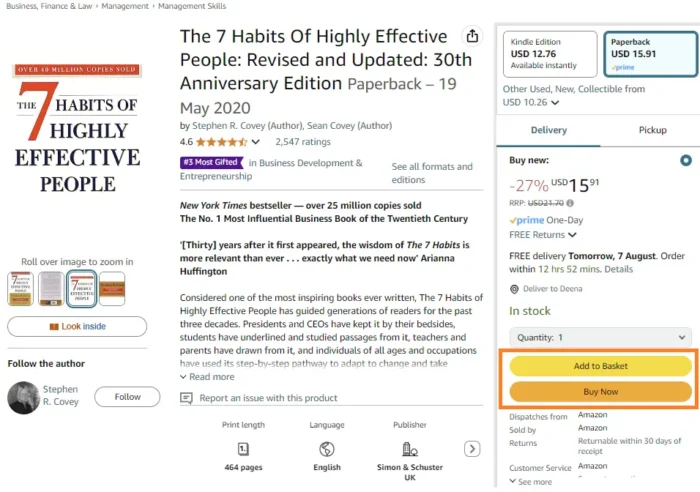
5. Conversion-Optimized Store Experience
Even strong traffic fails if the website does not convert visitors into buyers.
A successful ecommerce strategy should ensure:
- Fast loading product pages.
- Clear pricing and product details.
- Simple checkout process.
- Mobile-friendly experience.
6. Trust-Building Elements
Customers only buy when they trust the brand.
Key trust signals ecommerce brands should include:
- Customer reviews.
- Ratings and testimonials.
- Secure payment options.
- Clear return and refund policies.
7. Retention and Repeat Sales System
Successful ecommerce brands do not rely only on new customers.
They focus on repeat purchases through:
- Targeting their customers through email marketing campaigns.
- Offering loyalty programs & offers.
- Personalized offers to them.
- Engage with customers post-purchase.
8. Data Tracking and Optimization
Without tracking performance, growth becomes guesswork.
A strong strategy includes:
- Tracking ad performance.
- Monitoring conversion rates.
- Analyzing customer behavior.
- Improving campaigns based on data.
Successful ecommerce marketing is not about doing more activities. It is about combining the right elements that work together to generate consistent sales and long-term growth.
11+ Tested Digital Marketing Strategies to Grow Your Ecommerce Business
After thorough research, we have found 11+ digital marketing strategies that ecommerce businesses can use to attract buyers, drive conversions, and scale revenue.
Let’s dive in!
1. Focus on SEO to Generate High-Intent Buyers
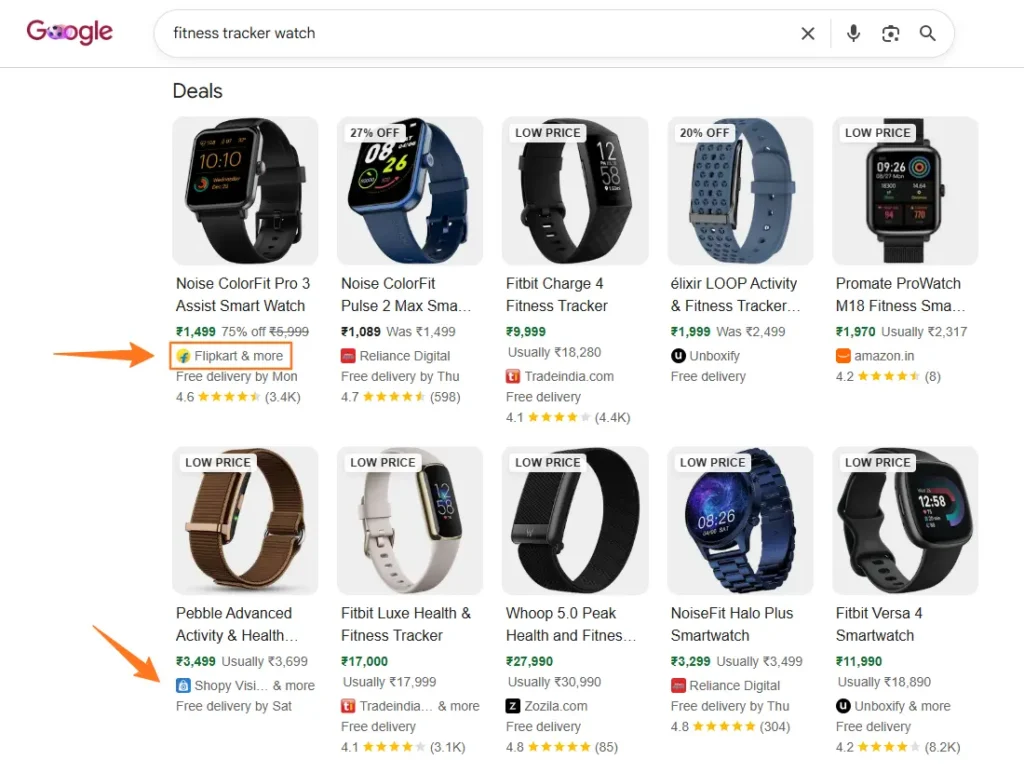
Most ecommerce brands spend heavily on paid ads but ignore the channel that drives the most consistent traffic. Organic search drives 43% of all ecommerce traffic and converts at an average of 2.8%, outperforming social media and most paid channels combined.
Even 23.6% of ecommerce orders come directly from organic search traffic, making SEO one of the highest-ROI investments an online store can make. Unlike paid ads, organic rankings keep bringing buyers without additional spend.
The key here is targeting the right keywords. Around 70% of ecommerce searches are transactional in nature, meaning most people searching for products are already close to buying. Ranking for these terms puts your store directly in front of high-intent buyers.
What ecommerce SEO focuses on:
- Product page optimization: Clear titles, descriptions, and structured data that help Google understand and rank your pages.
- Long-tail keyword targeting: Specific search terms like “buy organic dog food online” attract buyers with strong purchase intent.
- Technical SEO: Fast loading speed, mobile optimization, and clean site structure improve both rankings and conversions.
- Category page SEO: Optimizing collection pages for broader product keywords drives consistent high-volume traffic.
- Content marketing: Blog posts and buying guides targeting informational keywords build authority and attract early-stage buyers.
SEO takes time to build but delivers compounding returns. The earlier you invest in it, the stronger your organic traffic becomes over time. Read more here if you want a complete SEO checklist for ecommerce website.
Want to improve your ecommerce SEO and attract more buyers organically? Talk to our team at Codexxa and let’s build a strategy that drives consistent, high-intent traffic to your store.
2. Run Google Shopping and Search Ads for Faster Sales
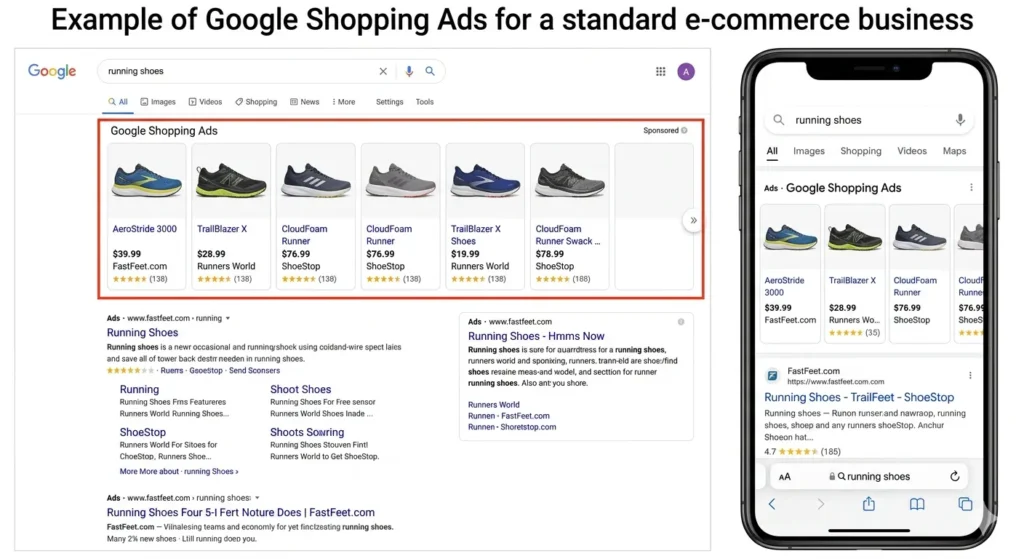
Paid search puts your products in front of buyers at the exact moment they are searching for them. Unlike most marketing channels, Google Shopping and Search ads target people already looking to purchase, which makes every click more valuable.
Google Shopping ads account for 85% of all clicks on Google Ads campaigns for ecommerce and drive over 76% of all retail search ad spend in the United States. People who click on Google ads are also 50% more likely to buy compared to organic visitors, making paid search one of the highest-converting channels available to online stores.
For ecommerce brands that need faster results, these two channels work together to capture demand that already exists.
What to focus on when running Google Shopping and Search ads:
- Product feed quality: Accurate titles, competitive pricing, and strong product images directly improve Shopping ad visibility and clicks.
- High-intent keyword targeting: Focus budgets on transactional search terms where buyers are ready to purchase immediately.
- Campaign structure: Separate bestsellers from new products to control budgets and bidding more effectively.
- Landing page relevance: Every ad must lead to a fast, relevant product or category page to convert clicks into sales.
- Bid strategy alignment: Use target ROAS or target CPA bidding once enough conversion data has been collected.
Google Shopping and Search ads work best when campaigns are built around profit margins, not just traffic volume. Brands that structure accounts correctly and optimize consistently tend to outperform industry benchmarks by a significant margin.
3. Use Social Media Advertising to Reach New Customers
Your next customer is already scrolling. The question is whether your brand shows up before a competitor does.
With 5.2 billion social media users worldwide and people spending an average of 143 minutes daily on these platforms, the reach available through paid social is unmatched.
77% of consumers discover new products through social ads. And 82% use social media to research products before buying. That makes paid social one of the strongest new customer acquisition channels available to ecommerce brands today.
Here is how the major platforms compare for ecommerce advertising:
| Platform | Best For | Key Stat |
| Facebook & Instagram | Broad audience targeting and retargeting | Meta controls 20% of global social ad spend |
| TikTok | Younger audiences and impulse purchases | 67% of users say TikTok inspired an unplanned purchase |
| High purchase-intent product discovery | Drives 2.3x higher purchase intent vs. display ads | |
| YouTube | Upper-funnel awareness and product demos | Ads increase top-of-funnel conversions by 27% |
4. Partner With Influencers in Your Niche
Consumers trust people more than brands. That single reality is why influencer marketing has grown into a $32.55 billion industry and continues outpacing most traditional advertising channels.
69% of consumers trust influencer recommendations over direct brand messaging. And 86% of consumers make at least one influencer-inspired purchase every year. For ecommerce brands, that translates directly into sales.
The average ROI from influencer marketing sits at $5.78 for every $1 spent. But what matters more than the average is who you partner with. Nano and micro-influencers consistently deliver better engagement and conversion rates compared to mega influencers, at a fraction of the cost.
Here is a quick breakdown by influencer type:
| Influencer Type | Followers | Best For |
| Nano | 1,000 – 10,000 | High trust, niche audiences, low cost |
| Micro | 10,000 – 100,000 | Strong engagement, targeted reach |
| Macro | 100,000 – 1M | Broad awareness at scale |
| Mega | 1M+ | Mass reach, lower relative engagement |
The platform also matters. TikTok influencer campaigns delivered a short-term ROI of 11.8% in a joint study with Dentsu, and 78% of TikTok users have purchased a product after seeing it in creator content. Instagram remains the strongest platform for shoppable posts and longer-term brand partnerships.
The smartest approach is not one-off posts. Brands that build ongoing creator relationships and repurpose influencer content across paid ads consistently see stronger returns than those running single sponsored posts.
5. Create Helpful Content Around Your Products
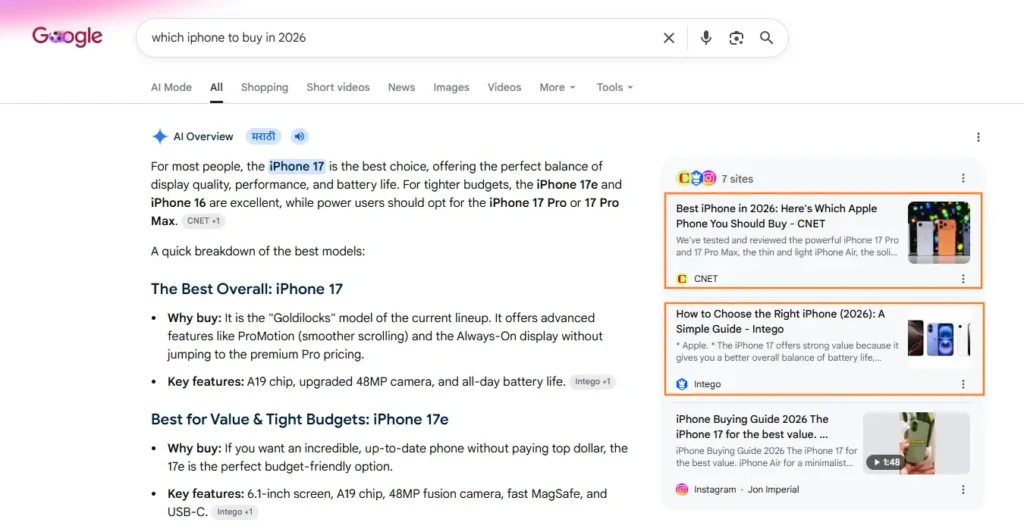
Content marketing generates 3x more leads than outbound marketing and costs 62% less. Companies with active blogs generate 67% more leads monthly and 55% more website traffic than those without.
Even average ROI from content marketing is at $7.65 for every $1 spent.
For ecommerce brands, those numbers reflect one clear reality. Buyers research before they purchase. The store that answers their questions first earns the trust that leads to the sale.
Helpful ecommerce content works across four stages of the buying journey:
- Awareness: Blog posts and guides attract buyers searching for information related to your product category.
- Consideration: Comparison articles, how-tos, and video tutorials help buyers evaluate their options.
- Decision: Product-specific content, reviews, and customer stories remove final objections before purchase.
- Retention: Post-purchase content like usage guides and care tips increases satisfaction and drives repeat orders.
The key here is writing content that solves real problems, not content that simply talks about your products. Brands that consistently publish helpful, search-optimized content build authority over time and create a traffic source that keeps delivering results long after publication.
6. Build an Email Marketing System That Drives Repeat Purchases
Many ecommerce stores invest heavily in attracting first-time shoppers while neglecting the people who have already bought from them.
That can become costly over time. Acquiring a new shopper often costs significantly more than retaining an existing one, while loyal purchasers typically spend more across multiple orders.
Email remains one of the most profitable retention channels available. Research shows it delivers an average return of $36 for every $1 spent, outperforming many other digital marketing activities.
One reason email performs so well is ownership. Unlike social platforms or advertising channels, your subscriber list is an audience you directly control.
A well-structured email system keeps your store visible after the first order and creates additional opportunities for future sales.
The highest-performing ecommerce email programs usually include:
| Email Type | Purpose | When to Send |
| Welcome Emails | Introduce the store and products | Immediately after signup |
| Abandoned Cart Emails | Recover unfinished checkouts | Within hours of abandonment |
| Post-Purchase Emails | Improve the buying experience | After order completion |
| Product Recommendation Emails | Suggest relevant products | Based on shopping behavior |
| Re-Engagement Emails | Reconnect inactive subscribers | After extended inactivity |
| Loyalty and Reward Emails | Encourage additional orders | When milestones are reached |
Relevance plays a major role in performance. Personalized email campaigns consistently generate stronger engagement than generic broadcasts.
Rather than sending identical messages to every subscriber, successful retailers segment audiences using interests, browsing activity, and order history.
This creates a more tailored experience while improving open rates, click-through rates, and repeat sales.
The objective is not sending more emails. The objective is delivering the most relevant message at the most appropriate moment.
Retailers that consistently nurture subscribers through email often generate stronger lifetime value while reducing dependence on paid acquisition channels.
7. Recover Lost Sales With Cart Abandonment Campaigns
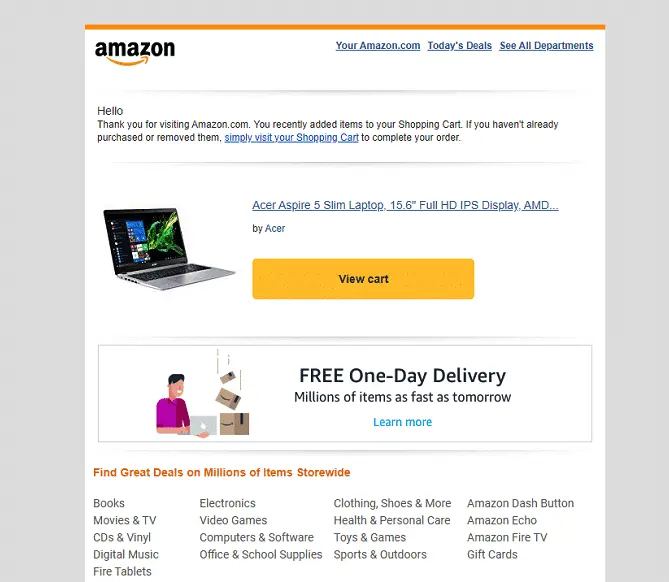
Not every shopper who adds products to their cart completes the checkout process during their first visit.
In fact, nearly 70% of online shopping carts are abandoned, representing one of the largest untapped revenue opportunities.
Many visitors leave because they are comparing prices, checking alternatives, facing unexpected costs, or simply getting distracted.
The good news is that these shoppers have already shown strong buying intent by reaching the checkout stage.
Cart abandonment campaigns help bring those potential buyers back before they purchase from a competing store instead.
The most effective recovery campaigns usually follow a structured sequence:
| Campaign Stage | Timing | Purpose |
| First Reminder | Within 1 Hour | Remind shoppers about items left behind |
| Follow-Up Email | Within 24 Hours | Reinforce product value and benefits |
| Final Reminder | Within 48–72 Hours | Create urgency and encourage completion |
Timing also plays a critical role. Recovery messages sent quickly tend to generate stronger engagement and higher checkout completion rates.
Here are some effective cart recovery campaigns that often include:
- Product images that remind shoppers what they viewed.
- Clear checkout links that reduce friction.
- Customer reviews that reinforce trust.
- Limited-time offers when appropriate.
- Shipping and return information that removes hesitation.
Many ecommerce stores focus entirely on attracting new visitors while ignoring shoppers already close to purchasing.
Recovering even a small percentage of abandoned carts can generate additional sales without increasing advertising spend or acquisition costs.
8. Use Customer Reviews to Increase Trust and Conversions
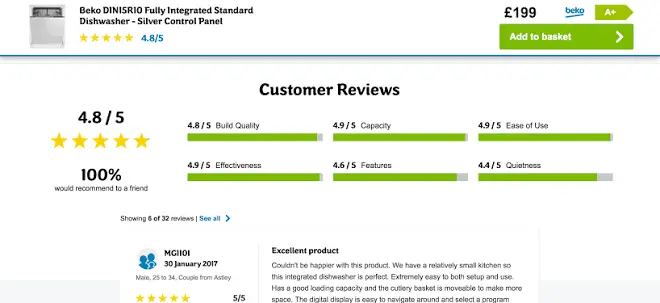
Customer reviews influence buying decisions long before a shopper reaches the checkout page.
According to PowerReviews, 99.9% of consumers read reviews before purchasing, while products with reviews can convert significantly better than products without them.
The mistake many ecommerce stores make is treating reviews as something to collect rather than something to showcase strategically.
Where reviews create the biggest impact:
- Product pages: Reviews help answer objections that product descriptions rarely address, including sizing, quality, durability, and real-world performance.
- Category pages: Displaying ratings directly within product listings helps shoppers compare options faster and increases click-through rates.
- Search results: Review stars displayed in search results can improve visibility and attract more qualified visitors.
- Advertising campaigns: Including ratings, testimonials, or customer feedback in ads often improves credibility and lowers buyer hesitation.
Not all reviews deliver equal value. The most persuasive reviews usually contain:
- Customer photos showing the product in use.
- Specific outcomes or results achieved.
- Comparisons against competing products.
- Detailed explanations instead of one-line ratings.
- Verified purchase indicators.
A product with 500 generic five-star reviews is often less persuasive than one with fewer detailed reviews explaining actual experiences.
That is why leading ecommerce brands actively request post-purchase feedback, encourage photo submissions, and highlight their most useful reviews throughout the buying journey.
When used correctly, customer reviews become more than social proof. They become a sales asset that helps future shoppers make faster and more confident purchasing decisions.
9. Improve Product Pages to Turn More Visitors Into Buyers
Most ecommerce stores spend heavily on driving traffic. But traffic alone does not generate revenue. What happens after a visitor lands on your product page decides whether they buy or leave.
The average ecommerce conversion rate sits at 1.81%. Top performing stores hit 4% or higher. That gap is almost entirely explained by how well product pages are built, not how much traffic they receive.
What separates high-converting product pages from average ones:
- Visuals matter more than copy: Brands that optimize product pages with high-quality imagery see conversion lifts of up to 40%. Multiple angles, zoom capability, and short demo videos reduce purchase hesitation significantly.
- Page speed is non-negotiable: A one-second load delay is associated with a 7% drop in conversions. On mobile, where 73% of ecommerce traffic arrives, slow pages cost sales every single day.
- Clarity beats cleverness: Shoppers need to understand pricing, variants, shipping timelines, and return policies without hunting for them. Hidden costs alone cause 48% of cart abandonments.
- Mobile experience is a separate priority: Mobile devices drive the majority of traffic, but convert far below desktop. Sticky add-to-cart buttons, large tap targets, and digital wallet support all directly improve mobile purchase rates.
- Social proof belongs near the buy button: Moving star ratings and review snippets closer to the add-to-cart button consistently lifts conversions. Most stores still bury reviews at the bottom of the page.
Improving your product pages does not require more traffic or a bigger budget. It requires identifying exactly where visitors drop off and fixing those points one by one.
Also Read: Conversion Rate Optimization Checklist: 25+ Actionable Steps to Increase Conversions in 2026
10. Offer Personalized Product Recommendations
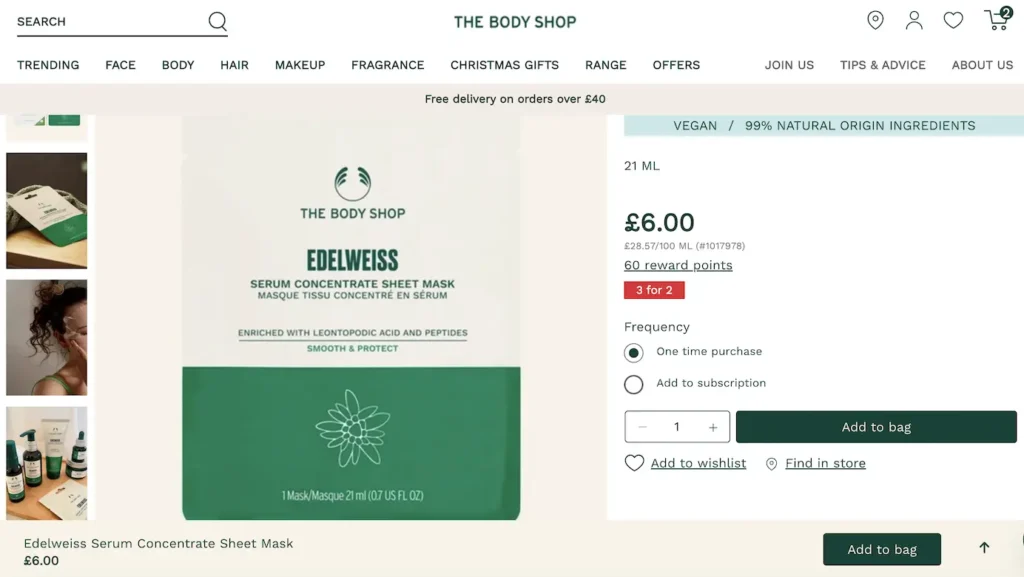
Shoppers do not want to scroll through hundreds of irrelevant products. They expect the store to already know what they are looking for.
80% of consumers are more likely to purchase from brands that offer personalized experiences. And product recommendations alone account for 26% of total ecommerce revenue despite driving just 7% of traffic.
The most effective spots to place recommendations across your store:
- Homepage: Show returning visitors products based on past browsing or purchase history instead of the same generic bestsellers everyone sees.
- Product pages: “Frequently bought together” and “You may also like” sections keep shoppers exploring rather than leaving.
- Cart page: Suggest complementary items before checkout to lift order value without adding any friction.
- Post-purchase emails: Recommend related products right after an order while purchase intent is still fresh.
- Search results: Personalized ranking based on individual behavior helps shoppers find relevant products faster.
Top-performing brands that invest in personalization generate 40% more revenue than those offering generic store experiences. The difference is not always a better product. It is a smarter, more relevant shopping journey.
11. Build a Loyalty Program That Encourages Repeat Orders
Most ecommerce brands pour their entire budget into attracting new buyers. But 65% of a store’s revenue already comes from existing customers who have already purchased before.
Even repeat buyers spend nearly 67% more per order than first-time shoppers. Retaining them is not just cheaper. It is significantly more profitable than chasing new ones through paid channels.
To do so, you can build a loyalty program that gives buyers a clear reason to return without relying on constant discounts or heavy ad spend to pull them back in.
Here’s what an effective ecommerce loyalty program should include:
| Element | Purpose |
| Points on every purchase | Reward buying behavior and build habitual ordering |
| Tiered membership levels | Motivate higher spend to unlock better benefits |
| Exclusive member offers | Create value beyond standard promotions |
| Early access to new products | Give loyal buyers something non-members cannot get |
| Referral rewards | Turn satisfied customers into a word-of-mouth channel |
The biggest mistake most ecommerce stores make is building a program that only rewards discounts. That trains buyers to wait for deals rather than purchase at full price. The strongest programs mix points, experiences, and recognition to build genuine brand attachment that keeps customers coming back on their own.
Read More: 8 Proven Ecommerce Retargeting Strategies for 2026
12. Use Short-Form Video Content to Showcase Products
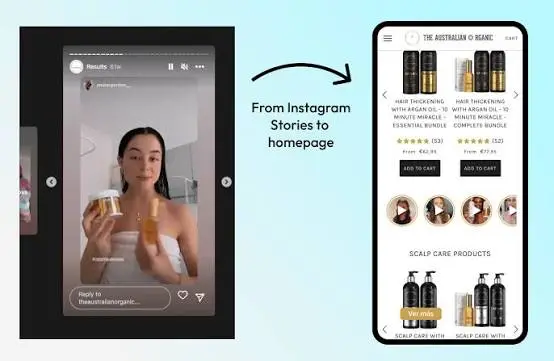
A 30-second clip of your product in action will often outperform long descriptions every single time.
Today’s buyers don’t want to read what a product does. They want to instantly see it working. Around 93% of people say video has influenced their purchase decision, and 63% prefer short videos over any other format when researching products.
This shift has completely changed how ecommerce attention and sales are distributed. Platforms like TikTok, Instagram Reels, and YouTube Shorts are no longer just for entertainment. They are now where discovery, evaluation, and purchase decisions happen in real time.
What makes short-form video so powerful is not high-end production. It is clarity, speed, and relevance. A simple 15-second clip showing a real problem being solved will usually beat a polished but disconnected brand video. People respond more to authenticity than perfection.
The formats that consistently perform best include:
- Product demos that show exactly how the item works in a real environment, removing confusion and hesitation.
- Before and after transformations that make outcomes instantly visible, especially effective for beauty, fitness, home, and lifestyle categories.
- UGC-style videos recorded by real users or creators that feel natural and trustworthy, often outperforming branded content in reach and conversions.
- Shoppable videos with direct links that reduce friction between discovery and purchase, turning attention into immediate action.
Brands seeing the fastest growth are not focusing on making fewer, perfect videos. They are focusing on consistent, high-volume output across multiple platforms. In short-form video, consistency and speed always outperform perfection.
Why Choose Codexxa for Ecommerce Digital Marketing?
Growing an ecommerce brand today is not about running ads or posting content randomly. It is about building a system where every channel works together to drive consistent revenue.
At Codexxa, we have worked with 100+ ecommerce brands across multiple industries and markets. That experience gives us a clear understanding of what actually moves the needle in ecommerce growth, not theory, but real performance patterns.
Here is what working with us looks like in practice:
- We Build End-to-End Ecommerce Growth Strategy: Every brand has different margins, audiences, and acquisition costs. We start by understanding your numbers deeply and then design a strategy that actually fits your business reality, not a generic playbook.
- We Run Fully Connected Multi-Channel Growth Systems: SEO, Google Ads, Meta ads, influencer marketing, email, and content are not treated as separate efforts. We connect them so each channel feeds the next and compounds your results.
- We Focus on Revenue, Not Vanity Metrics: Traffic and impressions mean nothing if they do not convert. Every campaign we run is designed around bringing in qualified buyers and increasing overall store profitability.
- We Turn Data Into Continuous Growth Decisions: We track what actually matters in ecommerce, from CAC and ROAS to conversion rates and repeat purchase behavior, and use that data to constantly refine performance.
- We Move Fast, Because Ecommerce Moves Faster: Markets shift quickly, trends change overnight, and opportunities do not wait. Our team stays hands-on so your store adapts and grows without delays.
If you’re serious and ready to grow your ecommerce business with digital marketing, choose none other than Codexxa. We’re built to scale ecommerce with performance that grows your business. Contact us today and see how we can take your business to the next level.
Before you go, read this: Ecommerce Performance Metrics: 12 KPIs Every Online Store Must Track in 2026
Conclusion
Growing your ecommerce business with digital marketing is not about doing everything at once or chasing every new trend you see online.
It’s more about understanding what brings revenue into your ecommerce store and then doubling down on those channels instead of overcomplicating things.
Because at the end of the day, ecommerce growth is pretty straightforward when the strategy is right, the execution is consistent, and you’re tracking the right metrics. And that’s how your ecommerce business will grow with digital marketing in a real way.
Add Comment