

How to Use Meta Ads for B2B Lead Generation [11+ Strategies]
Meta Ads have changed how B2B businesses attract potential customers, moving beyond traditional search-driven lead generation methods.
With precise audience targeting, personalized messaging, and data-backed optimization, businesses can reach decision-makers before they actively search for solutions.
However, many B2B companies struggle with Meta Ads because campaigns often focus on clicks instead of qualified opportunities.
A successful strategy requires understanding audience intent, choosing the right campaign approach, and optimizing every stage of the conversion journey.
In this blog, we’ll explore Meta Ads strategies for B2B lead generation, campaign formats, and key performance metrics that help businesses drive measurable growth.
Why Do Meta Ads for B2B Fail Most of the Time?
Meta Ads can generate valuable B2B leads, but poor execution often turns campaigns into expensive traffic-generation exercises.
The biggest challenge is that B2B businesses frequently apply B2C advertising methods without considering longer decision-making cycles and complex buying processes.
Common reasons behind unsuccessful B2B Meta Ads campaigns include:
- Targeting broad audiences without identifying the ideal customer profile
- Optimizing for clicks instead of qualified business enquiries
- Using generic ad messages that fail to address buyer challenges
- Sending users to low-converting landing pages
- Ignoring lead nurturing after form submissions
B2B success on Meta requires a strategic approach where audience quality, campaign objectives, creative messaging, and follow-up systems work together.
When these elements align, Meta Ads become a reliable channel for generating high-value business opportunities instead of just collecting low-intent leads.
Is Using Meta Ads for B2B Profitable?
Yes, Meta Ads can be profitable for B2B businesses when campaigns are designed around qualified lead generation rather than simple engagement metrics.
Unlike traditional B2B channels that depend heavily on active searches, Meta Ads allow businesses to create demand by reaching relevant decision-makers across Facebook and Instagram.
The profitability depends on factors such as:
- Audience quality: Reaching professionals who match your ideal customer profile
- Offer strength: Promoting valuable resources, consultations, or solutions that encourage action
- Creative relevance: Addressing specific business challenges through clear messaging
- Conversion process: Using optimized landing pages and effective lead follow-up systems
A successful B2B Meta Ads campaign focuses on customer acquisition value instead of only reducing cost per lead.
Key metrics that determine profitability:
| Metric | Why It Matters |
| Cost Per Qualified Lead | Shows whether campaigns attract valuable prospects |
| Lead-to-Customer Conversion Rate | Measures actual sales impact |
| Customer Acquisition Cost | Helps evaluate overall campaign efficiency |
| Return on Ad Spend (ROAS) | Shows revenue generated from advertising investment |
For B2B companies with high customer lifetime value, even a small number of qualified leads can create significant business returns when campaigns are optimized correctly.
Meta Ads become profitable when businesses combine accurate targeting, strong offers, conversion-focused creatives, and consistent performance analysis.
Best Meta Ad Formats for Winning B2B Campaigns
Choosing the right Meta Ad format plays a major role in how effectively B2B businesses attract, educate, and convert potential buyers.
Different formats support different stages of the B2B funnel, from creating awareness among decision-makers to capturing high-intent enquiries.
The best-performing formats for B2B campaigns include:
| Meta Ad Format | Best Use Case | Key Advantage |
| Lead Ads | Collecting business enquiries directly | Reduces friction with instant forms |
| Video Ads | Building trust and explaining solutions | Demonstrates expertise through engaging content |
| Carousel Ads | Showcasing multiple products, services, or benefits | Helps communicate complex offerings clearly |
| Retargeting Ads | Reaching users who already interacted with your brand | Improves conversion opportunities through repeated engagement |
1. Meta Lead Ads for Direct Lead Collection
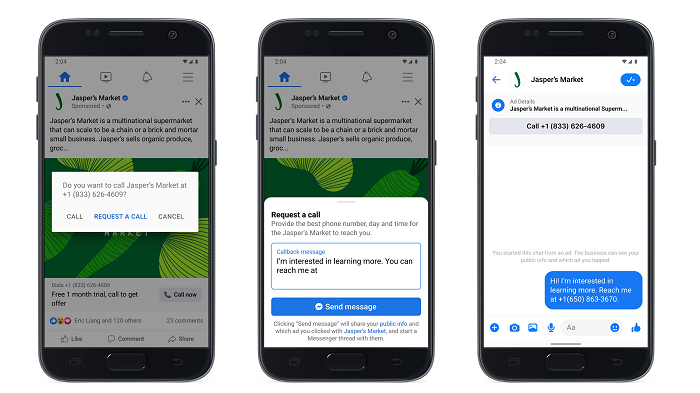
Source: Social Media Knowledge
Meta Lead Ads allow businesses to capture prospect information without sending users to external landing pages. This reduces conversion barriers and creates a smoother enquiry process.
For B2B companies, these ads work well when promoting:
- Free consultations
- Product demos
- Industry reports
- Case studies
- Strategy sessions
2. Video Ads for Building Brand Authority
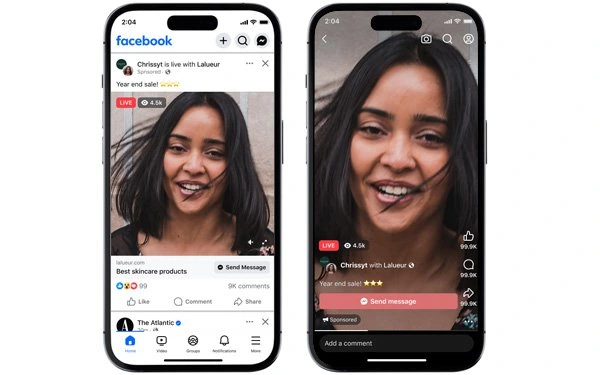
Source: Media Post
Video Ads help B2B brands communicate complex solutions through educational and trust-building content.
Businesses can use videos to showcase:
- Customer success stories
- Product demonstrations
- Expert insights
- Industry challenges and solutions
3. Carousel Ads for Showcasing Multiple Solutions
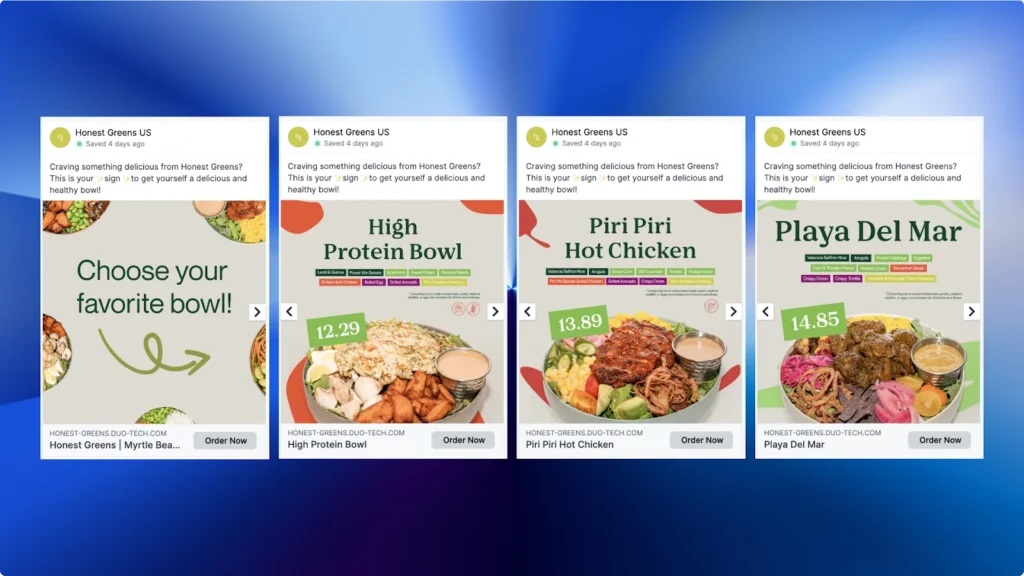
Source: Foreplay
Carousel Ads allow businesses to highlight multiple services, features, or benefits within a single advertisement.
They are useful for companies offering different solutions because users can explore various offerings before taking action.
4. Retargeting Ads for Re-Engaging Interested Prospects
Most B2B buyers need multiple interactions before making a decision. Retargeting Ads help businesses reconnect with users who visited websites, engaged with content, or interacted with previous campaigns.
By maintaining consistent visibility, businesses can move interested prospects closer to conversion while improving overall campaign efficiency.
Meta Ads for B2B Lead Generation: 11+ Strategies That Work
Generating B2B leads through Meta Ads isn’t about spending more budget. It depends on reaching the right decision-makers with relevant messaging at the right stage of their buying journey.
The following strategies are built around improving lead quality, reducing acquisition costs, and increasing the likelihood of converting enquiries into long-term customers.
1. Define Your Ideal Customer Profile Before Running Campaigns
Many campaigns fail before spending their first advertising dollar because businesses never define who their ideal customers actually are.
An Ideal Customer Profile (ICP) goes beyond demographics by identifying industry, company size, annual revenue, employee count, job roles, buying challenges, and purchasing intent.
Instead of targeting everyone interested in “Digital Marketing,” narrow audiences using attributes that reflect actual buying potential.
For example, a B2B SaaS company targeting HR software should prioritize HR Directors, Operations Managers, and founders from mid-sized organizations.
This approach improves lead quality because Meta’s algorithm receives stronger conversion signals from relevant prospects instead of random audience interactions.
Before launching campaigns, document these ICP elements:
| ICP Component | Example |
| Industry | Manufacturing, SaaS, Healthcare |
| Company Size | 50–500 Employees |
| Decision-Maker | Founder, Marketing Director, CEO |
| Primary Challenge | Low-quality leads, slow sales pipeline |
| Business Goal | Increase qualified enquiries |
A well-defined ICP reduces wasted advertising spend while improving campaign efficiency across every stage of the B2B sales funnel.
2. Target Decision-Makers with Precise Audience Segmentation
B2B purchases rarely depend on a single individual. However, decision-makers remain the most influential people throughout the buying process.
Instead of targeting broad business interests, build audiences around leadership positions, professional behaviors, industry-specific interests, and company characteristics whenever available.
Combining multiple audience signals often produces better campaign performance than relying on one targeting option alone.
For example, rather than targeting “Marketing,” combine audiences interested in CRM platforms, business software, digital transformation, and entrepreneurship.
This layered approach improves relevance because advertisements appear before professionals already engaged with business-related topics.
Smaller, highly qualified audiences frequently outperform larger audiences by producing stronger engagement and more meaningful business conversations.
3. Use Custom Audiences to Reach Existing Prospects
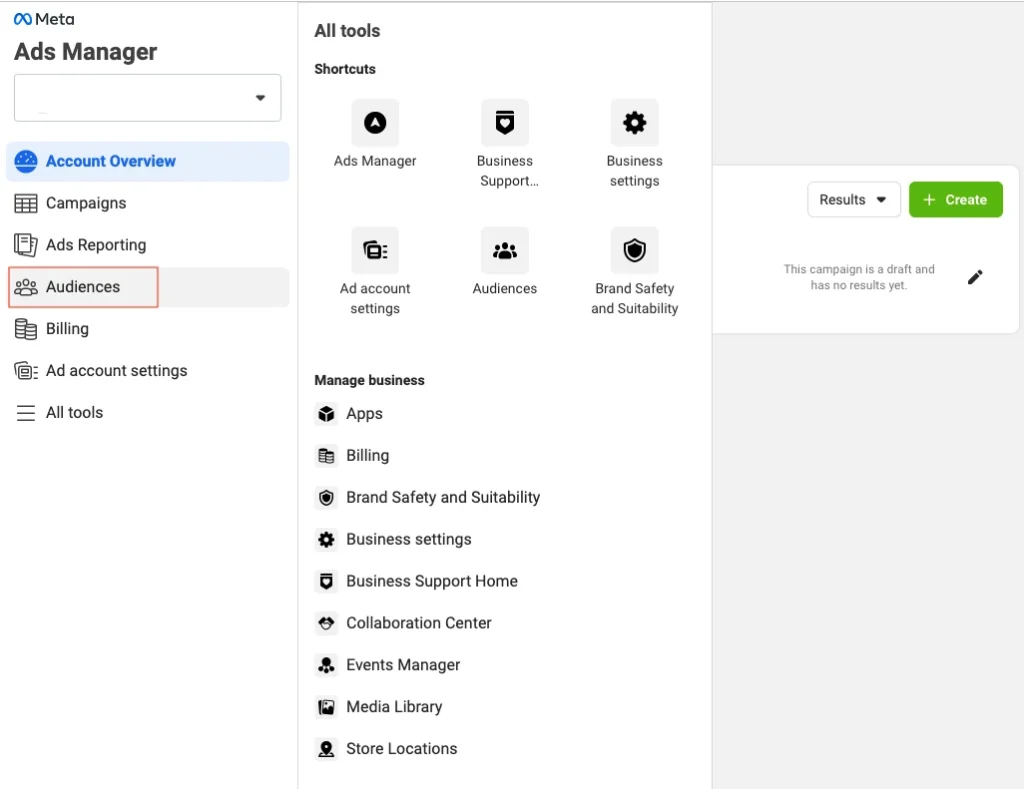
Most website visitors never convert during their first interaction, especially within longer B2B purchasing journeys.
Custom Audiences allow businesses to reconnect with users who already visited important website pages, watched videos, submitted forms, or engaged with previous advertisements.
Instead of restarting conversations, businesses continue nurturing prospects already familiar with their products or services.
High-performing Custom Audiences commonly include:
- Website visitors from the last 30–180 days
- Product or service page visitors
- Previous lead form submissions
- Video viewers with high watch percentages
- CRM contacts excluding existing customers
Retargeting warm audiences generally produces stronger conversion opportunities because trust already exists before another advertisement appears.
4. Create Lookalike Audiences from High-Quality Customer Data
Lookalike Audiences help businesses discover new prospects who closely resemble their highest-value customers instead of random platform users.
The quality of the source audience determines the quality of future leads generated through Meta’s machine learning systems.
Rather than uploading thousands of unqualified contacts, build Lookalike Audiences using:
- Existing customers
- Closed business opportunities
- Sales-qualified leads
- High-value clients
- Long-term customers
Using revenue-generating customers as the source enables Meta to identify similar users with stronger conversion potential.
This strategy supports scalable growth without sacrificing lead quality as advertising budgets increase.
5. Offer Valuable Lead Magnets to Attract Potential Buyers
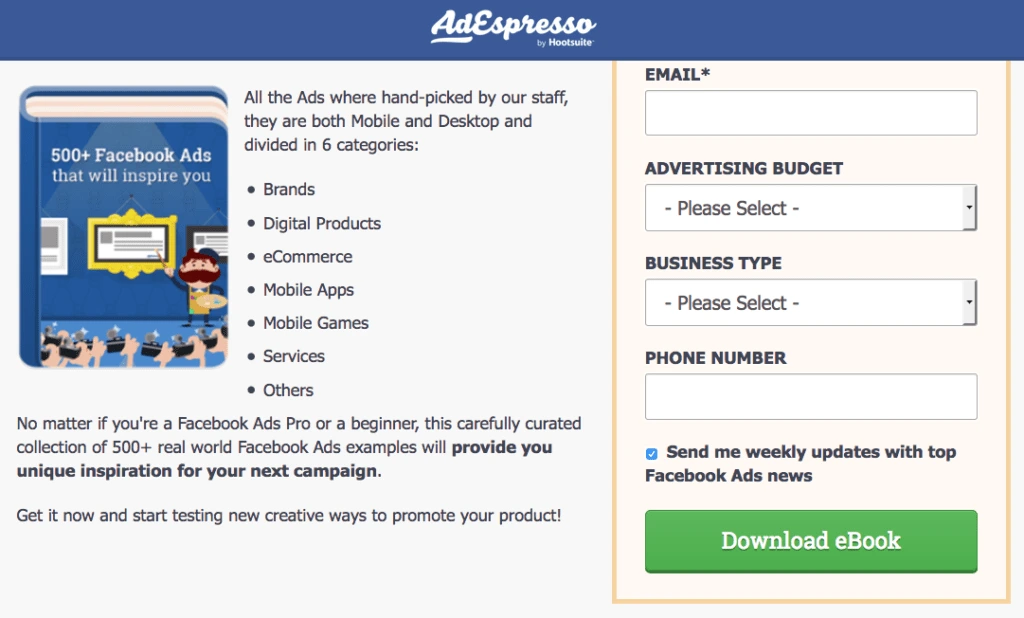
Very few B2B buyers request demonstrations immediately after discovering a new brand through social media advertisements.
Businesses generate better results by offering resources that solve immediate business problems before asking prospects for purchasing commitments.
High-converting lead magnets include:
- Industry reports
- Practical checklists
- ROI calculators
- Templates
- Benchmark reports
- Case studies
Every lead magnet should answer a specific business question instead of promoting company achievements.
When prospects receive immediate value, they become significantly more willing to continue conversations with your sales team.
6. Use Meta Lead Ads to Capture Qualified Business Leads
Every additional click between an advertisement and conversion increases the likelihood of losing potential customers.
Meta Lead Ads simplify the enquiry process by allowing users to submit business information without leaving Facebook or Instagram.
To improve lead quality, avoid requesting only basic contact information.
Instead, include qualification questions such as:
- Company size
- Monthly marketing budget
- Required service
- Business industry
- Project timeline
These additional fields help marketing and sales teams prioritize genuine opportunities while reducing time spent on unqualified enquiries.
A shorter form may generate more leads, but a smarter qualification process consistently produces better business outcomes.
7. Create Problem-Focused Ad Creatives Instead of Sales Pitches
B2B audiences rarely respond to advertisements that simply promote services, features, or company achievements without addressing their business challenges.
Decision-makers engage with content that helps them identify problems, understand solutions, and evaluate possible improvements for their organizations.
Instead of writing ads like “We provide the best marketing solutions,” focus on messaging that highlights a specific pain point and its business impact.
For example:
| Weak Ad Message | Problem-Focused Ad Message |
| Get Our Digital Marketing Services | Struggling With Low-Quality Leads? Discover How B2B Brands Improve Lead Generation |
| Grow Your Business With Our Agency | Reduce Wasted Ad Spend With Data-Driven Campaign Optimization |
A strong B2B Meta Ad creative usually follows this structure:
- Identify the problem your audience already faces
- Explain the impact of ignoring that problem
- Present your solution as the next logical step
- Add proof through results, insights, or customer experiences
The goal is not to immediately sell but to create relevance. When advertisements connect with real business challenges, prospects are more likely to stop scrolling, engage with the content, and enter the sales journey.
8. Promote Case Studies and Industry Insights to Build Trust
B2B buyers rarely make decisions based only on advertisements. They need evidence that a business understands their challenges and can deliver measurable outcomes.
Case studies, industry reports, and educational resources help transform Meta Ads from promotional messages into credibility-building touchpoints.
Instead of advertising “We deliver excellent results,” showcase proof through:
- Before-and-after performance improvements
- Customer success stories
- Campaign outcomes and lessons learned
- Industry research and actionable insights
For example, a digital marketing agency can promote a case study showing how a B2B company increased qualified leads through a targeted advertising strategy.
This type of content reduces buyer hesitation because prospects can visualize similar results for their own business.
The key is promoting insights that help potential customers make better decisions, not just highlighting your brand achievements. Value-first advertising builds trust before the sales conversation begins.
9. Retarget Engaged Users to Increase Conversion Opportunities
B2B buyers usually require multiple interactions before they are ready to start a business conversation or request a consultation.
A prospect may visit your website, watch a video, download a resource, or interact with an advertisement but still need additional trust before converting.
Retargeting campaigns help businesses continue these conversations by showing relevant messages based on previous interactions.
Effective retargeting audiences include:
- Website visitors who viewed important service pages
- Users who opened but did not submit lead forms
- Video viewers who watched significant portions
- Previous content downloaders
The messaging should also change depending on the user’s previous action.
For example, someone who downloaded a guide may respond better to a case study, while someone who visited a pricing page may need a consultation offer.
Strategic retargeting improves conversion efficiency because businesses focus advertising spend on users who have already shown interest.
10. Test Different Ad Creatives, Audiences, and Messaging
Successful Meta Ads campaigns are not built from assumptions. They are created through continuous testing, analysis, and optimization.
Even experienced marketers cannot always predict which combination of audience, creative, and messaging will generate the highest-quality B2B leads.
Testing helps identify what actually influences conversion performance.
Key elements to experiment with include:
| Testing Area | Examples |
| Creative Format | Video, image, carousel |
| Messaging Angle | Cost reduction, growth, efficiency |
| Audience Type | Interest, custom, lookalike |
| Offer | Audit, consultation, resource |
However, testing too many variables at once makes it difficult to understand what improved results.
A structured approach where one major element changes at a time creates clearer insights.
Over time, these learnings help businesses build campaigns based on customer behavior rather than assumptions.
11. Connect Meta Ads with CRM Data to Improve Lead Quality
Generating leads is only the first step of a successful B2B advertising strategy. The real objective is identifying which campaigns create revenue opportunities.
Many businesses optimize campaigns based only on lead volume, but a large number of leads does not always mean better results.
Connecting Meta Ads with CRM systems allows businesses to track the complete customer journey.
This helps identify:
- Which campaigns generate sales-qualified leads
- Which audiences create higher-value customers
- Which advertisements influence revenue growth
- Where prospects drop during the sales process
CRM-based optimization shifts the focus from collecting contacts to creating measurable business growth.
12. Continuously Optimize Campaigns Using Performance Insights
Launching Meta Ads is not the final step. Long-term success depends on regularly analyzing performance and improving campaign decisions.
Audience behavior, competition, and advertising costs continue changing, which means campaigns require consistent refinement.
Businesses should review performance data to identify:
- High-performing audience segments
- Best-performing creative formats
- Most effective messaging angles
- Campaigns generating quality opportunities
Optimization decisions should focus on business outcomes rather than surface-level metrics.
For example, reducing cost per lead may appear successful, but if lead quality decreases, the campaign becomes less valuable.
Continuous optimization helps businesses maintain efficient advertising performance, improve lead quality, and build a scalable B2B acquisition system.
The Takeaway
Meta Ads can work extremely well for B2B, but only when campaigns are built around qualification, trust, and revenue.
The strongest campaigns do not chase cheap clicks. They attract decision-makers, filter poor-fit leads, and guide buyers toward meaningful action.
That is why strategy matters more than budget. When messaging, targeting, retargeting, and CRM tracking work together, results become far more predictable.
B2B brands that win with Meta Ads usually focus on:
- clear customer profiles
- value-driven creatives
- qualified lead capture
- consistent optimization
In the end, Meta Ads are most profitable when they support the full sales journey, not just the first click.
Want to run Meta Ads for B2B brand? Contact us today and see how we can scale your B2B business with Meta Ads!
Add Comment