

15 Local SEO Tips for Small Businesses to Dominate Nearby Search in 2026
Local search is where small businesses win nearby customers who are ready to call, visit, or buy. Google has reported that 82% of consumers use search engines to find information about local businesses, which makes local SEO a direct revenue channel, not just a visibility tactic.
How local SEO helps small businesses:
- Appear where nearby customers are already searching.
- Turn local visibility into calls, visits, and inquiries.
- Build trust through reviews, accurate business details, and location relevance.
Google also notes that searchers use Google to find business phone numbers, locations, and opening hours. That is why Google Business Profile, local pages, and consistent business information matter so much.
In this blog, we’re sharing the most important local SEO tips for small businesses to help you dominate nearby searches. Let’s check that out!
What is Local SEO and Why Does It Matter for Small Businesses?
Local SEO is the process of optimizing your online presence so your business appears in location-based searches and Google Maps results.
It helps Google understand where your business is, what you offer, and who you should show it to in nearby search results.
Local SEO matters because it directly influences real customer actions, not just website traffic.
For example, if someone searches “cafes near me”, Google prioritizes nearby bakeries with strong reviews, complete profiles, and local relevance.
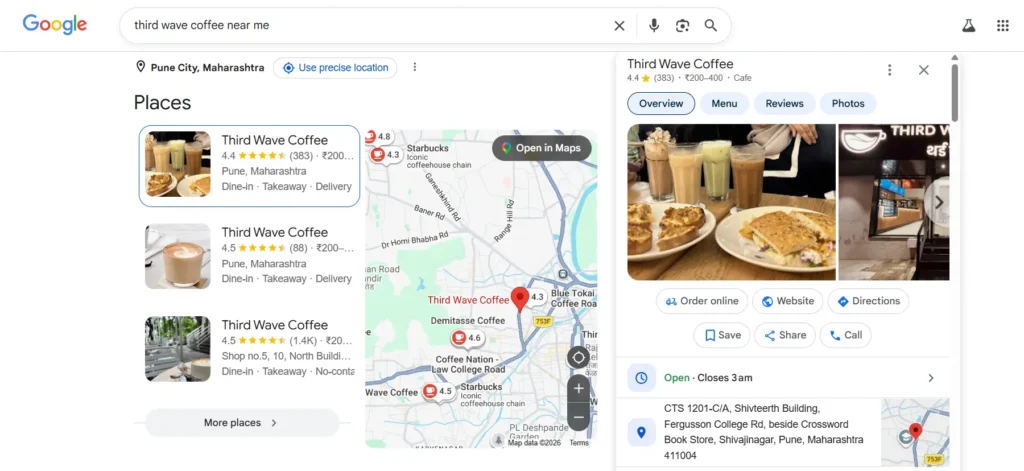
According to recent stats, around 76% of people who perform a local search on their smartphone visit a business within 24 hours, and nearly 28% of those searches lead to a purchase.
Here’s why Local SEO matters for small businesses:
- Helps you appear when customers are actively searching nearby services.
- Increases phone calls, direction requests, and walk-in traffic.
- Builds trust through reviews, ratings, and accurate business information.
- Allows small businesses to compete with larger brands in local markets.
- Converts high-intent searches into real customers faster than traditional marketing.
In simple terms, Local SEO connects your business with people who are already ready to buy in your area.
Now, let’s explore the most practical local SEO tips for small businesses. These strategies will help you improve visibility, strengthen your local SEO performance, and attract more nearby customers.
Tip 1 — Claim and Fully Optimize Your Google Business Profile
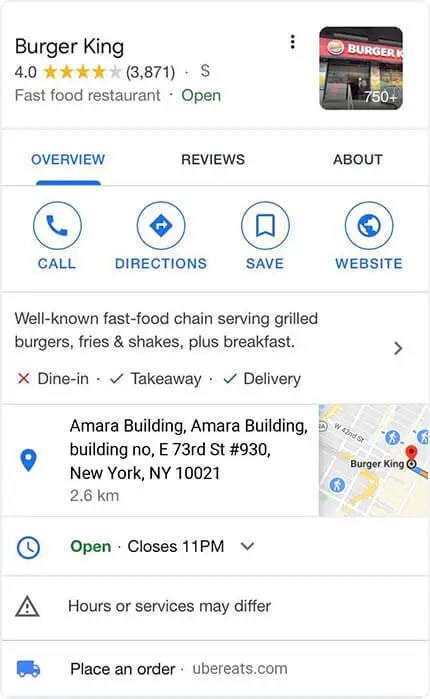
Your Google Business Profile is one of the strongest local SEO assets for improving visibility in Google Maps and nearby searches.
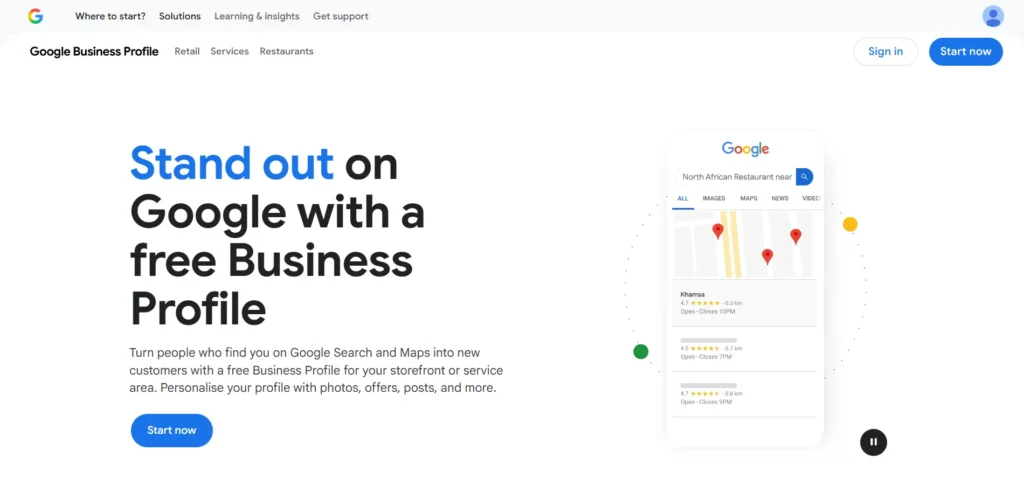
When someone searches for a nearby service, Google often displays Business Profiles before showing traditional organic website results on search pages. That means your profile directly influences whether customers call, visit, message, or completely ignore your business in local results.
Many small businesses create a profile but never fully optimize it, which limits visibility, engagement, and potential customer conversions significantly.
A fully optimized Google Business Profile helps Google understand your business category, services, location relevance, credibility, and customer engagement signals.
Businesses with photos on their profiles receive more direction requests and website clicks compared to businesses without visual content.
Your profile should always include:
- Accurate business name, address, and phone number.
- Primary and secondary business categories.
- Updated business hours and holiday schedules.
- Real business photos, team photos, and storefront images.
- Service descriptions with local SEO keywords naturally included.
- Website link, appointment link, and contact information.
- Regular review responses and customer engagement.
For example, a restaurant in Pune with updated photos, reviews, menus, and local keywords will usually outperform incomplete local listings.
Google also uses profile activity signals like updates, reviews, photos, and customer interactions to understand business trust and relevance locally.
Important Google Business Profile optimization actions:
- Upload new photos consistently to keep your listing active.
- Select the most accurate business category possible.
- Write a keyword-focused business description naturally.
- Add every important service your business provides.
- Reply professionally to both positive and negative reviews.
- Keep your business information updated across all seasons.
A complete and active Google Business Profile improves local visibility, strengthens trust, and increases chances of converting nearby searchers into customers.
Tip 2 — Get Your NAP Consistent Everywhere Online
NAP stands for Name, Address, and Phone Number, and consistency here directly impacts your local SEO trust and visibility.
Google uses business information consistency to verify whether your business details are accurate across different online platforms and directories.
If your address, phone number, or business name appears differently online, Google may treat those listings as separate businesses, and it can weaken your local search credibility significantly.
Your NAP information should stay exactly consistent across:
- Google Business Profile.
- Official business website.
- Local directories and citations.
- Facebook and social media profiles.
- Review platforms and listing websites.
Keeping NAP consistency everywhere helps Google trust your business information and improves visibility for nearby local intent searches.
Tip 3 — Target Local Keywords the Right Way
Local keywords help Google understand where your business operates and which nearby searches your website should appear for online.
Instead of targeting broad keywords like “dentist” or “coffee shop,” focus on location-based searches with clear local intent attached.
For example, “best dentist in India” or “coffee shop near me” target users actively searching for nearby business solutions immediately.
These keywords usually attract higher-intent traffic because users already know what service they need and where they want it.
Your local SEO keywords should naturally appear within:
- Page titles and meta descriptions.
- Google Business Profile descriptions.
- Service pages and local landing pages.
- Website headings and content sections.
- Image alt text and internal links.
Google also understands conversational searches better now, making long-tail local keywords more valuable for small business local SEO strategies. For example, users may search “affordable salon near me open now” instead of typing short keywords like “salon near me”.
That is why understanding real customer search behavior matters more than stuffing exact-match keywords repeatedly throughout your website content.
Strong local keyword targeting improves relevance, increases qualified traffic, and helps your business rank for nearby customer searches.
Tip 4 — Build and Manage Online Reviews Actively
Online reviews do more than building trust. They shape how Google and customers judge your business locally.
A business with strong recent reviews often looks more active, credible, and relevant than a listing with no feedback. For example, a local dentist with steady 4.8-star reviews and detailed customer comments will usually attract more clicks than a similar clinic with outdated ratings.
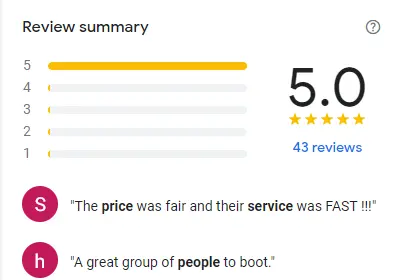
What matters most:
- Ask for reviews after each successful customer interaction.
- Reply to reviews quickly and professionally.
- Keep collecting reviews consistently instead of in sudden bursts.
- Encourage customers to mention the service and location naturally.
Google uses review signals to understand trust and customer satisfaction, which makes reviews a direct part of local visibility.
Tip 5 — Create Location-Specific Pages on Your Website
If your business serves multiple cities or areas, one generic service page usually is not enough for strong local rankings. Google wants clear location relevance.
That is how dedicated local pages help businesses appear in city-based search results more consistently.
For example:
“Digital Marketing Agency in New York”
“SEO Services in Dubai”
“Web Design Company in India”
Each page gives search engines a stronger context about where your services are available and which audience the page targets.
A high-quality location page should contain:
- Area-specific service information.
- Locally relevant keywords naturally placed.
- Customer reviews from that location.
- Unique content focused on that city.
- Nearby landmarks or service coverage details.
Avoid creating duplicate city pages with only location names changed because that weakens content quality and local SEO performance.
Well-optimized local pages increase visibility for nearby searches and help small businesses attract highly targeted local traffic.
Tip 6 — Get Listed in High-Quality Local Directories
Local directories help search engines verify your business information while improving local visibility across multiple online discovery platforms simultaneously.
When your business appears consistently on trusted directories, Google gains stronger confidence in your business legitimacy and local relevance.
Popular directories like Yelp, Justdial, Yellow Pages, Bing Places, and industry-specific platforms can strengthen your local SEO authority significantly.
However, quality matters more than quantity because spammy or low-quality directories can weaken trust instead of improving local rankings.
Focus on directories that:
- Have real traffic and strong credibility.
- Match your business industry or location.
- Allow complete business information and reviews.
- Support website links and contact details.
Every listing should contain identical NAP details, website URLs, business categories, and updated contact information for consistency purposes.
Tip 7 — Optimize Your Website for Mobile and Page Speed
Most local searches now happen on smartphones, which makes mobile experience a direct ranking and conversion factor for businesses.
If your website loads slowly or feels difficult on mobile devices, users usually leave before taking any meaningful action online.
Google also uses mobile-first indexing, which primarily means that it evaluates the mobile version of your website for ranking purposes.
Why mobile speed optimization matters:
- 53% of mobile users leave websites taking longer than 3 seconds to load.
- Mobile-friendly websites improve engagement, retention, and local conversion rates.
- Faster websites create smoother experiences for nearby customers searching with immediate purchase intent.
- Page speed directly impacts user experience and overall website performance signals.
Simple improvements can significantly improve page speed:
- Compress large images before uploading.
- Reduce unnecessary plugins and scripts.
- Use responsive, mobile-friendly layouts.
- Enable browser caching and performance optimization.
By keeping a smooth mobile experience, it keeps visitors engaged longer and increases the chances of turning local search traffic into real customers.
Tip 8 — Use Local Schema Markup to Help Google Understand Your Business
Schema markup works like extra business context added behind your website content so search engines understand information more accurately.
It helps Google identify:
- Who you are.
- Where your business operates.
- Which services you provide?
- How customers can contact you.
For example, a local bakery using schema markup can clearly show business hours, reviews, address, and contact details directly to Google.
This reduces confusion and strengthens location relevance for nearby searches connected to your products or local business services.
The most useful local schema details usually include:
- Business category.
- Address and phone number.
- Operating hours.
- Customer ratings.
- Website and social profiles.
Many small businesses ignore schema completely, even though it helps search engines process local business information more efficiently.
Tip 9 — Create Locally Relevant Content Consistently
Local SEO is not only about business listings. Your website content also helps Google understand local relevance and expertise clearly.
Publishing location-focused content consistently increases opportunities to rank for nearby searches connected to your products or business services.
For example, a real estate agency in New York can create blogs around:
- Best neighborhoods for families in Brooklyn.
- Property investment trends in Manhattan.
- First-time homebuyer tips in New York City.
This type of content targets real local search behavior while building stronger topical authority within specific geographic service areas.
Locally relevant content can include:
- Area-specific blogs and guides.
- Local event or community updates.
- Location-focused service pages.
- Customer success stories from nearby areas.
- Frequently searched local questions.
Google prioritizes helpful content created for real users, especially when it demonstrates expertise and genuine local business relevance.
In this way, creating consistent local content improves search visibility, builds trust with nearby audiences, and increases long-term local organic traffic steadily.
Tip 10 — Build Local Backlinks from Trusted Sources
Local backlinks are links from other websites in your area or industry that point back to your business website. They act as trust signals that help Google understand your website authority and relevance within a specific local market.
When trusted local websites mention your business, it strengthens your credibility and improves your chances of ranking in local search results.
High-value local backlink sources include:
- Local news websites and online newspapers.
- Industry-specific blogs and publications.
- Local business associations and chambers of commerce.
- Community websites and event listings.
- Partner with businesses and suppliers in your area.
While not all backlinks carry equal value. Links from spammy or irrelevant sites can harm your SEO performance instead of helping it. But strong local backlinks improve domain trust, increase referral traffic, and support higher rankings in competitive local search results.
Tip 11 — Leverage Social Media for Local Visibility
Most small businesses treat social media as branding, but it also influences how local customers discover and trust your business online. When people see your business repeatedly in their feed, they start recognizing it before they even search for it on Google.
For example, someone in your city might not search for your café today, but after seeing your Instagram reels and tagged location a few times, they eventually look it up on Google Maps.
That shift from “scrolling audience” to “searching customer” is where social media supports local SEO indirectly.
Instead of random posting, focus on actions that increase local discovery:
- Tag your exact business location in every post.
- Share real customer visits and experiences.
- Post short updates about offers, events, or daily activity.
- Encourage customers to tag your business when they visit.
- Engage with nearby businesses and local pages.
These signals don’t just build followers — they create repeated local exposure that drives branded searches later.
Over time, this increases direct searches for your business name, which strengthens your local authority in Google’s system.
Tip 12 — Optimize for Voice Search and Conversational Queries
People don’t speak the way they type, and that difference is exactly what voice search changes for local SEO.
Instead of short keywords, users ask complete questions using natural, conversational language on mobile assistants. For example, someone won’t just type “electrician Chicago,” they’ll ask “Who is a reliable electrician near me open right now?”
These searches are usually urgent, location-based, and action-oriented, which means intent is much clearer than standard queries.
Voice search patterns often sound like real conversations:
- “Where can I find…”
- “Who offers… near me”
- “Is there a… open now”
- “How much does… cost in my area”
- “Best option for…”
To optimize for this, your content should directly answer questions instead of only targeting keywords. Pages that use simple, direct explanations have a higher chance of being picked up for voice responses.
In practice, this means writing in a way that mirrors how customers actually speak when they need a local service quickly.
Tip 13 — Track Your Local SEO Performance with the Right Metrics
Most businesses invest in local SEO but never track what actually drives calls, visits, or real customer actions.
Without measurement, you cannot understand which efforts are bringing nearby customers and which strategies are wasting resources.
Local SEO success is not about rankings alone. It is about actions users take after finding your business online.
Key local SEO metrics to monitor:
- Google Business Profile views and interactions.
- Direction requests from Google Maps.
- Phone calls generated from local listings.
- Website visits from local search traffic.
- Search queries triggering your business listing.
- Conversion actions like bookings or inquiries.
Google provides built-in insights that show how customers discover your business and what actions they take afterward.
Businesses that track these metrics regularly can adjust their strategy faster and improve visibility where it matters most.
Tip 14 — Use Google Posts to Stay Active and Visible
Source: WebFX
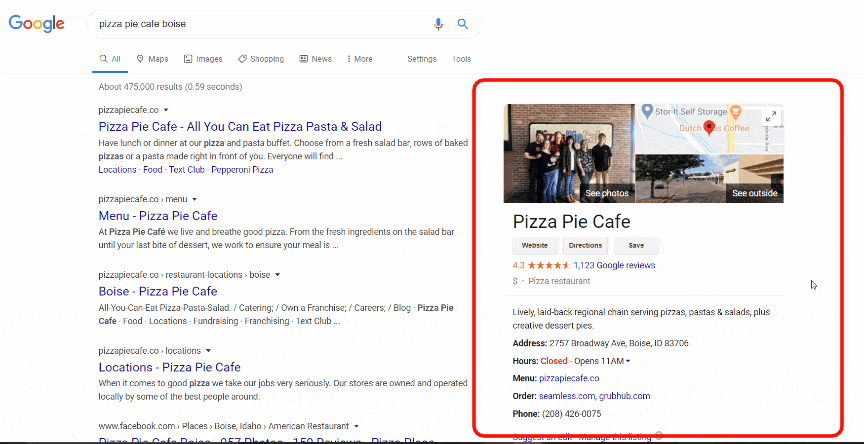
Google Posts turn your Business Profile into a live update feed that influences customer decisions directly at search time.
When someone searches your business, these posts act like real-time signals showing activity, relevance, and current offers.
A bakery posting “fresh cakes available today” can instantly attract nearby users searching for something sweet in that moment. This works because local search users often decide quickly, and visible updates increase the chances of immediate action.
Google Posts can be used for:
- Offers and limited-time deals.
- New services or product launches.
- Event announcements.
- Daily or weekly updates.
- Important business notifications.
The key here is consistency, not complexity. Even short updates keep your profile active and more visible in local discovery.
Businesses that regularly post appear more trustworthy because they look operational, responsive, and engaged with customers.
Tip 15 — Partner with a Local SEO Expert When You Need to Scale
Local SEO becomes difficult to manage when a business starts expanding across multiple services or multiple locations, because every listing, keyword, and content decision starts directly affecting visibility and lead generation performance.
At this stage, execution errors like inconsistent citations, weak Google Business Profile optimization, or poor local keyword targeting can quietly reduce rankings and slow down customer acquisition even if the overall marketing effort is strong.
Working with a local SEO expert helps bring structure, consistency, and strategy into the system, ensuring every signal from listings, content, and backlinks is aligned with how Google evaluates local search relevance.
At Codexxa, we help businesses scale local SEO by handling everything from Google Business Profile optimization and citation cleanup to local keyword strategy, content planning, and authority building so brands can focus on growth while we manage visibility and lead generation performance.
If you want to improve your local search presence and generate more qualified leads, contact Codexxa today.
Conclusion
Local SEO is no longer just an optional marketing activity. It has become a core growth driver for small businesses competing in the location-based search era.
From Google Business Profile optimization to reviews, content, backlinks, and mobile performance, every element works together to influence visibility in local search results.
Businesses that consistently apply these strategies build stronger trust, attract more nearby customers, and convert search intent into real-world actions like calls, visits, and bookings.
The key is not doing one thing perfectly, but maintaining all local SEO signals in a consistent, structured, and ongoing way.
Local search continues evolving, but businesses that stay active, relevant, and optimized will always stay ahead of local competition.
Also Read: 9+ Best Digital Marketing Strategies for Small Businesses
FAQs
1. What is the best local SEO strategy for small businesses?
The best local SEO strategy combines Google Business Profile optimization, consistent NAP citations, local keyword targeting, reviews management, and locally relevant content. Google prioritizes relevance, distance, and prominence for local rankings, so aligning all signals improves visibility and lead generation.
2. How long does it take for local SEO to show results?
Local SEO typically shows noticeable improvements within 4 to 12 weeks, depending on competition, existing online presence, and optimization consistency. Strong Google Business Profile activity and reviews can accelerate ranking improvements in map and local pack results.
3. Is Google Business Profile free for small businesses?
Yes, Google Business Profile is completely free for all businesses. It allows companies to appear in Google Search and Maps, manage business information, respond to reviews, and publish updates without any subscription cost.
4. How do online reviews affect local SEO rankings?
Reviews impact local rankings by signaling trust, relevance, and customer satisfaction. Businesses with frequent, high-quality reviews and active responses often achieve better visibility in local packs and attract higher click-through and conversion rates.
5. What is NAP in local SEO, and why does it matter?
NAP stands for Name, Address, and Phone Number. Consistency across websites, directories, and listings helps Google verify business authenticity, improving trust signals and reducing confusion in local search rankings.
6. Can small businesses do local SEO without hiring an agency?
Yes, small businesses can manage basic local SEO tasks like Google Business Profile updates and reviews. However, scaling requires expertise in technical SEO, content strategy, citations, and tracking performance effectively.
7. How often should I update my Google Business Profile?
Google Business Profile should be updated regularly, ideally weekly or whenever changes occur. Frequent updates like posts, photos, and offers signal activity, improving engagement and visibility in local search results.
Add Comment