
How to Conduct a Facebook Ads Audit for Better ROI
A Facebook ads audit is a structured review of targeting, creatives, tracking, and budget decisions that reveal performance leaks and how you can use this data to improve your ROAS.
Even strong campaigns can underperform when audiences overlap, conversion tracking breaks, or creative fatigue quietly drains efficiency fast.
That’s where a proper audit shows what is working, what is wasting spend, and where to fix campaign friction first.
This guide walks you through a step-by-step Facebook ads audit process so marketers can improve ROI without guessing or overcorrecting blindly. Let’s dive in!
What is a Facebook Ads Audit and Why Does It Matters?
A Facebook ads audit evaluates campaign structure, targeting accuracy, creative effectiveness, tracking setup, and budget allocation to uncover performance inefficiencies.
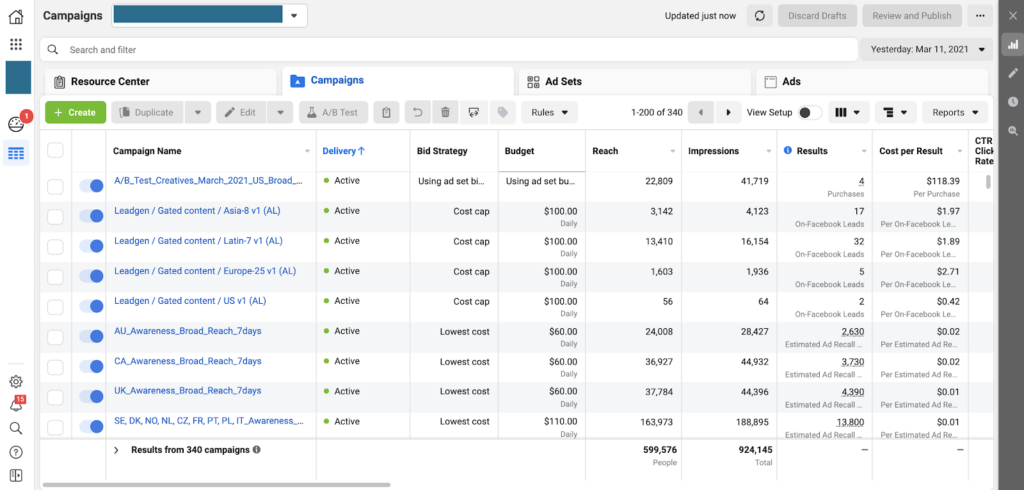
Many advertisers scale campaigns without diagnosing issues first, which increases costs while reducing ROI and weakening overall marketing performance consistency.
An audit connects campaign data with actual business outcomes, ensuring every optimization aligns with conversions, revenue growth, and long-term acquisition efficiency.
Without audits, hidden problems like audience overlap, tracking errors, and creative fatigue continue compounding, silently reducing performance and increasing acquisition costs.
Key outcomes businesses achieve after a structured audit:
- Identify wasted ad spend across underperforming audiences, creatives, or placements.
- Improve conversion tracking accuracy and data reliability for better decisions.
- Align campaign objectives with actual business goals and revenue outcomes.
- Increase ROAS through focused optimization and smarter budget allocation.
A properly executed audit transforms campaigns from reactive adjustments into controlled, data-driven systems built for predictable and scalable growth.
When Should You Perform a Facebook Ads Audit?
A Facebook ads audit should be performed before performance drops significantly, helping advertisers identify inefficiencies early and prevent unnecessary budget losses.
Many campaigns appear stable on the surface but hide issues like audience saturation, creative fatigue, and tracking gaps that silently reduce performance.
Why timing your audit correctly matters:
- Improves budget efficiency by identifying underperforming segments before costs escalate beyond acceptable acquisition thresholds.
- Prevents scaling failures by ensuring campaigns are structurally optimized before increasing spend or expanding audience reach.
- Strengthens data accuracy by validating tracking setups before making critical optimization or budgeting decisions.
Here are the most common scenarios where a Facebook ads audit becomes necessary:
1. When your cost per result starts increasing
If acquisition costs rise consistently, it often signals targeting fatigue, poor creative performance, or bidding inefficiencies that require immediate correction.
2. When your return on ad spend (ROAS) declines
Even with stable budgets, declining ROAS indicates misalignment between audience intent, ad messaging, and conversion experience across the funnel.
3. When conversion tracking becomes unreliable
Inconsistent event tracking or missing data leads to poor optimization decisions, making it critical to audit pixel setup and attribution accuracy.
4. Before scaling your campaigns
Scaling without auditing amplifies existing inefficiencies, causing higher spend without proportional returns or meaningful performance improvements.
According to Meta, advertisers who regularly monitor and optimize campaigns based on performance signals achieve significantly better cost efficiency and conversion outcomes.
Therefore, conducting a Facebook ads audit at regular intervals ensures campaigns stay aligned with platform dynamics, audience behavior changes, and meet business growth objectives without relying on assumptions.
How to Conduct a Facebook Ads Audit (Step-by-Step Checklist)
A Facebook ads audit becomes effective only when executed systematically, analyzing each layer from tracking and structure to creatives and performance metrics.
Most advertisers fail audits because they review metrics in isolation instead of connecting performance signals across the complete acquisition and conversion funnel.
Before starting, understand this clearly:
A Facebook ads account is an interconnected system where structure, data accuracy, audience quality, and creatives directly influence overall campaign efficiency.
If one layer underperforms, it affects optimization signals, delivery quality, and ultimately increases cost per acquisition significantly.
Core components you will audit:
- Tracking system including Pixel, Conversions API, and event prioritization.
- Campaign structure and objective alignment with measurable business outcomes.
- Audience targeting logic, including segmentation, exclusions, and scalability.
- Ad creatives performance across formats, hooks, and messaging angles.
- Budget allocation, bid strategy, and scaling efficiency.
- Landing page experience and full-funnel conversion journey.
Also, Facebook ads average conversion rate is around 9.21%, which means even a small inefficiency can significantly impact overall profitability.
Now, follow this structured audit process:
Step 1: Audit Your Campaign Structure and Setup
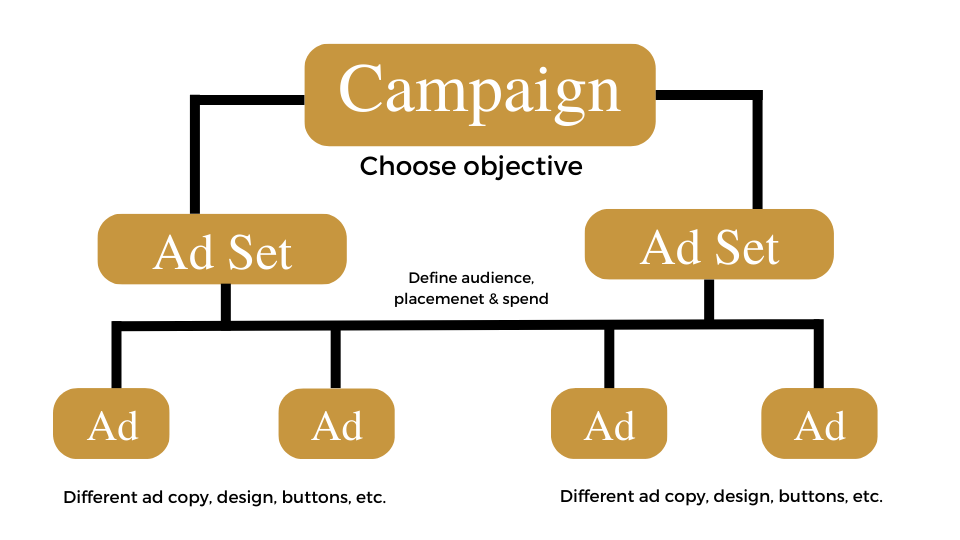
Start by analyzing campaign architecture because structure directly impacts how Meta distributes budget and learns from performance data.
A cluttered account with too many campaigns or ad sets restricts the algorithm, delays learning phase, and fragments performance insights.
Go deeper to:
- Ensure campaign objectives reflect real outcomes like purchases or leads, not upper-funnel metrics that do not drive revenue.
- Limit excessive ad sets and consolidate where needed to allow enough budget per ad set for proper learning.
- Check if campaigns are segmented logically by funnel stage, such as prospecting, retargeting, and retention.
- Evaluate if Advantage+ or CBO strategies are used correctly to improve automated budget distribution efficiency.
Meta recommends achieving approximately 50 optimization events per ad set weekly for stable delivery and better performance learning.
Step 2: Audit Conversion Tracking and Data Accuracy
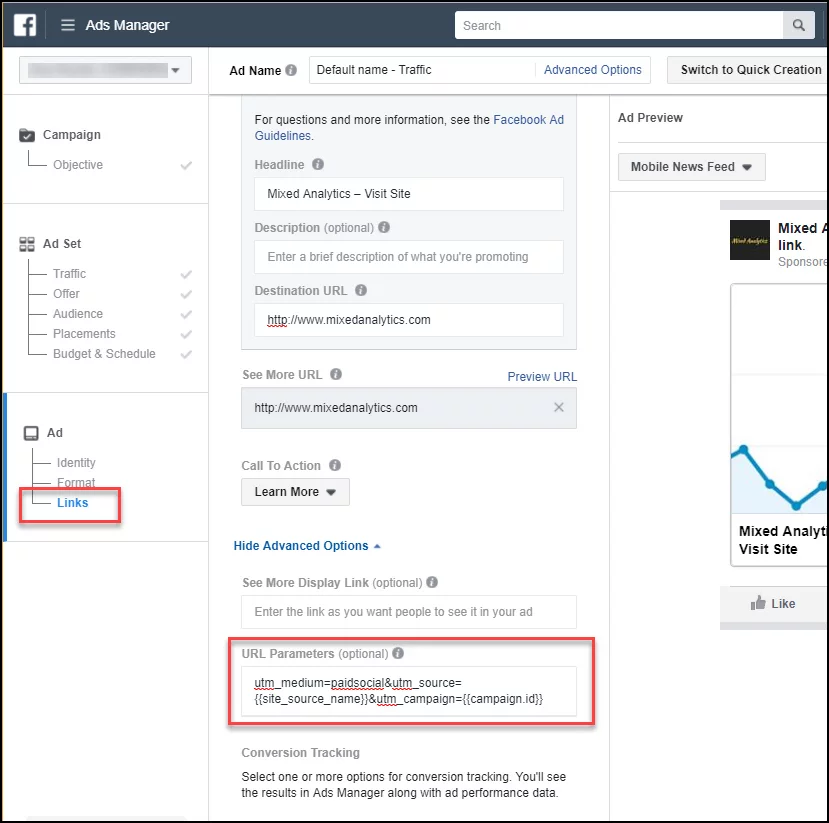
Tracking accuracy is the foundation of every optimization decision, and even minor tracking gaps can mislead the algorithm significantly.
Without reliable data, campaigns optimize toward incorrect signals, leading to higher costs and reduced conversion efficiency.
Deep audit checks include:
- Verify Pixel installation across all critical pages, including landing, product, cart, and purchase confirmation pages.
- Test event firing using tools like Meta Events Manager and Pixel Helper to detect duplication or missing events.
- Confirm event prioritization aligns with business goals under Aggregated Event Measurement settings.
- Validate Conversions API integration to improve data reliability, especially after iOS privacy updates.
Poor tracking can reduce optimization accuracy by limiting signal quality, directly impacting campaign performance and scalability potential.
Step 3: Audit Audience Targeting and Segmentation
Audience strategy determines who sees your ads, and poor targeting often leads to wasted impressions and low-quality traffic. Advanced audits go beyond basic targeting and focus on intent, overlap, and audience lifecycle positioning.
Therefore, you should:
- Check audience overlap using Meta tools to avoid internal competition that drives up CPM and reduces efficiency.
- Ensure clear segmentation between cold audiences, warm engagement users, and high-intent retargeting segments.
- Review lookalike audiences based on high-value actions such as purchases instead of low-intent events like page views.
- Analyze audience size to maintain a balance between scalability and relevance without restricting delivery.
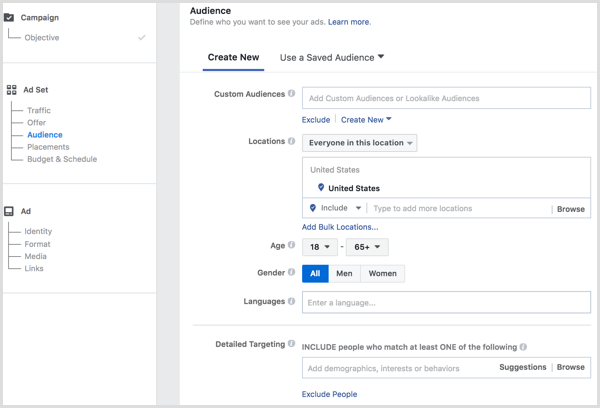
Broad targeting combined with strong creatives typically outperforms overly restricted targeting due to Meta’s algorithmic learning capabilities.
Step 4: Audit Ad Creatives and Messaging Performance
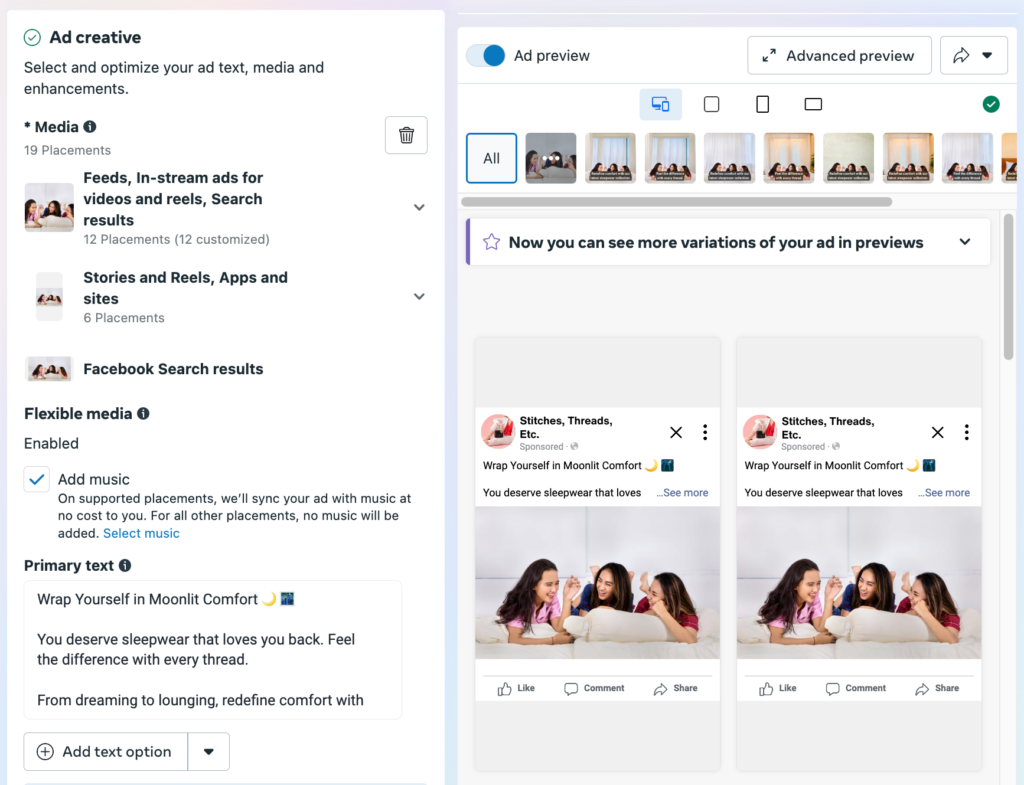
Creative is now the strongest performance driver in Meta advertising, influencing engagement, click-through rates, and conversion intent.
Even with perfect targeting, weak creatives reduce delivery quality and increase cost per result.
Perform a detailed creative audit:
- To identify ads with low CTR, indicating weak hooks or poor attention capture in the first few seconds.
- Analyze thumb-stop rate and engagement signals to measure how effectively creatives capture user attention.
- Detect creative fatigue through rising frequency and declining performance trends over time.
- Ensure messaging aligns with the funnel stage, addressing awareness, consideration, or conversion-specific intent.
Also, you can test multiple formats, including video, static, carousel, and user-generated style creatives to maximize engagement across placements.
Step 5: Audit Landing Page and Funnel Experience
Ad performance does not end at the click, and poor landing experiences often become the biggest bottleneck in conversion rates.
Many campaigns fail because messaging disconnect and friction reduce user trust after clicking the ad.
Audit deeper:
- To ensure messages match between the ad promise and the landing page headline to maintain user intent continuity.
- Optimize page speed since delays increase bounce rates, especially for mobile users dominating Meta traffic.
- Simplify forms, checkout flows, and navigation to reduce friction and improve conversion completion rates.
- Use behavioral tools like heatmaps or session recordings to identify drop-off points and usability issues.
Even a one-second delay in page load time can significantly impact conversion rates and reduce campaign profitability.
Step 6: Audit Budget Allocation and Bidding Strategy
Budget allocation directly controls scaling potential, and inefficient distribution often limits high-performing campaigns from reaching full potential.
Audit not just spend, but how effectively the budget is being utilized across performance tiers.
Review:
- Shift budget toward high-performing campaigns instead of evenly distributing across all ad sets.
- Pause or reduce spending on consistently underperforming segments draining budget without meaningful outcomes.
- Evaluate if automated bidding aligns with goals or if manual strategies are needed for tighter cost control.
- Check if budget supports enough data generation for stable optimization and learning phase completion.
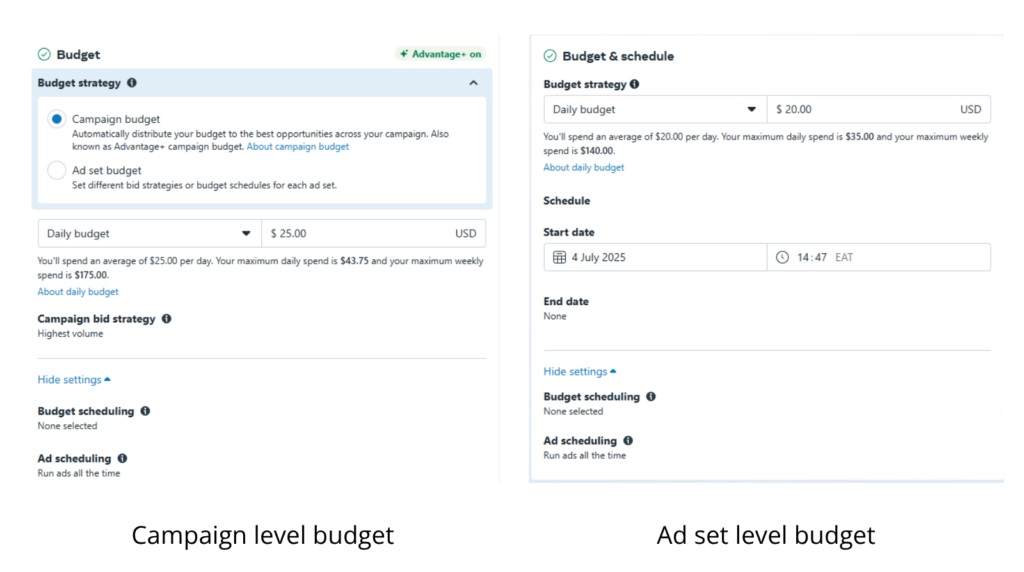
Scaling without correcting budget inefficiencies amplifies losses instead of improving returns.
Step 7: Audit Key Performance Metrics and Benchmarks
Metrics must be analyzed in relation to each other, not individually, to understand real performance drivers and bottlenecks.
Key metrics or benchmarks to check:
- High CTR but low conversions indicate landing page or offer issues rather than creative problems.
- Low CTR with high CPC signals weak creatives or poor audience targeting, affecting engagement.
- A rising CPA with stable CTR often points to funnel friction or tracking inconsistencies.
- ROAS should be evaluated alongside volume to balance profitability with scalability.
Benchmarking against industry averages helps identify whether performance gaps are internal issues or market-driven challenges.
Step 8: Audit Wasted Ad Spend and Identify Quick Fixes
This stage focuses on immediate impact opportunities where small changes can deliver measurable performance improvements quickly.
Identify budget leakage sources:
- Ads consuming high spend without conversions should be paused or reworked immediately.
- Audience segments with high frequency and declining engagement indicate saturation and require refresh strategies.
- Placements delivering traffic but no conversions should be optimized or excluded strategically.
Quick wins include reallocating budgets, refreshing creatives, refining targeting, and fixing tracking gaps to stabilize performance.
In this way, conducting a Facebook ads audit transforms campaign management from delusional decision-making into a predictable system driven by data, testing, and continuous optimization.
Common Facebook Ads Audit Mistakes to Avoid
Many audits fail not because of missing data, but due to incorrect interpretation and poor decision-making during optimization processes.
Even experienced marketers misjudge performance signals, leading to unnecessary changes that disrupt learning phases and reduce campaign stability.
Mistakes that reduce audit effectiveness:
- Focusing only on surface-level metrics like CTR or CPC without analyzing how they impact conversions and actual revenue outcomes.
- Making frequent changes within short timeframes prevents Meta’s algorithm from stabilizing and delivering consistent performance improvements.
- Ignoring funnel-level issues such as landing page friction, which often causes conversion drop-offs despite strong ad engagement metrics.
Critical audit errors most advertisers overlook:
- Over-optimizing too early: Making decisions before sufficient data accumulates leads to incorrect conclusions, especially during the learning phase, where performance fluctuates naturally.
- Ignoring attribution inconsistencies: Different attribution models across platforms create misleading insights, causing marketers to undervalue or overestimate campaign performance inaccurately.
- Testing without structure: Random creative or audience testing without hypotheses results in unclear insights, making it difficult to scale what actually works.
- Neglecting creative fatigue signals: Rising frequency and declining engagement indicate ad fatigue, yet many advertisers continue scaling instead of refreshing creatives strategically.
According to Meta, stable performance requires consistent learning signals, and frequent edits reset optimization, reducing delivery efficiency significantly.
Avoiding these mistakes ensures your Facebook ads audit leads to meaningful insights instead of unrealistic decisions that may harm long-term campaign performance.
Tools to Use for an Effective Facebook Ads Audit
A Facebook ads audit becomes significantly more accurate when supported by tools that provide deeper insights beyond basic platform-level reporting.
Relying only on Meta Ads Manager limits visibility, especially when analyzing creative performance, cross-channel attribution, and user behavior across the funnel.
Core tools every advertiser should use during an audit:
- Meta Ads Manager for campaign-level data, breakdowns, and performance analysis across campaigns, ad sets, and individual ads.
- Meta Events Manager to validate Pixel tracking, event accuracy, and diagnose data inconsistencies affecting optimization signals.
- Meta Audience Insights to understand audience demographics, interests, and behavior patterns for better targeting decisions.
But now, here are some more advanced tools that improve audit depth:
- Google Analytics to analyze post-click behavior, conversion paths, and identify drop-off points across landing pages and funnel stages.
- Heatmap tools like Hotjar or Microsoft Clarity to visualize user interaction, scroll depth, and friction areas impacting conversion rates.
- Creative analytics tools that identify which hooks, visuals, and messaging elements actually drive engagement and conversions.
Using a mix of both foundational and advanced tools can significantly make a good impact, as Meta’s native analytics only provide foundational metrics, but lack deeper insights into creative performance and cross-platform attribution accuracy.
What to Do After Completing Your Facebook Ads Audit?
Completing an audit is only valuable when insights are translated into structured actions that improve performance, efficiency, and long-term scalability.
Many advertisers stop at analysis, but real growth comes from executing prioritized optimizations based on data-driven findings from the audit.
First, prioritize fixes based on impact:
- High-impact issues like broken tracking, poor creatives, or incorrect objectives should be resolved immediately to prevent ongoing budget losses.
- Medium-impact improvements like audience refinement and budget redistribution should follow once foundational issues are corrected.
- Low-impact changes such as minor creative variations can be tested gradually without disrupting overall campaign stability.
Next, build a structured testing roadmap:
In this, testing should follow a clear hypothesis, ensuring each experiment answers a specific performance question rather than generating random insights.
For example:
- Test new creatives to improve CTR and engagement.
- Test audience segments to identify high-intent users.
- Test landing page variations to increase conversion rates.
This is usually called A/B testing, which improves campaign efficiency by identifying winning variables and reducing wasted spend over time.
Then, focus on performance monitoring:
Track key metrics consistently after implementing changes to understand how optimizations impact campaign performance and profitability.
Monitor:
- CTR to evaluate engagement improvements.
- CPA to measure cost efficiency after optimization changes.
- ROAS to ensure revenue growth aligns with increased ad spend.
Finally, establish an ongoing optimization cycle. In this, Facebook ads audits should not be one-time activities but part of a continuous improvement process aligned with changing audience behavior and platform dynamics.
Top-performing advertisers continuously test, analyze, and refine campaigns to maintain a competitive advantage and a consistent return on ad spend.
Also Read: Facebook Ads vs Google Ads: Which Is Better for Business ROI?
Final Thoughts
A Facebook ads audit is not a one-time fix but a continuous process that directly impacts profitability, scalability, and long-term campaign sustainability. Most businesses lose efficiency not because ads stop working, but because they stop optimizing based on real performance signals.
So, here are key takeaways for advertisers:
- Consistent audits reveal hidden inefficiencies that compound over time and silently reduce return on ad spend across campaigns.
- Structured optimization based on audit insights creates predictable growth instead of relying on assumptions or short-term performance spikes.
- Long-term success depends on continuously aligning targeting, creatives, and funnel experience with evolving audience behavior.
Facebook ads remain one of the highest ROI channels, with many businesses reporting strong returns when campaigns are optimized correctly.
However, performance is never static.
Small improvements across tracking, creatives, and targeting often create compounding gains that significantly increase profitability over time.
If you are a business and want to accelerate results, reduce wasted spend, and scale with confidence, working with experienced Meta Ads specialists can unlock significantly better outcomes. Contact us to help you conduct a Facebook ads audit and identify hidden inefficiencies.
Add Comment