

Influencer Whitelisting: What It Is, How It Works & Why Brands Use It to Scale Paid Ads
Influencer whitelisting is a paid advertising strategy where brands run ads through a creator’s social account, combining influencer trust with advanced performance targeting and scalable media buying.
As traditional brand ads are losing efficiency as audiences scroll past creatives faster, forcing marketers to rethink how credibility and performance can coexist inside paid campaigns.
Nearly 69% of consumers trust influencer recommendations more than branded advertising, proving authenticity directly impacts engagement, click behavior, and ultimately conversion performance in modern social platforms.
Today, brands don’t rely solely on sponsored posts, instead, brands now amplify creator content through paid distribution to gain more acquisition opportunities simultaneously.
That’s why influencer whitelisting is becoming important today!
Therefore, in this guide, we’ll explore you how influencer whitelisting works, why branded content ads outperform traditional formats, and how brands can utilize creator partnerships for predictable performance marketing. Let’s check!
What Is Influencer Whitelisting?
Influencer whitelisting allows brands to run paid ads through a creator’s social account, combining authentic creator identity with advanced targeting, optimization, and measurable advertising performance.
Traditional influencer collaborations depend heavily on organic reach, which limits scalability and makes campaign performance unpredictable for brands seeking consistent acquisition outcomes.
Whitelisting changes this model by transforming creator content into controlled advertising assets, allowing brands to test audiences, optimize creatives, and scale winning campaigns efficiently.
Instead of requesting repeated sponsored posts, marketers gain backend ad permissions, enabling budget control, conversion tracking, audience segmentation, and structured performance optimization without losing creator authenticity.
Here’s why brands are shifting towards creator whitelisting:
- Organic reach across major social platforms continues declining, making paid amplification essential for maintaining predictable visibility and measurable campaign performance outcomes.
- Creator-led ads feel native within feeds, increasing trust signals and encouraging stronger engagement compared to traditional brand-originated promotional creatives.
- Performance teams can scale successful creatives faster because campaigns operate inside advertising platforms rather than relying on manual influencer posting cycles.
With creator partnership ads, you can deliver up to 2.4X higher conversion compared to standard brand advertising formats.
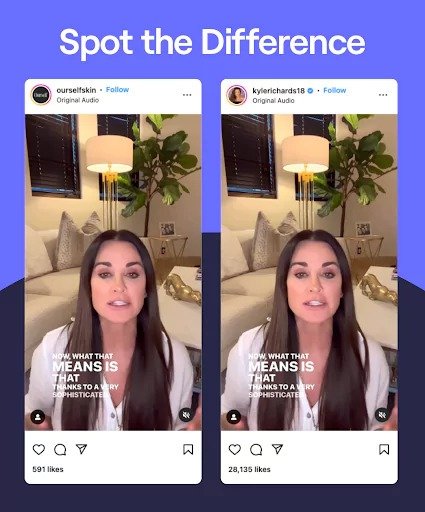
Influencer whitelisting, therefore, bridges influencer marketing and performance media, allowing brands to convert creator credibility into scalable acquisition systems driven by measurable data and optimization.
How Influencer Whitelisting Actually Works (Step-by-Step)
Here’s how influencer whitelisting works in real:
Step 1: Brand and creator align goals, audience fit, deliverables, and usage rights clearly.
Step 2: Creator grants advertising permissions through platform partnership or branded content access tools.
Step 3: Creator publishes approved content designed specifically for paid performance amplification.
Step 4: Brand launches ads via creator handle using targeting, tracking, and testing frameworks.
Step 5: Performance data determines scaling decisions, budget allocation, and ongoing creative optimization.
Here’s how responsibility is divided during whitelisting collaborations:
| Area | Creator Role | Brand / Agency Role |
| Content Creation | Produces authentic creator-led content | Defines strategy and messaging direction |
| Ad Permissions | Grants advertising access | Executes campaign setup and delivery |
| Optimization | Maintains audience authenticity | Runs testing, targeting, and scaling |
| Performance Tracking | Reviews collaboration outcomes | Analyzes data and improves performance |
Brands using this creator partnership ads often achieve stronger engagement because audiences interpret creator-led promotions as trusted recommendations. Also, running these influencer marketing campaigns can deliver up to 11x higher ROI compared to traditional digital advertising, giving brands an advantage over acquisition costs.
Influencer Whitelisting vs Traditional Influencer Marketing
Brands often confuse influencer marketing with influencer whitelisting, yet they both operate differently in terms of execution, scalability, engagement levels, and long-term performance.
Traditional influencer marketing focuses primarily on sponsored visibility, where campaign outcomes depend largely on organic reach, posting timing, and creator audience behavior patterns.
Influencer whitelisting shifts this model toward performance marketing, enabling brands to transform creator content into measurable acquisition channels optimized through structured paid media strategies.
Core differences that impact marketing performance outcomes:
| Factor | Traditional Influencer Marketing | Influencer Whitelisting |
| Distribution | Limited to the creator’s organic audience | Paid amplification with advanced audience targeting |
| Costing Structure | Fixed creator fees with uncertain outcomes | Media spend is optimized based on measurable performance |
| ROI Measurement | Difficult attribution and limited performance data | Clear conversion tracking and campaign-level analytics |
| Scalability Levels | Requires repeated collaborations | Budgets scale instantly on winning creatives |
| Engagement Quality | Depends on organic visibility | Higher engagement through native creator-led advertising |
| Optimization Ability | Minimal optimization after posting | Continuous testing, iteration, and performance refinement |
| Audience Targeting | Restricted to existing followers | Lookalike, retargeting, and funnel-based targeting |
| Campaign Longevity | Short lifecycle tied to post visibility | Extended lifespan through ongoing ad optimization |
Instead of choosing between influencers or paid media, whitelisting merges both approaches into a unified system focused on measurable performance growth.
Key Benefits of Influencer Whitelisting for Paid Ads
Influencer whitelisting transforms creator collaborations into performance-driven acquisition channels, allowing brands to combine authenticity, paid targeting precision, and scalable optimization within one measurable advertising factor.
Creator ads have shown up to 70% higher click-through rates and 159% higher engagement compared to non-creator ads running under similar campaign conditions.
Here’s what performance advantages brands experience with influencer whitelisting:
- Higher Conversion Efficiency: Creator identity reduces resistance during decision-making, improving click quality and increasing conversion probability across mid-funnel and bottom-funnel advertising campaigns.
- Stronger Return on Ad Spend (ROAS): Influencer marketing delivers an average return of $5.78 for every $1 invested, outperforming many traditional digital acquisition channels significantly.
- Advanced Audience Targeting: Brands apply lookalike audiences, retargeting layers, and funnel segmentation while maintaining creator authenticity, creating precision targeting without sacrificing trust signals.
- Faster Creative Testing Cycles: Multiple creator variations can run simultaneously, allowing performance teams to identify winning creatives quickly and scale budgets toward proven revenue drivers.
- Reduced Creative Fatigue: Native creator storytelling blends naturally into feeds, extending ad lifespan and reducing performance decline typically seen with repetitive brand-focused creatives.
- Full-Funnel Marketing Integration: Whitelisted ads support awareness, consideration, and conversion campaigns simultaneously, enabling marketers to build cohesive performance funnels instead of isolated influencer promotions.
Even, 89% of marketers report influencer campaigns perform equal to or better than other marketing channels, reinforcing their growing role in performance advertising strategies.
Common Mistakes Brands Make with Influencer Whitelisting
Influencer whitelisting delivers strong performance potential, yet many brands underperform. It’s mainly because of mistakes in choosing creators based only on follower count instead of audience relevance and engagement quality.
Some common mistakes you need to avoid in influencer whitelisting:
- Launching campaigns without defined KPIs, attribution tracking, or structured conversion-focused performance benchmarks.
- Treating whitelisting as a one-time influencer promotion instead of continuous paid media optimization and scalable acquisition strategy.
- Relying on single creative assets without testing across hooks, formats, messaging angles, and audience variations.
- Failing to secure proper usage rights, limiting scaling ability after identifying high-performing creator-led advertising assets.
- Running whitelisted ads separately from retargeting and funnel strategies, reducing overall campaign efficiency and measurable performance outcomes.
When brands correct these execution gaps, influencer whitelisting evolves from experimental marketing into a predictable acquisition channel supported by measurable performance data.
Platforms That Support Influencer Whitelisting
Influencer whitelisting works because major social platforms now provide native partnership advertising tools, allowing brands to scale creator content while maintaining authenticity and measurable paid performance outcomes.
Here are the top platforms that support influencer whitelisting:
1. Meta (Facebook & Instagram Partnership Ads)
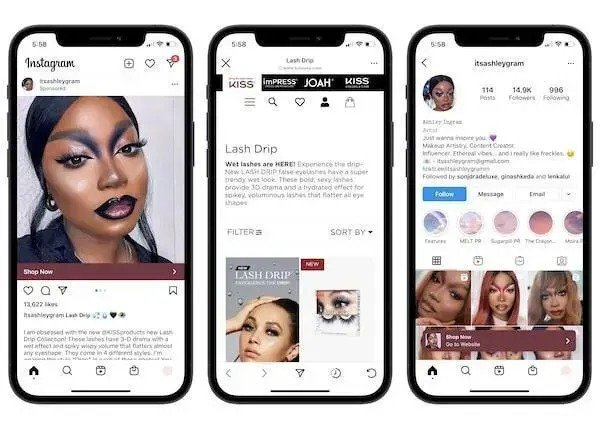
Meta enables brands to run ads directly from creator profiles, combining paid targeting capabilities with authentic social proof and detailed conversion tracking infrastructure.
Meta partnership ads deliver on average 19% lower cost per acquisition and 13% higher click-through rates compared to traditional branded advertising formats.
2. TikTok (Spark Ads)
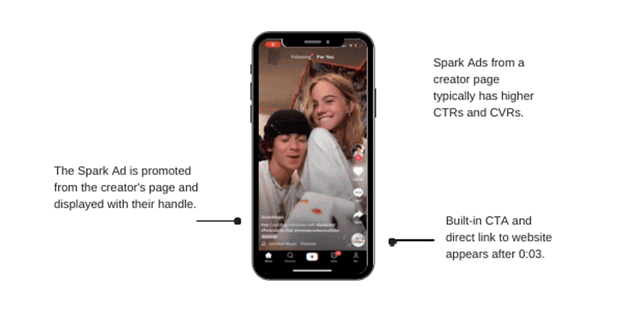
TikTok Spark Ads allow brands to amplify existing creator videos as paid ads, preserving engagement signals, comments, and social credibility already built organically.
Spark Ads generate up to 142% higher engagement rates and 43% higher conversion performance compared to standard in-feed advertising formats on the platform.
3. YouTube (Creator Partnership Ads)
YouTube creator partnerships enable brands to promote influencer videos through Google Ads, combining creator storytelling with intent-driven targeting and measurable performance attribution.
Creator-led video advertising performs strongly because viewers actively consume longer content formats, improving watch time, brand recall, and purchase consideration behavior.
As creator ecosystems expand, platforms continue investing heavily in partnership advertising tools, making influencer whitelisting a foundational strategy across modern paid media ecosystems.
Is Influencer Whitelisting Right for Your Brand?
While we’ve seen how influencer whitelisting benefits brands, how do you know if this works for us or not?
Influencer whitelisting works best for brands that want scalable acquisition, measurable paid performance, and in building authentic customer trust, rather than relying only on traditional brand advertising.
You should consider influencer whitelisting if your brand faces these growth challenges:
- Struggling with rising paid advertising costs while traditional branded creatives deliver declining engagement and inconsistent conversion performance across acquisition campaigns.
- Launching products that require education, demonstrations, or social proof before customers feel confident enough to complete purchasing decisions online.
- Scaling ecommerce or DTC growth, where creative fatigue frequently reduces performance and requires continuous fresh content aligned with audience behavior.
- Targeting younger digital-first audiences who increasingly discover brands through creators and social platforms rather than direct brand advertisements.
- Building performance marketing funnels where authentic creator storytelling strengthens awareness, improves consideration, and accelerates conversion across multiple customer journey stages.
That’s how brands should treat influencer whitelisting, not as influencer marketing, which directly ties into paid media strategy.
Conclusion
Using influencer whitelisting brings in too many benefits that brands can leverage to combine creator authenticity with a paid media strategy.
Instead of relying on unpredictable organic influencer reach, brands gain more measurable control through targeting, testing, optimization, and scalable budget allocation aligned directly with conversion-focused marketing objectives.
As competition increases and advertising costs continue rising, creator-led paid advertising provides a sustainable advantage by improving trust signals, engagement quality, and long-term marketing efficiency.
Want to check how influencer whitelisting can grow your marketing ROI? Contact us and let us show you how it works and the ROI it can bring to your business!
Add Comment