

8 Proven Ecommerce Retargeting Strategies for 2026
Customer acquisition costs are rising while conversion rates remain stubbornly low across e-commerce markets worldwide in 2026.
Most visitors leave without purchasing, with only about 3% of visitors converting into customers on average.
This means nearly 97% of e-commerce traffic disappears without buying, leaving significant revenue on the table.
Henceforth, building effective e-commerce retargeting strategies can help bring the right audience back at the right moment. Let’s explore which strategies might work for your business in 2026.
Why E-commerce Retargeting Strategy Matters in 2026
E-commerce retargeting is a performance marketing approach focused on reconnecting with visitors who showed purchase intent but exited before completing their buying decision.
Global ecommerce conversion rates average only 2–4%, meaning the majority of traffic leaves without converting despite brands investing heavily in acquisition campaigns.
Here’s why businesses are prioritizing e-commerce retargeting today:
- Higher Purchase Probability: Retargeted visitors are 70% more likely to convert compared to new audiences because they already recognize the brand and product value.
- Stronger Engagement Performance: Retargeting campaigns generate nearly 10 times higher click-through rates than standard display advertising, proving stronger relevance and intent alignment.
- Recovery of Abandoned Buyers: Around 26% of users return to a website after seeing retargeting ads, directly helping brands recover otherwise lost revenue opportunities.
- Improved Marketing Efficiency: Retargeting improves conversion efficiency because brands focus on warm audiences instead of continuously paying higher costs to acquire completely new users.
- Sustainable Revenue Growth: As advertising costs rise globally, maximizing existing traffic through retargeting allows ecommerce brands to scale profitably without proportionally increasing acquisition budgets.
In 2026, winning ecommerce brands are not simply driving more traffic. But they are systematically converting existing visitors through data-backed retargeting strategies. Let’s see what e-commerce retargeting strategies work well in 2026.
Strategy 1: Segment Audiences Based on Buyer Intent
Segmentation in e-commerce retargeting means dividing your visitors into meaningful groups based on behavior and purchase readiness.
Generic retargeting wastes advertising budget because product viewers, cart abandoners, and casual browsers all receive identical ads despite different motivations. Segmented campaigns fix this by aligning the message with the intent.
Examples of key retargeting audience segments:
- Homepage & Category Browsers: Visitors just browsing categories need product discovery messaging and brand value cues before conversion pushes.
- Product Page Viewers: Showing product value, reviews, and benefits works better than generic promotions for this more engaged group.
- Cart Abandoners: Users who abandoned carts signal strong purchase intent and require short-window triggers and reminders to return.
- Past Purchasers: Repeat buyers can be retargeted with upsells, replenishment offers, and VIP incentives to boost lifetime value.
Smart segmentation doesn’t just target behaviors, it drives performance. These segmented campaigns can lift revenue dramatically compared to broad targeting.
By tailoring messaging to each group’s intent stage, your e-commerce retargeting becomes more relevant, efficient, and impactful in driving conversions.
Strategy 2: Use Dynamic Product Retargeting Ads
Dynamic product retargeting focuses on showing shoppers the exact products they previously explored, reminding them about unfinished buying decisions while reinforcing purchase intent through personalized visual exposure.
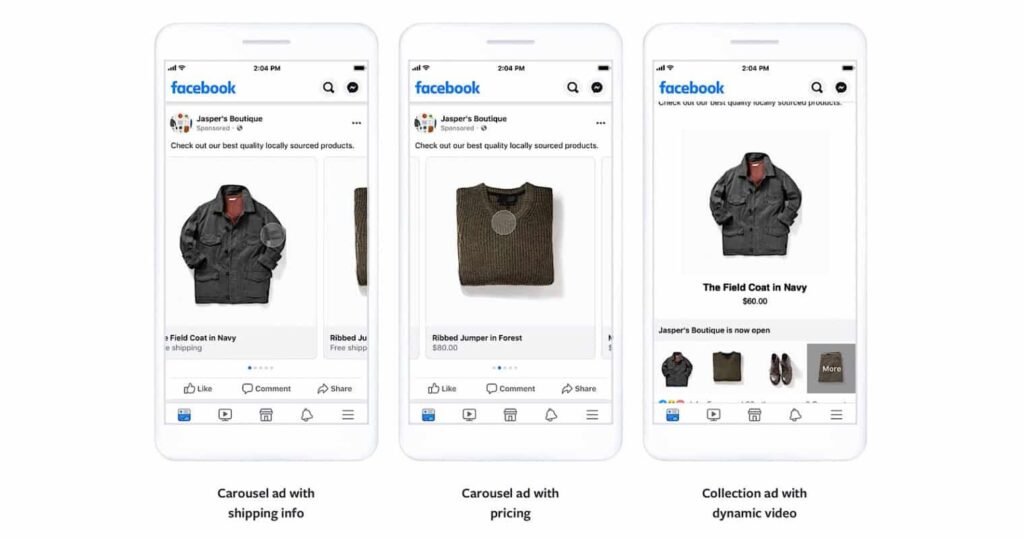
Instead of restarting discovery, users instantly reconnect with familiar products, reducing decision friction and shortening the path between consideration and completed checkout actions.
Why this strategy works effectively in modern e-commerce:
- Personalization at Scale: Dynamic feeds automatically match ads with browsing behavior, allowing brands to deliver individualized product experiences without manually creating separate campaigns for every audience segment.
- Stronger Conversion Performance: Personalized retargeting ads generate significantly higher engagement and can increase conversion rates by nearly 30% compared to non-personalized advertising formats.
- Faster Decision Recovery: Seeing previously viewed products triggers memory recall, helping hesitant buyers resume their journey instead of restarting research across competitors or marketplaces.
- Revenue Expansion Opportunities: Dynamic ads also recommend related or higher-value products, enabling natural cross-sell and upsell opportunities while maintaining relevance throughout the retargeting journey.
When executed correctly, dynamic retargeting transforms passive reminders into timely purchase nudges, helping ecommerce brands convert intent already created rather than generating demand again.
Strategy 3: Build a Dedicated Cart Abandonment Retargeting Funnel
Cart abandonment retargeting focuses on re-engaging shoppers who added products to their cart but exited before completing checkout due to hesitation, distractions, or unresolved purchase concerns.
The global average cart abandonment rate is about 70%, which means seven out of ten ready buyers leave before completing a purchase.
Instead of relying on a single reminder, high-performing ecommerce brands design structured recovery funnels that progressively rebuild trust and remove buying friction.
A practical cart abandonment retargeting flow typically follows:
| Step | Timing | Purpose |
| Reminder Touchpoint | Within 1–3 hours | Recover attention while purchase intent remains strongest. |
| Trust Reinforcement | After 24 hours | Reduce hesitation using reviews, guarantees, or social validation. |
| Conversion Push | 48–72 hours | Encourage checkout completion through urgency or limited incentives. |
Timing matters because purchase intent declines quickly after abandonment, making delayed follow-ups significantly less effective at recovering potential revenue opportunities.
When structured strategically, abandonment funnels transform near-buyers into customers, helping brands grow revenue using existing traffic rather than increasing acquisition spend.
Strategy 4: Optimize Frequency and Ad Fatigue Control
Retargeting loses effectiveness when users repeatedly see identical ads, causing declining engagement, lower click-through rates, and rising advertising costs over time.
Ad fatigue happens when audiences become overexposed to the same creative, leading users to ignore ads or develop negative brand perception during repeated exposure.
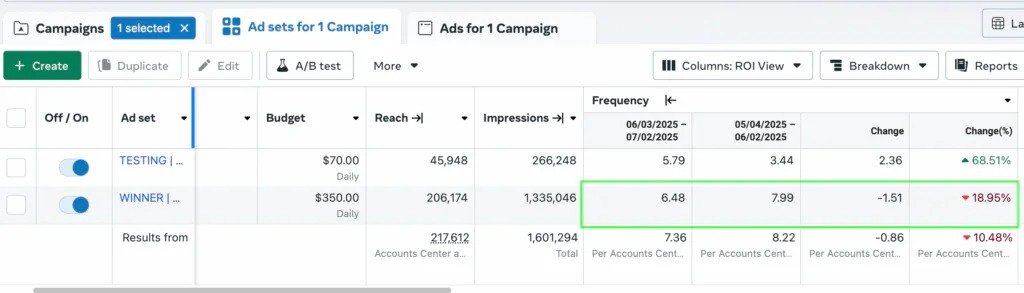
Higher ad frequency directly reduces performance because repeated impressions are linked with falling CTR and weaker response rates across display advertising campaigns.
Performance commonly begins declining once users see the same ad more than five to six times, making frequency control essential for maintaining campaign efficiency.
Instead of increasing impressions endlessly, smart brands rotate creatives and manage exposure carefully, ensuring every retargeting interaction adds persuasion rather than annoyance.
Strategy 5: Align Retargeting Creatives with Funnel Stage
Retargeting creatives perform best when messaging reflects the shopper’s decision stage, ensuring communication feels relevant instead of prematurely sales-driven or repetitive.
Early-stage audiences respond to educational visuals and product discovery content, while high-intent visitors react better to urgency, reassurance, and proof-focused messaging.
Epsilon data confirms that 80% of consumers are more likely to purchase when brands deliver personalized experiences aligned with individual behavior and preferences.
Creative alignment reduces customers hesitation because each message answers a specific objection, guiding users naturally from awareness toward confident purchase decisions.
When messaging evolves alongside buyer intent, retargeting feels supportive rather than intrusive, increasing engagement while improving conversion efficiency across campaigns.
Strategy 6: Exclude Converted Users Strategically
Many e-commerce brands unknowingly continue retargeting customers after purchase, turning helpful reminders into unnecessary noise that weakens overall campaign efficiency.
Once a purchase happens, intent disappears. Continuing acquisition messaging at this stage wastes budget and creates friction instead of strengthening customer relationships.
A smarter approach shifts messaging immediately after conversion:
- Stop product ads shown before checkout.
- Move buyers into upsell or cross-sell journeys.
- Introduce loyalty or repeat-purchase communication.
Post-purchase retargeting exposure has been linked to reduced satisfaction because repeated ads create expectation mismatch after customers already made their decision.
Exclusion audiences allow brands to protect their budgets while improving relevance, ensuring advertising reaches undecided shoppers instead of already converted customers.
Strategy 7: Leverage Cross-Channel Ecommerce Remarketing
Modern shoppers rarely convert through a single touchpoint. They are continuously moving between social media, search, email, and marketplaces before finalizing purchase decisions.
Cross-channel remarketing reconnects users across platforms, ensuring messaging continues seamlessly instead of restarting the buying journey every time users switch channels.
73% of retail consumers now use multiple channels during their shopping journey, making single-platform retargeting insufficient for consistent conversion performance.
Therefore, brands using coordinated cross-channel strategies can increase up to 89% customer retention, proving that consistent messaging significantly improves long-term engagement and repeat purchasing behavior.
An effective execution connecting paid ads, email automation, search remarketing, and social retargeting into one unified journey could be helpful.
When channels work together, retargeting evolves from repeated advertising into guided decision support, helping shoppers complete purchases without friction or confusion.
Strategy 8: Use Data to Continuously Optimize Retargeting Campaigns
Retargeting performance improves when campaigns evolve through continuous testing, allowing marketers to replace assumptions with measurable performance insights and validated decision-making.
Most e-commerce conversion rates remain between 2% to 4%, which means even small optimization improvements can create a significant revenue impact without increasing traffic acquisition costs.
Instead of guessing, data reveals what actually drives purchases:
- Creative variation testing (image vs video ads).
- Offer comparison (discount vs free shipping).
- Audience timing adjustments (1-day vs 7-day retargeting windows).
- Landing page experience improvements.
Also, a landing page A/B testing delivers about 30% average conversion improvements, producing predictable growth. And, only 20–30% of experiments typically produce winning outcomes, yet successful tests compound revenue gains across future campaigns.
For example, an e-commerce brand testing checkout messaging may discover trust badges outperform urgency-driven copy, leading to permanently higher conversions across all retargeting traffic.
By doing all the continuous optimization, it can gradually transform retargeting into a feedback system, where every campaign teaches what persuades customers and strengthens long-term marketing efficiency.
Conclusion
E-commerce growth today depends less on attracting new visitors and more on converting existing traffic through highly-intent retargeting execution.
From audience segmentation to cross-channel remarketing, each strategy works together to guide shoppers towards taking confident purchase decisions without increasing acquisition costs.
Brands that treat retargeting as a continuous optimization system consistently recover lost revenue, improve ROAS, and build stronger long-term customer relationships.
If your ecommerce campaigns are driving traffic but missing conversions, refining your retargeting strategy may unlock the fastest path toward sustainable revenue growth. Contact us to get an expert’s help!
Add Comment