

7 Best B2B Google Ads Strategies That Work Like Magic (2026)
Many B2B companies invest heavily in Google Ads yet struggle to generate a qualified pipeline because campaigns prioritize clicks over intent.
In B2B markets, buying decisions involve multiple stakeholders, longer evaluation cycles, and higher contract values, making traditional PPC tactics ineffective.
This is why successful advertisers shift from traffic-focused campaigns towards B2B advertising strategies designed to capture high-intent searches and nurture demand.
This guide breaks down the 7 best B2B Google Ads strategies that can help your business align with paid search efforts with real buying behavior.
Let’s check it out!
Why B2B Google Ads Needs a Different Strategy Than B2C
B2B purchasing decisions rarely depend on one individual because investments affect multiple departments, operational workflows, and long-term financial outcomes within organizations.
Most complex B2B purchases involve six to ten stakeholders, each researching independently and validating vendors through different evaluation criteria before internal consensus forms.
Buyers complete significant portions of evaluation before contacting vendors, which means that while running paid search, visibility influences decisions long before sales conversations begin.
Many organizations create vendor shortlists early, so brands appearing consistently during research stages gain higher credibility, while late visibility dramatically reduces competitive consideration.
Here’s how B2B buyer’s behavior changes in B2B Google advertising:
- Campaign messaging must address multiple stakeholders with different priorities across technical, operational, and executive decision levels.
- Always-on visibility for commercial keywords is essential because buyers shortlist vendors during independent research phases.
- Campaign success depends on optimizing for qualified pipeline (meaning conversions) impact instead of clicks, impressions, or surface-level metrics.
- Remarketing becomes critical since buyers revisit vendors multiple times while validating solutions during extended internal evaluation cycles.
Because B2B decisions evolve through research and internal validation, effective Google Ads strategies focus on influence across stages instead of immediate conversion volume. Let’s take a look at how you can think in terms of B2B Google advertising strategically.
1. Build Funnel-Based Campaign Structures
Many B2B campaigns underperform because every keyword targets the same action, ignoring how buyers gradually move from research toward vendor selection decisions.
A well-planned funnel aligns advertising with buyer psychology, allowing campaigns to educate early, validate solutions mid-journey, and convert when purchase confidence increases.
B2B journeys typically follow awareness, consideration, and decision stages, where messaging must evolve as stakeholders shift from problem discovery toward vendor evaluation.
Organizations aligning campaigns with funnel stages see stronger conversion efficiency because intent signals remain clear instead of blending multiple buyer motivations together.
How funnel-based structures improve campaign performance:
- Top-funnel campaigns introduce problems and educate buyers before competitors establish familiarity during early independent research behavior.
- Middle-funnel campaigns strengthen credibility using case studies, comparisons, and industry proof while buyers actively evaluate alternative vendors.
- Bottom-funnel campaigns capture high-intent searches where stakeholders validate pricing, capabilities, and implementation readiness before initiating sales conversations.
- Remarketing reconnects earlier visitors, and retargeted users become up to 70% more likely to convert after repeated brand exposure.
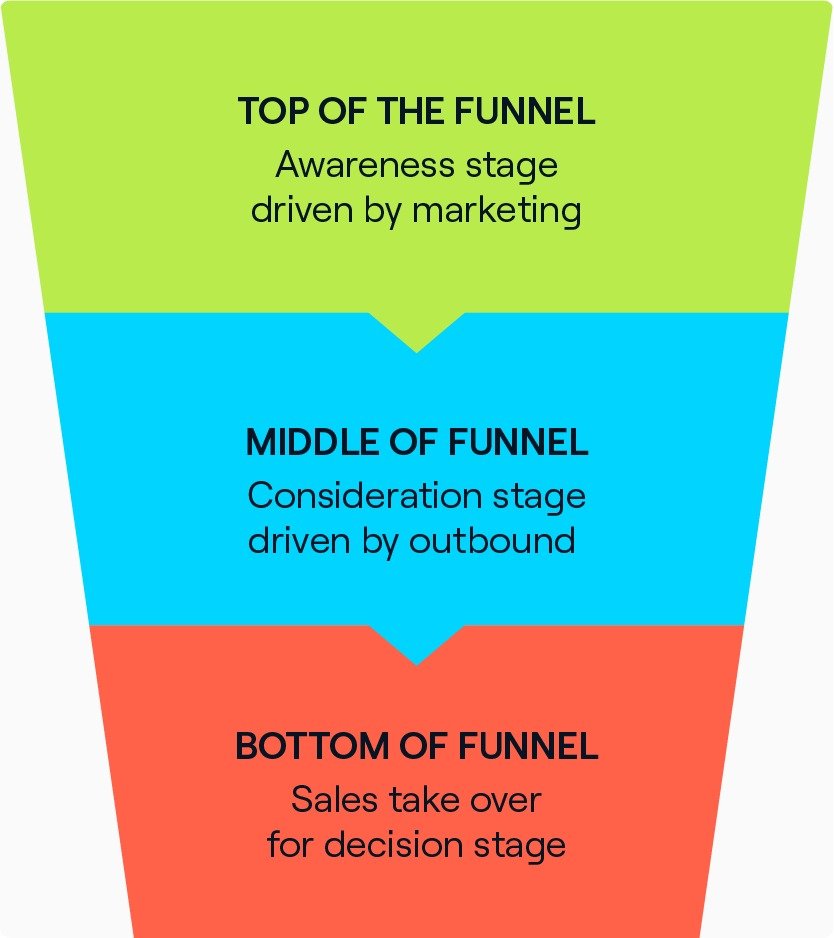
Instead of forcing conversions prematurely, funnel-based structures guide buyers naturally, aligning advertising investment with real decision-making momentum.
2. Focus on Bottom-Funnel Keywords First
Most B2B advertisers lose budget while targeting informational traffic, while high-intent searches already signal buyers actively comparing vendors and preparing shortlists.
In B2B markets, search volume is lower, but intent is significantly stronger, which explains why niche commercial keywords consistently outperform broader discovery queries.
Around 71% of B2B buyers begin research with Google searches, where early keyword visibility directly influences which vendors enter consideration stages. On the other hand, problem-focused and solution-aware keywords often convert up to 2.5 times higher because users already understand their challenges and actively evaluate solutions.
Instead of targeting “what is” searches, strong B2B campaigns prioritize queries like pricing, services, comparisons, integrations, or industry-specific solution searches.
High-intent keyword structure typically includes three layers that align closely with buying readiness and commercial evaluation behavior:
- Decision searches (example: “b2b google ads agency pricing”) capture buyers validating vendors before outreach.
- Comparison searches (example: “best b2b ppc agency vs freelancer”) attract users actively narrowing vendor options.
- Solution searches (example: “google ads lead generation for saas”) indicate immediate problem-solution alignment and stronger conversion probability.
B2B search campaigns average conversion rates are around 3–4%, but intent-aligned targeting frequently doubles performance compared to generic keyword targeting.
When campaigns prioritize bottom-funnel intent, traffic volume may decrease, yet pipeline quality improves because ads reach buyers already moving toward purchase decisions.
3. Apply Audience Layering for Better Targeting
Keyword targeting only explains what users search, but not who they are, which often results in wasted spend from irrelevant or non-commercial audiences.
Audience layering adds behavioral and demographic context, allowing campaigns to prioritize professionals actively researching solutions instead of casual informational searchers.
Combining audiences with keywords helps reduce wasted spend while improving relevance, especially in competitive industries with expensive commercial keywords.
Instead of restricting reach immediately, advertisers use observation mode to collect performance data while ads continue showing broadly across qualified search traffic. Basically, observation settings allow performance tracking without limiting visibility, helping marketers identify which audiences convert before applying stricter targeting filters.
When you do this, audience insights reveal unexpected converting segments, enabling bid adjustments toward high-value users while reducing investment across low-intent traffic clusters.
Here’s how you can improve B2B advertising performance for targeting better:
- Targeting familiar industries
- Selecting a decisive company size, or
- Professional keyword-intent targeting.
Over time, audience layering shifts campaigns from traffic acquisition toward decision-maker acquisition, improving lead qualification and long-term advertising efficiency.
4. Optimize for Lead Quality Instead of Lead Volume
High lead numbers often create false success signals because most B2B inquiries lack authority, budget, or urgency required for meaningful sales conversations.
Nearly 79% percent of marketing leads never convert, primarily because campaigns prioritize acquisition volume instead of qualification accuracy.
When you’ve an average B2B funnels it reveals strong drop-offs, where only a small percentage of initial leads progress into sales-qualified leads. Therefore, instead of scaling traffic blindly, high-performing advertisers should evaluate whether leads match with their ideal customer profiles (ICP), buying roles, and realistic implementation timelines.
What changes when campaigns optimize for quality:
- Qualified leads convert nearly four times higher compared to unqualified prospects, improving pipeline efficiency without increasing advertising spend.
- CRM-connected tracking helps identify which keywords generate opportunities, not just submissions, allowing algorithms to optimize toward revenue outcomes.
- Offline conversion tracking improves optimization accuracy because platforms learn from closed deals rather than early engagement signals alone.
When optimization focuses on verified buying intent, marketing and sales alignment improve naturally, reducing wasted advertising efforts while strengthening predictable pipeline growth.
5. Write Problem-Solution Focused Ad Copy
Most B2B ad copy fails because it speaks broadly instead of addressing specific business challenges experienced by decision makers in target markets.
High-performing B2B ads clearly connect client problems to measurable outcomes like reduced cost per acquisition or faster pipeline acceleration.
Ads that mention proof points, case results, or quantifiable improvements improve relevance and drive higher engagement from serious buyers instead of generic searchers.
6. Build Conversion-Focused B2B Landing Pages
Many B2B campaigns lose potential customers after the first click because landing pages fail to continue the conversation started by the ad or keyword intent.
When a messaging mismatch occurs, visitors leave quickly, which explains why many B2B pages convert only around 2–3% despite strong campaign targeting.
Few dedicated landing pages perform better only because they guide buyers toward one clear action instead of forcing navigation across complex service websites.
You should be optimizing for conversion rates around 6.6%, which is also a median landing page rating, where you can implement optimized pages by aligning messaging, proof, and expectations immediately.
7. Use Remarketing for Multi-Touch Lead Nurturing
B2B buyers rarely convert during the first visit because decisions require repeated research, stakeholder validation, and internal comparison before vendor selection begins.
Remarketing keeps brands visible throughout this journey, reinforcing familiarity while buyers revisit options and gradually move closer toward confident purchasing decisions.
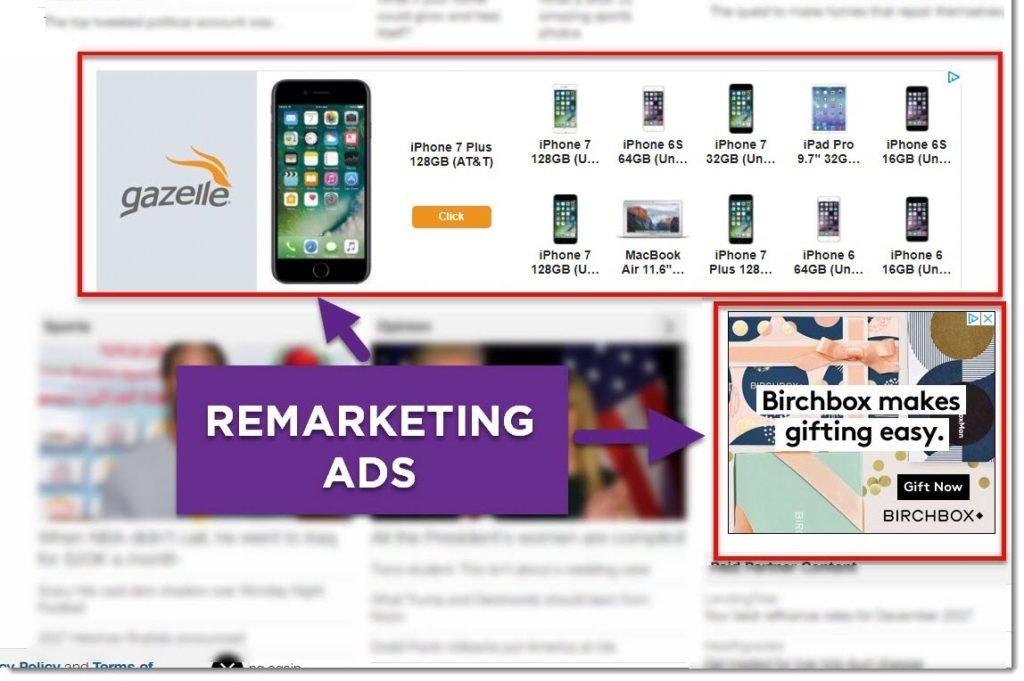
Retargeted visitors are nearly 70% more likely to convert because repeated exposure reduces uncertainty and strengthens recall during complex evaluation cycles.
How to use remarketing for multi-touch nurturing:
- Segment audiences based on visited pages to match messaging with buying stage intent.
- Show educational ads first, then shift toward proof, case studies, and outcome-focused messaging gradually.
- Use longer membership durations since B2B buying cycles often extend across several weeks or months.
- Retarget across search, display, and YouTube to maintain consistent visibility during ongoing independent research.
When remarketing supports the entire buying journey instead of immediate conversion pressure, campaigns build trust progressively and improve overall pipeline efficiency.
Conclusion
B2B Google Ads success depends on strategy alignment with buying behavior, not just bidding and budget allocation.
Implementing bottom-funnel keywords, structured funnels, layered audiences, and quality-first optimization drives more meaningful pipeline impact than broad traffic pursuit.
Strong ad messaging, conversion-focused landing pages, and remarketing bridges multiple touchpoints in long B2B journeys, increasing qualified engagement consistently.
When campaigns reflect real buying intent and nurture across stages, paid search becomes a predictable, revenue-aligned lead generation engine for B2B brands.
Ready to transform your paid search performance into predictable pipeline growth with advanced B2B Google Ads strategies? Partner with Codexxa to scale.
Add Comment