


13 Amazon Listing Optimization Tips to Increase Rankings and Sales in 2026
Putting a product live on Amazon is easy. But getting it to consistently appear in search results and generate steady sales is where most sellers struggle.
Often, the issue is not the product itself but how the listing is structured. Weak keyword targeting, unclear value communication, or outdated content can quietly limit performance without sellers realizing it.
Today, Amazon’s ranking system rewards listings that align closely with real search queries and that show strong buying activity over time.
Therefore, through this blog, you will learn practical Amazon listing optimization tips that can help your products appear for relevant searches and improve how shoppers respond once they land on your listing.
Let’s check it!
Why Amazon Listing Optimization Matters More Than Ever
Amazon hosts millions of sellers worldwide, making competition intense. As of 2025, nearly 1.9 million active third-party sellers compete daily for shopper attention across categories.
With more than 9.7 million registered sellers and an expanding product catalog, visibility has depended heavily on how well listings align with search behavior and marketplace expectations.
Today, Amazon’s search system prioritizes listings that closely match shopper queries while also generating strong engagement signals from customers, such as consistent sales, positive reviews, and sustained customer interactions.
Here’s why Amazon optimization has become critical today:
- Search results are increasingly becoming keyword-intent driven, which means listings must reflect how buyers are searching for your product rather than how brands describe it.
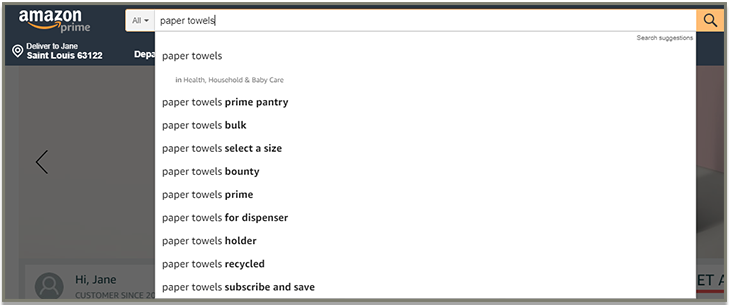
- Click behavior now influences ranking heavily, making main images, titles, and pricing immediate performance factors during early search impressions.
- Conversion rate directly impacts organic visibility, as Amazon promotes listings that consistently turn traffic into completed purchases.
- Review quality and recency also build trust signals, affecting both ranking momentum and buyer decision speed within competitive categories.
- Mobile shopping dominates Amazon traffic, requiring concise formatting, scannable information, and visual clarity optimized for smaller screens.
- Advertising competition has increased, making organic optimization more important to reduce long-term dependency on paid acquisition.
All these factors directly affect how often products appear, how confidently shoppers engage, and how consistently your product listings maintain sales within Amazon’s evolving ecosystem. Which is why Amazon’s optimizations become important to implement.
How Amazon’s A9/A10 Algorithm Evaluates Your Listing
Today, to appear in searches dominantly, Amazon’s A9/A10 algorithm evaluates listings by matching keywords with buyer intent and rewarding products that consistently perform well.
Unlike traditional search engines, Amazon prioritizes purchase likelihood. Rankings depend not only on keyword relevance but also on how shoppers interact with listings after discovering them in search results.
Below are the core factors that influence how Amazon evaluates and ranks product listings:
1. Search Relevance
- Exact and related keyword usage in title, description, and backend terms influences ranking eligibility.
- High-intent search alignment improves early impression count and session starts.
2. Click-Through Signals
- Click-through rate (CTR) is a strong relevance signal.
- Listings that get more clicks for a keyword tend to rank higher over time.
3. Conversion Signals
- Conversion rate reflects how well a product listing turns shoppers into buyers.
- Higher conversions improve sales history, boosting organic placement automatically.
4. Sales Volume
- Sales history within time windows influences visibility.
- Frequent conversions reinforce Amazon’s confidence in a listing’s relevance.
5. Customer Engagement
- Metrics like “Add to Cart” win impact ranking influence.
- Strong engagement signals indicate shopper trust and product desirability.
When these signals work together, Amazon interprets the listing as both relevant and reliable, increasing the likelihood of sustained rankings and consistent exposure across high-intent searches.
13 Amazon Listing Optimization Tips to Improve Rankings and Sales
Winning on Amazon rarely comes from a single adjustment. Listings improve when keyword alignment, shopper behavior signals, and buying confidence work together to support consistent marketplace performance.
The following tips focus on measurable improvements sellers can implement immediately, helping listings gain stronger search placement while supporting buying decisions that influence Amazon’s ranking system directly.
Tip 1: Conduct In-Depth Keyword Research Before Writing Anything
Over 56% of online shoppers begin product searches directly on Amazon, making keyword research the primary factor determining whether your product appears during purchase decisions.
To effectively do the keyword research, you can start by identifying search phrases customers type, using autocomplete suggestions, competitor listings, and keyword tools to uncover language patterns that reflect real purchasing intent rather than assumptions.
Amazon itself confirms that poor keyword research often causes low visibility because listings fail to match shopper queries, preventing products from entering relevant search result placements.
You should even prioritize long-tail keywords describing use cases, size, audience, or problems solved, because specific queries typically convert better and face lower competition compared to broad category keywords.
Tip 2: Optimize Your Product Title for Search Visibility and Click Impact
Your product title influences both ranking eligibility and click decisions because it is the first element Amazon evaluates for relevance and the first information that shoppers see inside crowded search results.
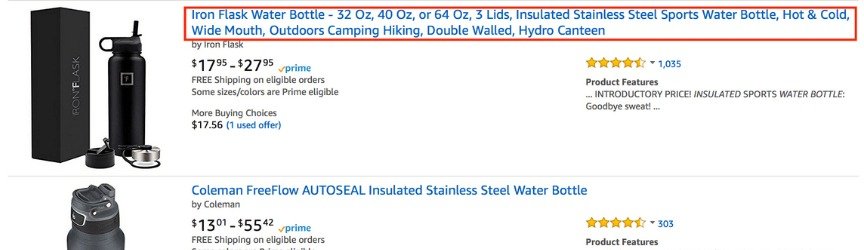
High-performing titles typically stay within 120–150 characters, balancing keyword coverage with readability, especially since mobile search displays shorten longer titles during initial browsing behavior.
A strong title usually follows this structure: “[Brand] + [Primary Keyword] + [Core Feature] + [Variant or Size] + [Use Case]”, helping Amazon understand relevance while guiding shoppers toward faster evaluation. Here is how it may look in practice: “Stainless Steel Water Bottle 1L | Leakproof Insulated Flask for Gym, Travel & Office”, where intent, differentiation, and usability appear immediately.
There are a few things you need to avoid, like keyword repetition, exaggerated claims, or promotional wording, because Amazon’s listing standards prioritize clarity and accuracy, and manipulative formatting can reduce trust and impact long-term ranking stability.
Tip 3: Write Bullet Points That Improve Conversion Rates
Bullet points are one of the strongest conversion drivers on Amazon because many shoppers read them before reviewing images or pricing to decide purchase intent.
Great bullets highlight specific buyer benefits, not generic features, helping shoppers rapidly assess if the product fits their exact needs and expectations.
Effective bullet structure includes:
• Problem-solution explanation (addresses a core use case directly)
• Tangible outcome (what the shopper achieves)
• Supporting detail (evidence that validates the outcome)
For example, a strong bullet may read like this:
“Adjustable grip handle boosts control and reduces wrist strain (ideal for long workouts and daily use).”
Focus each bullet on a distinct advantage that relates to real shopper priorities such as comfort, durability, performance, or speed of results.
Tip 4: Use High-Quality Images That Increase Click-Through Rate

Product images directly influence click-through rate because shoppers visually compare listings before reading titles, especially when multiple similar products appear side by side.
Amazon requires images at least 1000 pixels on the longest side to enable zoom functionality, a feature that increases buyer confidence during detailed product evaluation. The zoom-enabled listings improve engagement because shoppers inspect texture, build quality, packaging accuracy, and included components before committing to purchase.
A high-performing image stack typically includes:
- Main product image meets Amazon compliance standards.
- Contextual lifestyle image demonstrating real-world usage.
- Dimension clarity image with accurate scale reference.
- Feature callout graphic highlighting differentiators.
Tip 5: Add A+ Content to Strengthen Buying Confidence
A+ Content expands standard product descriptions into structured visual sections, helping shoppers understand product value faster while reducing uncertainty that often delays purchase decisions within competitive categories.
Amazon reports Basic A+ Content can increase sales by up to 8% because enhanced visuals and structured explanations help buyers evaluate products without leaving the listing page.
Instead of long descriptions, strong A+ layouts guide decision-making through a clear information hierarchy, allowing shoppers to compare features, understand differentiation, and validate quality before committing to purchase.
High-performing A+ sections commonly include:
- Brand story establishes credibility.
- Comparison charts clarifying product differences.
- Feature visuals explaining performance advantages.
- Problem-focused modules addressing buyer concerns.
When buyers quickly understand why a product fits their needs, users hesitations decrease, time spent on listings increases, and engagement signals strengthen performance metrics, influencing organic ranking visibility.
Tip 6: Optimize Backend Search Terms for Invisible Ranking Leverage
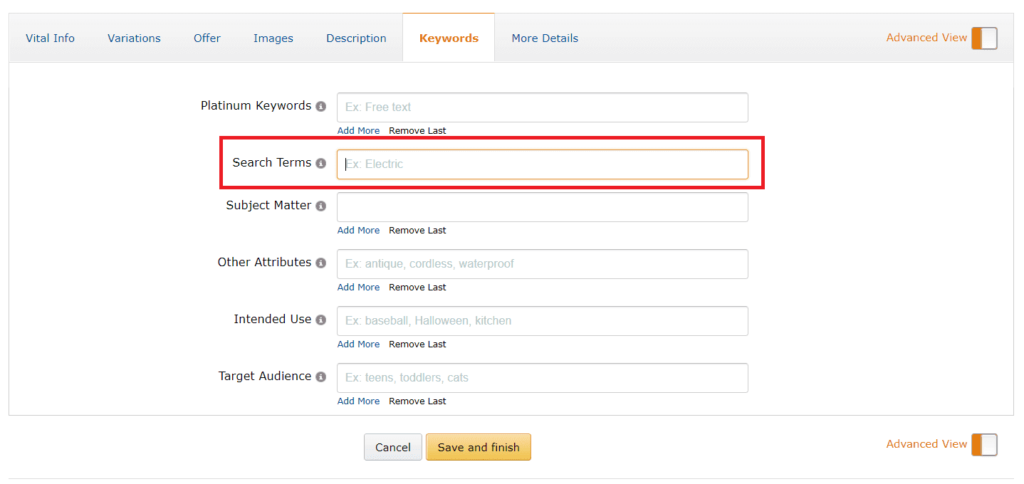
Backend search terms allow you to include additional relevant keywords that Amazon indexes but doesn’t display publicly, giving listings a broader reach without cluttering visible content.
Unlike visible fields, backend terms should contain relevant synonyms, alternate spellings, and secondary keywords that customers commonly use but don’t fit naturally in the title or bullets.
Always avoid repetition of visible keywords, brand names, and ASINs because Amazon does not index duplicates, wasting valuable character space and limiting hidden word coverage.
Use all available character space strategically by grouping phrases logically rather than repeating single words, improving the probability of matching diverse customer search queries.
Review backend terms periodically based on search term reports to identify new phrases driving impressions and ensure indexing remains aligned with evolving shopper language patterns.
Tip 7: Improve Product Pricing Strategy to Support Rankings and Conversions
Pricing directly affects purchase likelihood, session engagement, and Amazon’s sales velocity signals, all of which factor into how the platform rewards organic discovery.
Competitive pricing doesn’t always mean being cheapest; it means aligning price with perceived value, category averages, and customer expectations based on similar product features.
Start by benchmarking against top competitors in your category, noting price bands where conversion rates historically improve, then position yours within that context.
Pricing strategies that strengthen both demand and buyer trust include:
- Psychological pricing (e.g., $29.99 instead of $30).
- Bundle offers with perceived value increases.
- Limited-time discounts tied to promotional events.
Regularly monitor Buy Box (default purchase option shown on product pages) because Amazon prioritizes listings near that range, influencing session share and purchase likelihood.
Tip 8: Generate and Manage Product Reviews Consistently
Product reviews act as decision accelerators because shoppers rely heavily on peer validation before purchasing, especially when comparing unfamiliar brands within crowded Amazon search results.
Research shows products with higher ratings experience measurable conversion improvement, with conversion rates increasing about 12% when star ratings move from three stars toward five.
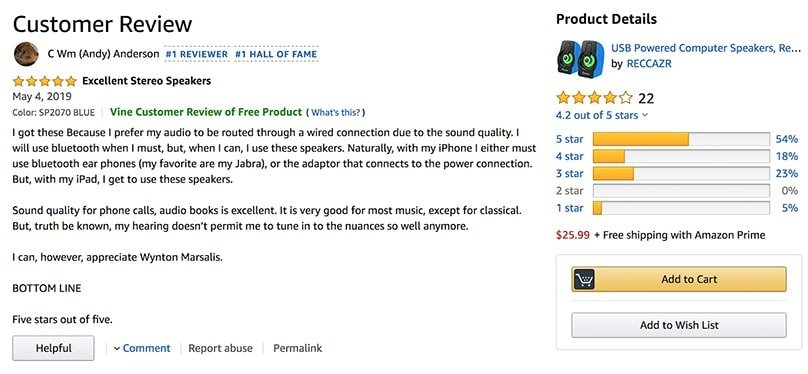
And, product listings with at least 50+ reviews often convert two to three times higher than products with fewer than ten reviews, demonstrating how review volume strengthens buyer confidence signals.
So, here are some effective review growth practices you can consider:
- Using automated review request tools inside Seller Central.
- Fast customer support resolving issues early.
- Packaging inserts encouraging honest feedback within policy guidelines.
But make sure to monitor review sentiment regularly because negative feedback highlights product friction points, allowing sellers to improve product quality while preventing declining ratings that weaken visibility and conversion performance.
Tip 9: Focus on Product Ratings and Social Proof
Higher star ratings influence buyer selection because shoppers filter and compare products based on trust cues before reviewing price or specifications.
Products with average ratings of 4.0 stars or higher show significantly stronger session engagement, helping listings gain preference in both organic and Buy Box competitions.
Strengthen rating performance by addressing common complaints swiftly and encouraging quality feedback, as improved star averages reduce hesitation during the first evaluation impression.
Social proof badges like “Best Seller” or “Amazon’s Choice” increase shopper confidence quickly, often lifting click-through rates without changes to text or visuals.
Authentic customer photos and verified purchase tags carry more credibility than text reviews alone, helping skeptical buyers commit faster during comparison evaluations.
Tip 10: Optimize Category and Subcategory Placement for Search Eligibility
Amazon categorization determines which search filters, browsing paths, and category pages display your listing, directly influencing visibility even before keyword performance is considered.
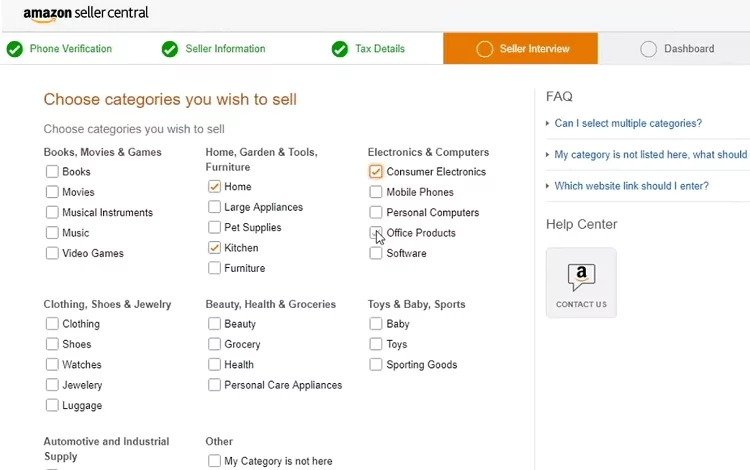
Browse nodes help Amazon understand product relevance, and incorrect placement can restrict indexing potential, limiting impressions despite strong titles, bullets, and backend keyword alignment.
Products that are listed in precise subcategories often gain stronger exposure because category-specific traffic typically reflects higher purchase intent compared to broader search discovery sessions.
Always select the most relevant and specific subcategory available, ensuring attributes align accurately so Amazon can confidently match your listing with the right buyer context.
Tip 11: Improve Listing CTR Through Thumbnail Optimization
In Amazon search results, shoppers decide within seconds which product deserves attention, making the main thumbnail one of the strongest drivers of click-through rate and early ranking momentum.
Well-optimized main images can increase click-through rates by up to 40–65% in competitive categories when visual clarity and differentiation immediately communicate product purpose.
High-performing thumbnails usually emphasize:
- Product recognition at small screen sizes.
- Visible differentiation from competing listings.
- Immediate understanding of product function without reading text.
Instead of copying competitors, analyze search result grids and design thumbnails that visually interrupt scrolling behavior, helping shoppers notice your product before evaluating price or ratings.
Tip 12: Monitor and Improve Conversion Rate Through Continuous Testing
Amazon listings typically convert between 10 to 15 percent on average, significantly higher than traditional ecommerce, which makes even small conversion improvements produce meaningful revenue impact.
Because Amazon rewards listings that generate consistent purchases, improving the conversion rate strengthens ranking signals, helping products gain visibility without relying solely on additional advertising spend.
Key performance indicators sellers should monitor regularly include:
- Session percentage.
- Unit session conversion rate.
- Add-to-cart behavior trends.
- Traffic versus purchase consistency.
Amazon’s “Manage Your Experiments” tool allows sellers to test titles, images, and A+ Content variations, with optimized content sometimes increasing sales performance by up to 25%.
Tip 13: Leverage Amazon Advertising to Strengthen Organic Ranking Momentum
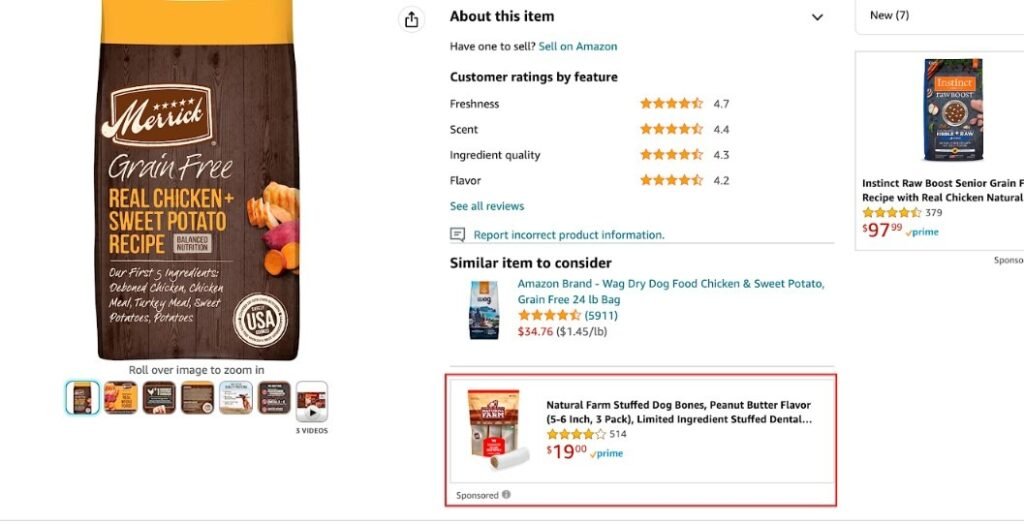
Amazon advertising does more than generate paid traffic because ad-driven sales increase sales velocity, one of the strongest performance signals influencing how products climb organic search rankings.
When sponsored campaigns drive consistent purchases for specific keywords, Amazon interprets those conversions as proof of relevance, gradually improving organic placement for the same search terms.
This creates a performance flywheel where paid visibility generates sales, stronger sales improve ranking, and improved ranking reduces long-term dependency on advertising spend.
Here’s what strategic PPC execution focuses on:
- Launching campaigns around primary keywords first.
- Scaling budgets only on converting search terms.
- Using search term reports to identify organic keyword opportunities.
Together, these optimization practices create a compounding effect where small listing improvements collectively strengthen visibility, buyer trust, and long-term sales performance on Amazon.
What These Amazon Listing Optimization Tips Mean for Sellers in 2026
Amazon’s marketplace is increasingly becoming a product marketplace, meaning rankings depend less on listing presence and more on measurable shoppers’ behavior.
Sellers treating optimization as an ongoing system outperform competitors because Amazon rewards listings continuously aligned with search intent, customer engagement, and marketplace performance expectations.
Data shows that successful sellers regularly refine keywords, images, and listing structure, maintaining relevance while static competitors gradually lose ranking stability and organic visibility over time.
Here are some sustainable growth priorities to consider:
- Search relevance aligned with buyer intent.
- Conversion-focused presentation supporting faster decisions.
- Continuous performance monitoring guides iterative improvements.
In 2026, advantage will belong to sellers building repeatable optimization processes rather than relying on isolated tactics that temporarily improve rankings without long-term performance consistency.
Conclusion
Amazon’s success today depends less on product availability and more on how effectively listings align with shopper behavior, search intent, and the performance signals that drive organic visibility.
Across titles, images, pricing, reviews, and advertising, each optimization layer strengthens ranking momentum, as Amazon consistently rewards listings that attract clicks, convert consistently, and sustain steady sales performance.
Sellers who approach optimization strategically build long-term competitive advantages, reducing reliance on heavy discounting or excessive advertising while maintaining stable visibility in increasingly competitive marketplaces.
If your listings are struggling to rank or convert consistently, Codexxa’s Amazon optimization experts can help. Contact us to unlock stronger visibility, higher conversions, and measurable growth in your Amazon performance.
Add Comment