

12 Powerful AI Tools for Digital Marketing in 2026
Artificial intelligence is no longer optional in digital marketing. In 2026, AI tools help marketers execute faster, optimize smarter, and compete effectively across SEO, content, ads, and social channels.
Most marketing teams struggle with limited time, rising competition, and overwhelming data. AI tools solve these challenges by automating repetitive tasks and improving decision-making with real-time insights.
This blog covers practical AI tools for digital marketing that are already delivering results. Each tool focuses on solving specific marketing problems, not replacing strategy.
You will learn which AI tools to use, where they fit in your workflow, and how to apply them for measurable growth without overcomplicating your marketing stack.
Here’s a quick view of the top AI digital marketing tools you should consider using in 2026:
| Tool | Best Use Case | Ideal For |
| ChatGPT | Content ideation, copywriting, planning | Content marketers, SEO strategists, growth marketers |
| Jasper | Long-form content and brand-consistent writing | Content teams, agencies, brand marketers |
| SurferSEO | On-page SEO optimization and content scoring | SEO specialists, content strategists |
| Ahrefs | Keyword research and competitor analysis | SEO managers, digital strategists |
| Grammarly | Writing quality control and tone consistency | Editors, content marketers, agencies |
| Zapier | Workflow automation and tool integration | Marketing operations teams, growth teams |
| Copy.ai | Short-form ad and social copy generation | Paid media managers, ecommerce marketers |
| Synthesia | AI-powered video creation | Video marketers, product marketers |
| Pictory | Content repurposing into short videos | Content marketers, social media teams |
| AdCreative.ai | Data-driven ad creative generation | Performance marketers, paid ads teams |
| Albert AI | Automated digital advertising optimization | Performance marketing teams, media buyers |
| Browse AI | Web scraping and competitive data monitoring | SEO teams, market research analysts |
AI Tools for Digital Marketing You Should Use in 2026
AI tools are no longer niche add-ons in digital marketing. They now play a central role across content creation, SEO, paid advertising, social media, automation, and customer engagement.
The tools below are selected based on real-world usage, adoption by marketing teams, and their ability to solve practical marketing problems at scale.
1. ChatGPT: AI Copywriting, Ideation, and Marketing Planning
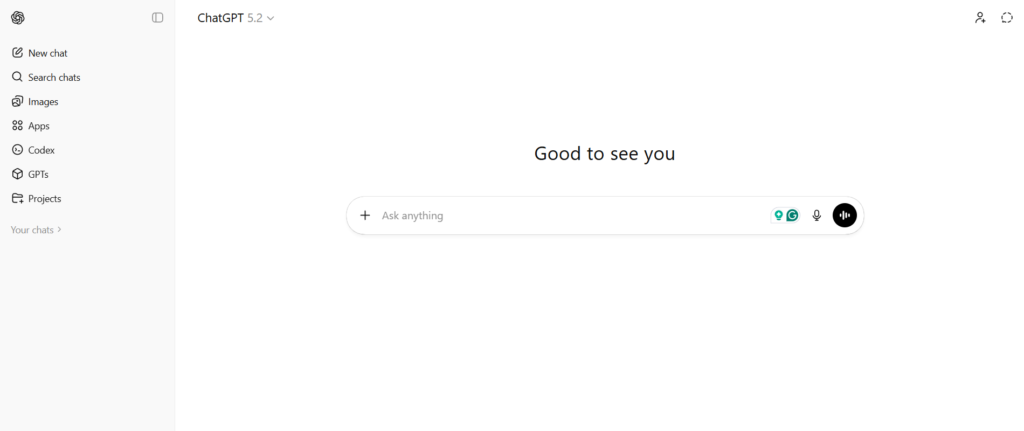
ChatGPT has become one of the most widely adopted AI tools in digital marketing because it fits naturally into how marketers plan, write, and execute campaigns across channels.
Most teams use ChatGPT during early planning stages to brainstorm topics, draft outlines, generate ad copy ideas, and structure emails without starting from scratch.
For SEO and content teams, ChatGPT supports keyword-based ideation, simplifies complex topics, and helps adapt messaging across funnel stages while still requiring human review for accuracy and tone.
Where ChatGPT adds real value in digital marketing:
- Content ideation and blog outline creation.
- Ad copy variations for search and social campaigns.
- Email subject lines and nurture sequence drafts.
- Social media captions tailored to different platforms.
- Campaign planning and audience messaging ideas.
The effectiveness of ChatGPT depends on prompt clarity, brand context, and defined goals. When guided well, it becomes a reliable productivity tool rather than a shortcut.
For marketers aiming to scale execution without expanding teams, ChatGPT is often the first AI tool that delivers immediate and measurable efficiency gains.
2. Jasper: Long-Form Content Creation and Brand Voice Consistency
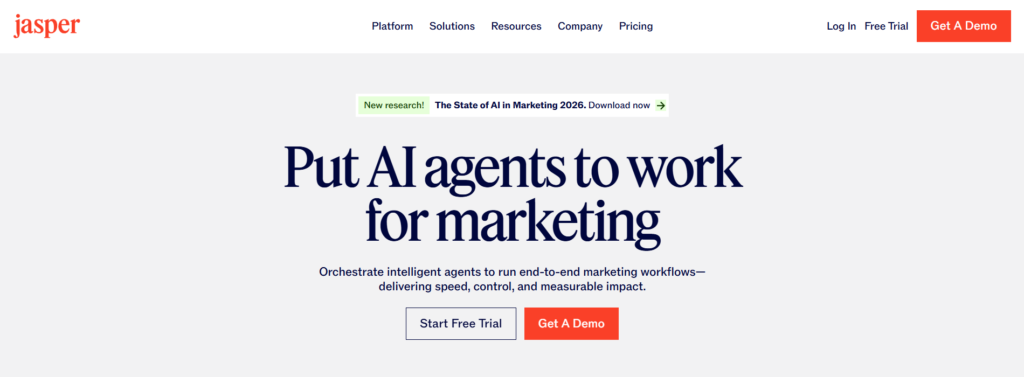
Jasper is built for teams that publish content at scale and still want consistency. It focuses less on quick ideas and more on structured, repeatable content creation.
Marketing teams often turn to Jasper when blog production, landing pages, and campaign copy start increasing faster than internal writing capacity can handle.
One of Jasper’s strongest advantages is brand voice control. You can define tone, terminology, and style guidelines so content feels aligned, even when multiple people use the tool.
Jasper works best when paired with human editors. It creates solid first drafts that reduce writing time, while teams focus on refinement, accuracy, and conversion optimization.
Where Jasper fits well in digital marketing:
- Long-form blog drafts and pillar content creation.
- Landing pages and website copy at scale.
- Brand-consistent campaign messaging.
- Content repurposing across formats and channels.
Jasper is not designed to replace editorial judgment. Instead, it supports content teams by accelerating production while keeping messaging consistent and structured.
For businesses investing heavily in content marketing, Jasper becomes valuable when speed, scale, and brand alignment matter equally.
3. SurferSEO: AI-Powered SEO Content Optimization
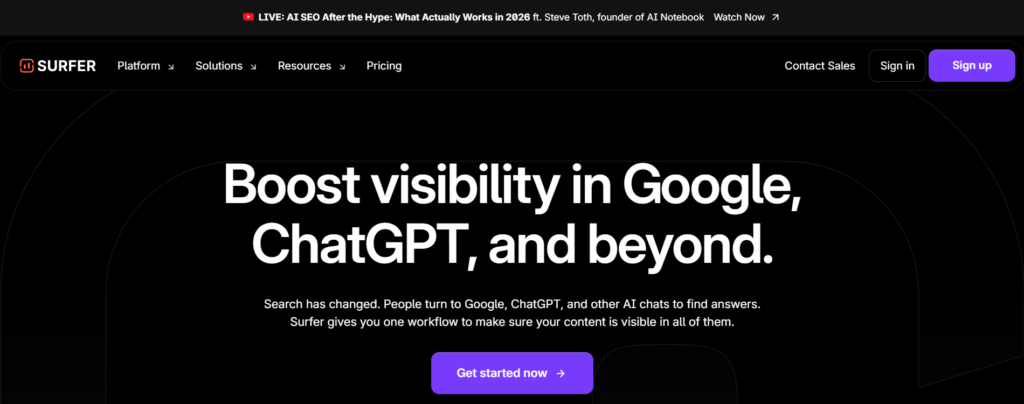
SurferSEO is designed to help content rank higher by aligning it with what already performs well on search engine results pages.
Instead of guessing SEO best practices, SurferSEO analyzes top-ranking pages and translates real SERP data into working content recommendations marketers can act on immediately.
It guides writers on keyword usage, content length, headings, internal links, and structure while content is being written, not after publishing.
This makes SurferSEO especially useful for teams focused on organic growth, where ranking improvements directly impact traffic, leads, and revenue.
How SurferSEO supports SEO-driven marketing:
- Keyword clustering and semantic term guidance.
- Real-time content scoring during writing.
- SERP-based structure and heading suggestions.
- Content audits for existing pages.
- On-page optimization without manual analysis.
SurferSEO works best when paired with strong writing and strategy. It does not write content for you, but it ensures every piece is built to compete.
For marketers serious about scaling SEO content with consistency and data-backed decisions, SurferSEO becomes an essential optimization layer in the workflow.
4. Ahrefs: Keyword Research and Competitive Intelligence
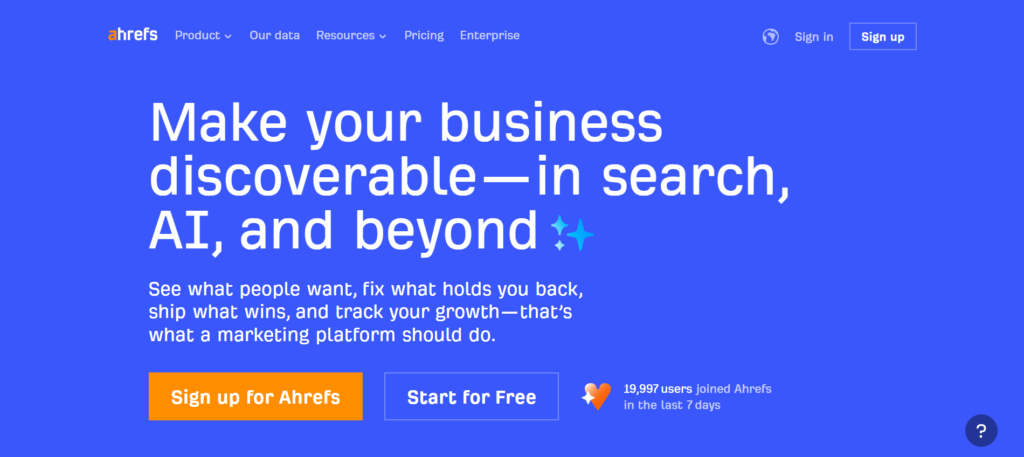
Ahrefs is widely trusted by SEO professionals because it focuses on one thing that matters most in organic growth. Understanding what users search for and why competitors rank ahead.
Ahrefs enhances traditional SEO research by speeding up analysis and surfacing opportunities that are easy to miss when dealing with large datasets and competitive markets.
Marketers primarily rely on Ahrefs to identify high-intent keywords, content gaps, and backlink opportunities that directly influence rankings, traffic potential, and long-term visibility.
Instead of relying on assumptions, Ahrefs allows teams to validate ideas using real search data, keyword difficulty metrics, and SERP behavior across industries and regions.
How Ahrefs supports digital marketing and SEO strategy:
- Keyword discovery based on search volume and intent.
- Competitor content gap and ranking comparison.
- SERP analysis to understand ranking patterns.
- Backlink research and authority-building insights.
- Content performance tracking over time.
Ahrefs is especially valuable during planning stages. It helps teams decide what content to create, update, or avoid based on realistic ranking potential.
For businesses aiming to build sustainable organic traffic and informed content strategies, Ahrefs acts as a decision-making engine rather than just a reporting tool.
5. Grammarly: Writing Clarity, Tone, and Quality Control
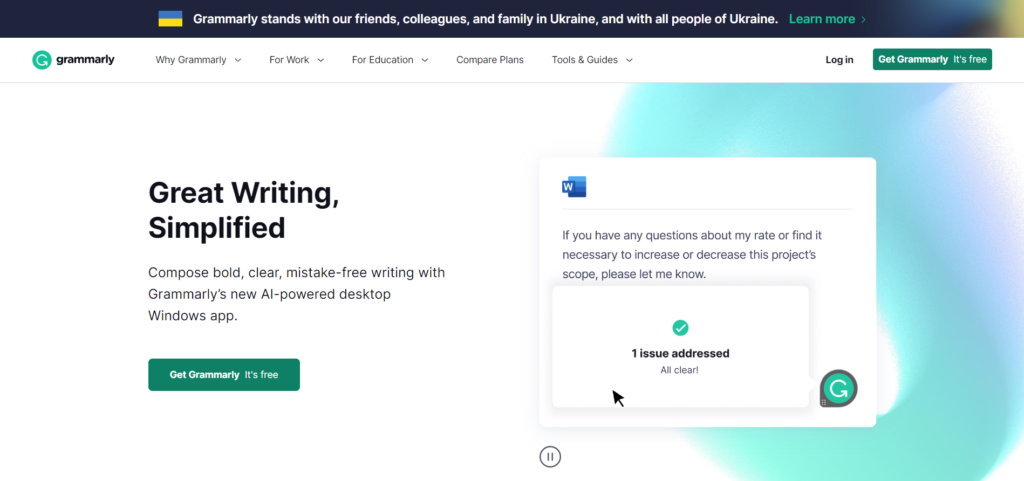
Grammarly plays a different role compared to other AI tools in digital marketing. It does not focus on ideation or strategy, but on making sure your final output reads clearly and professionally.
As marketing teams scale content across blogs, emails, ads, and social media, small writing errors can quietly reduce credibility and conversion rates. Grammarly helps eliminate those risks before content goes live.
Unlike basic spellcheckers, Grammarly analyzes sentence structure, tone, clarity, and consistency. This is especially useful when multiple writers or teams contribute to the same brand voice.
Grammarly works seamlessly across platforms. It integrates with browsers, email tools, document editors, and CMS environments, which makes it part of everyday workflows rather than an extra step.
Common digital marketing use cases for Grammarly:
- Final content editing before publishing blogs or landing pages.
- Improving clarity and tone in email campaigns.
- Polishing ad copy and social media captions.
- Maintaining consistent language across distributed teams.
- Reducing review and revision cycles.
6. Zapier: AI Workflow Automation and Tool Integration
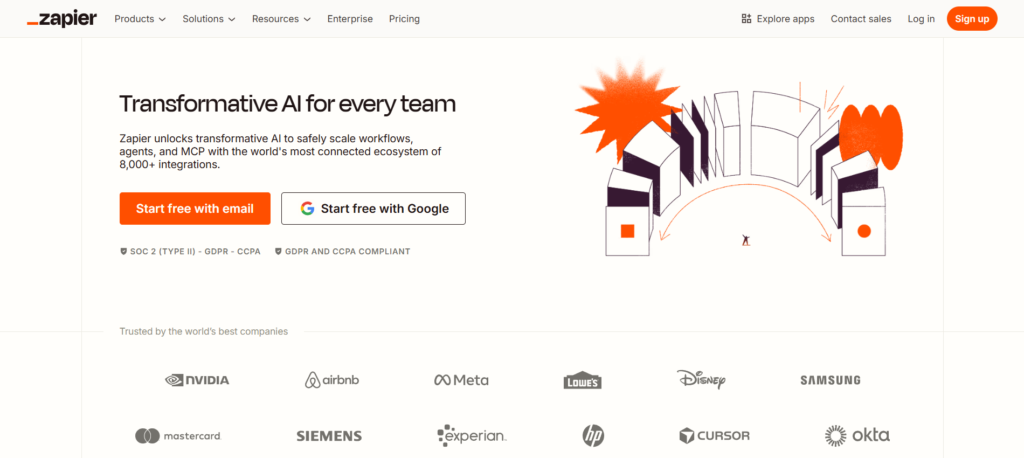
Zapier is an automation platform that connects different apps and systems to help marketing teams automate repetitive tasks without writing code. It allows data to move automatically between tools that are otherwise disconnected.
To use Zapier, you select a trigger event in one app, such as a new form submission or lead capture. You then define one or more actions in other apps, like adding the lead to a CRM, sending a Slack notification, or updating a spreadsheet. These automated workflows are called Zaps.
Zapier supports thousands of integrations across marketing, sales, analytics, and productivity tools. This makes it especially useful for teams that rely on multiple platforms to manage campaigns, leads, and reporting.
Marketers commonly use Zapier to automate lead management, campaign tracking, email workflows, and internal notifications. Multi-step Zaps allow conditional logic, scheduling, and data formatting to support more complex processes.
Zapier also integrates with popular tools such as Google Sheets, HubSpot, Salesforce, Mailchimp, Slack, and many others. It is widely adopted by marketing teams, agencies, and growing businesses that need reliable automation at scale.
For digital marketing teams looking to streamline operations and reduce manual workload, Zapier serves as a central automation layer across the entire marketing stack.
7. Copy.ai: Short-Form Ad and Social Copy Generation
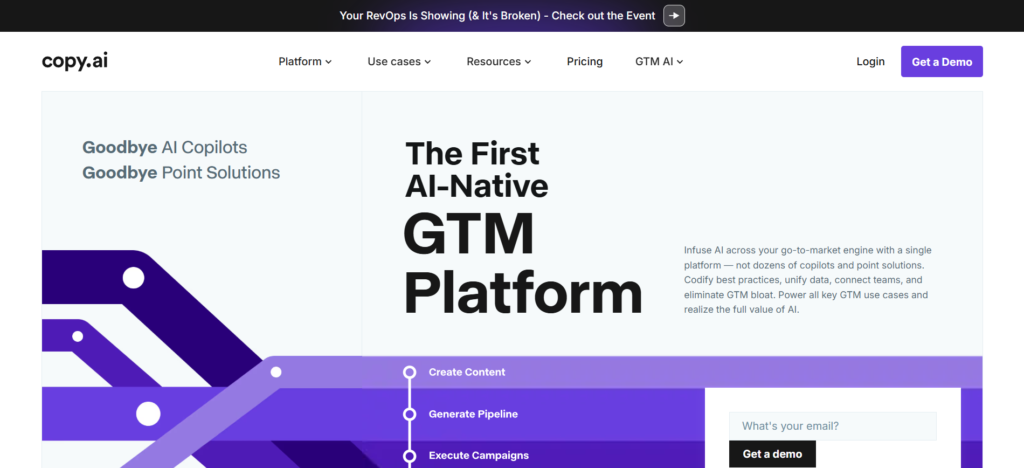
Copy.ai is an AI writing tool designed to help marketers create short-form marketing copy quickly. It focuses on speed and variation for ads, social posts, and promotional content.
Where Copy.ai helps marketing teams:
- Generating multiple ad copy variations for paid campaigns.
- Writing social media captions tailored to different platforms.
- Creating product descriptions and promotional snippets.
- Supporting A/B testing with fast copy experimentation.
Copy.ai works by taking a short prompt or context and generating multiple copy options instantly. This helps marketers avoid repetitive writing and test messaging ideas faster.
The tool is especially useful for paid media and social teams where performance depends on testing headlines, hooks, and CTAs at scale.
Copy.ai integrates well into content workflows as a rapid drafting tool. Human review is still important, but it significantly reduces the time spent creating first versions.
For teams running frequent campaigns and experiments, Copy.ai acts as a reliable assistant that accelerates execution without sacrificing flexibility.
8. Synthesia: AI Video Creation for Marketing
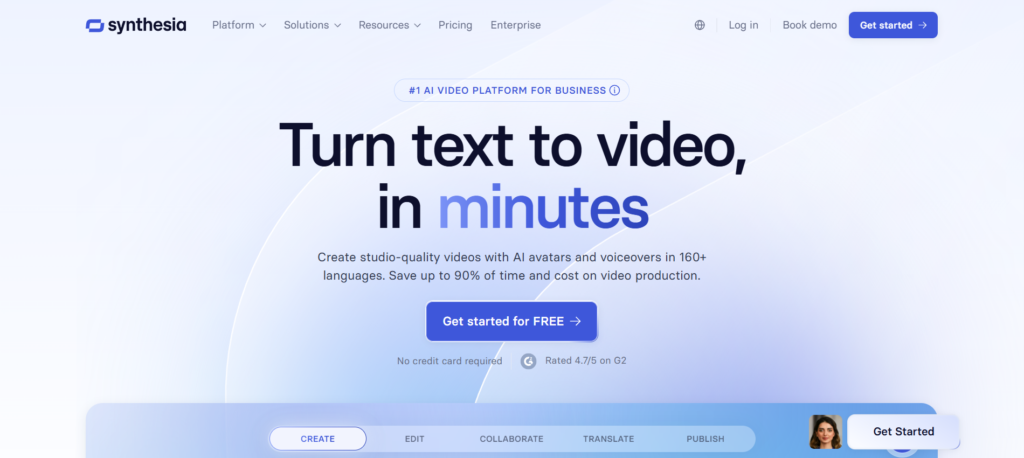
Synthesia is an AI video creation platform that allows marketers to produce professional videos without cameras, actors, or studio setups. It turns written scripts into presenter-led videos using AI avatars.
Steps to create a video using Synthesia:
- Choose an AI avatar and video template based on your use case.
- Paste or write your script directly in the editor.
- Select the language, voice, and visual style.
- Add branding elements such as logos, colors, or backgrounds.
- Generate and export the video in minutes.
Synthesia simplifies video production by removing technical barriers. This makes it easier for marketing teams to scale video content without increasing production costs or turnaround time.
Marketers commonly use Synthesia for:
- Product explainers and feature walkthroughs.
- Marketing and promotional videos.
- Onboarding and training content.
- Multilingual campaign videos.
- Internal communications and updates.
For teams that rely on video but lack in-house production resources, Synthesia offers a practical and scalable solution. It enables consistent video creation while keeping branding and messaging aligned across campaigns.
9. Pictory: Content Repurposing Into Short Videos

Pictory is an AI-powered video repurposing tool built to convert long-form content into short, engaging videos. It focuses on reuse, distribution, and reach rather than traditional video production.
Core capabilities of Pictory:
- Automatic conversion of blogs, articles, and scripts into videos.
- Scene generation using text summarization and visual matching.
- Stock footage and image library integration.
- Auto captions and subtitle generation.
- Format optimization for social platforms.
Pictory follows a simple workflow designed for speed. Users upload a blog URL, script, or text. The AI breaks content into scenes, selects relevant visuals, and generates a video draft. Editors can then adjust scenes, text overlays, pacing, and branding elements before export.
This approach removes the need for manual video editing skills. It allows marketing teams to scale video output using existing content assets instead of creating everything from scratch.
Pictory is especially valuable in content distribution strategies. Blogs that previously lived only on websites can be reused across YouTube Shorts, Instagram Reels, LinkedIn, and other video-first platforms.
Where marketers commonly use Pictory:
- Repurposing SEO blogs into short-form videos.
- Creating social video snippets from long articles.
- Improving content reach without additional production cost.
- Supporting video content calendars with minimal effort.
Pictory works best as a distribution and amplification tool. It helps marketing teams extend the lifespan of written content while meeting growing demand for video across channels.
10. AdCreative.ai: Data-Driven Ad Creative Optimization
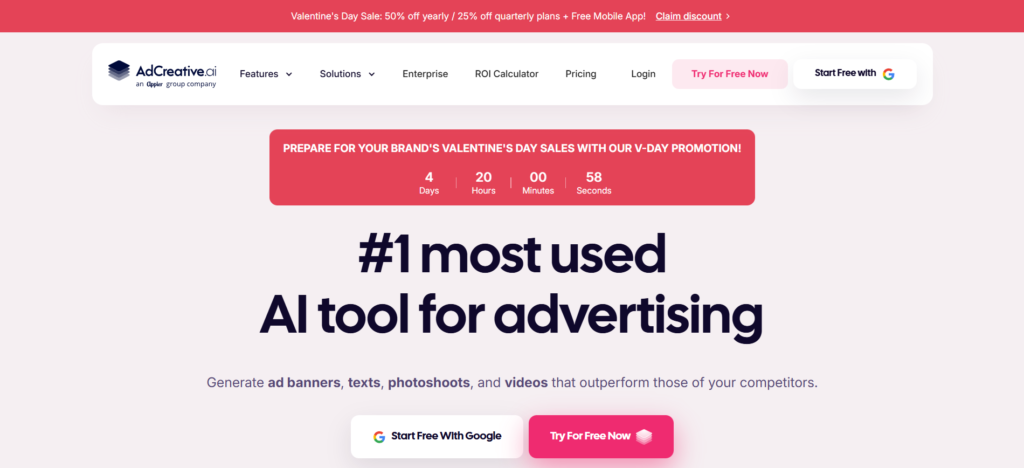
AdCreative.ai is an AI platform built to generate advertising creatives using performance data. It focuses on producing visuals and copy aligned with conversion patterns across paid marketing channels.
The platform uses brand inputs, audience signals, and historical ad performance to generate multiple creative variations. These creatives are optimized for platforms such as Google Ads, Meta Ads, and display networks.
AdCreative.ai supports high-volume creative testing by reducing manual design dependency. Marketing teams can identify winning formats faster and improve campaign efficiency through data-backed creative decisions.
For performance marketing teams, AdCreative.ai fits into workflows where speed, testing, and optimization are critical. It enables scalable creative production while maintaining consistency and improving return on ad spend.
11. Albert AI: AI-Powered Digital Advertising Optimization
Albert AI is an autonomous advertising platform designed to manage and optimize paid campaigns across multiple digital channels. It uses machine learning to analyze performance data and adjust targeting, creatives, and budgets in real time.
The platform connects directly with ad accounts and continuously tests variables such as audience segments, bids, creatives, and channels. Based on performance signals, Albert AI reallocates spend to improve efficiency and reduce wasted budget.
Albert AI is built for scale and consistency. It removes manual intervention from day-to-day campaign optimization while maintaining alignment with predefined business goals and performance benchmarks.
Where marketers use Albert AI:
- Managing and optimizing paid search and paid social campaigns.
- Scaling advertising across multiple platforms simultaneously.
- Improving return on ad spend through continuous testing.
- Identifying new audience segments and growth opportunities.
- Reducing manual workload in performance marketing operations.
12. Browse AI: Web Scraping and Competitive Data Monitoring
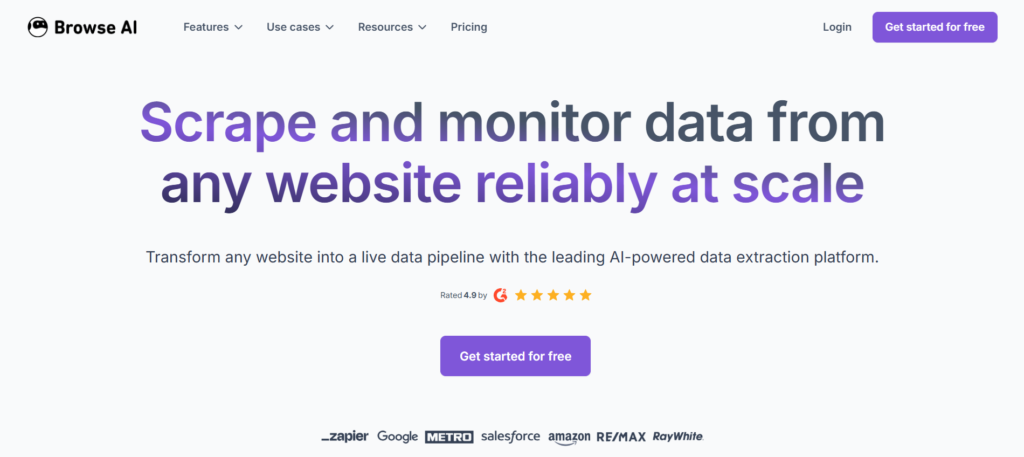
Browse AI is a web scraping and monitoring tool designed to extract structured data from websites without coding. It enables marketers to collect, track, and update external data sources at scale.
The platform works by training a bot to identify elements on a web page, such as prices, product listings, reviews, or content updates. Once trained, the bot runs on a schedule and delivers clean data to spreadsheets, databases, or integrations.
Browse AI emphasizes accuracy, repeatability, and automation. It supports pagination, change detection, and alerts, which helps teams stay updated as external data changes over time.
Where marketers use Browse AI:
- Monitoring competitor pricing, product launches, and content updates.
- Collecting reviews and sentiment signals from marketplaces and forums.
- Tracking SERP features, landing page changes, and offers.
- Building datasets for market research and trend analysis.
- Feeding scraped data into reporting dashboards or CRM workflows.
Browse AI is most effective when external data directly influences decisions. It reduces manual checks and ensures teams work with current information.
For marketers focused on competitive intelligence and data-driven planning, Browse AI provides a reliable way to turn public web data into actionable inputs.
Conclusion: How to Use AI Tools the Right Way
AI tools have become a core part of modern digital marketing operations. They support automation, content production, optimization, data analysis, advertising, and distribution at scale. When used correctly, these tools reduce manual workload and improve execution speed across channels.
The key is selective adoption. Each tool should address a specific operational gap, such as SEO optimization, paid campaign management, content repurposing, or workflow automation. Overloading stacks without defined use cases often leads to inefficiency.
Most tools covered offer free trials or entry-level plans. Testing them within controlled workflows helps teams evaluate performance impact before long-term adoption. Combined with human oversight and strategic direction, AI tools can strengthen marketing output and operational efficiency across different industries and personal use cases.
Add Comment